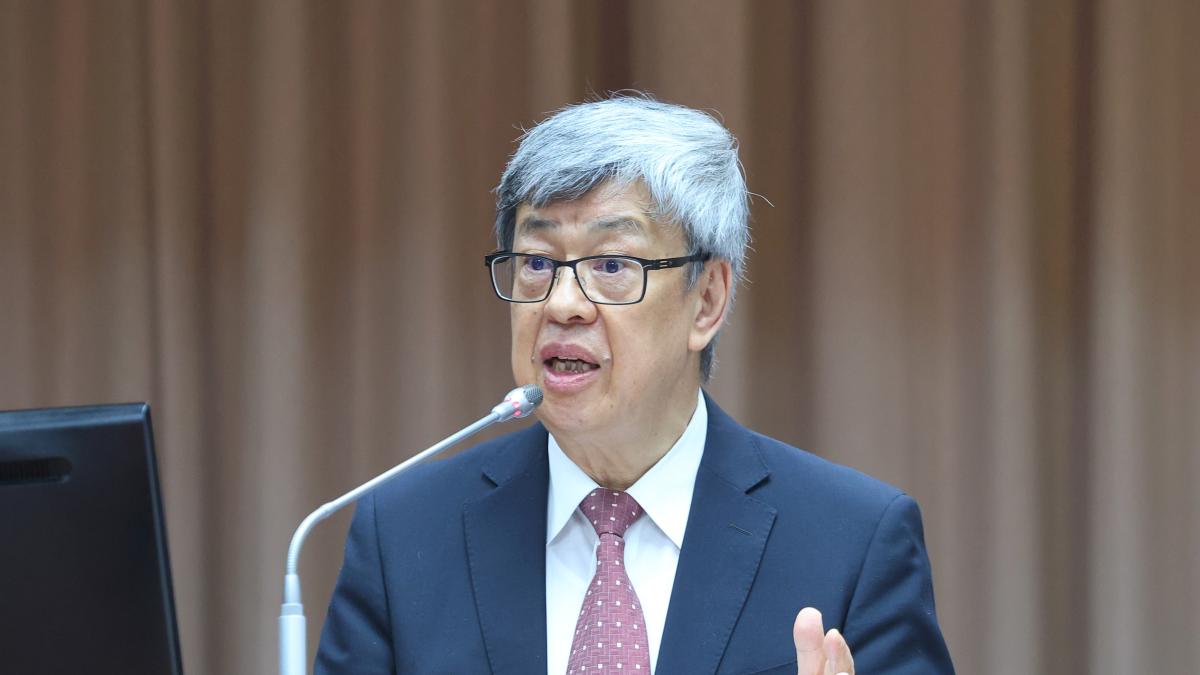
The carcinogenic oil scandal continues to escalate, with criticism mounting over the central government's slow response. Premier Cho Jung-tai has pledged to release inspection reports on problematic oils in the market by the 20th. Former Premier and current Academia Sinica President Chen Chien-jen stated that the Ministry of Health and Welfare took action the day after receiving notification, but delays occurred due to manufacturers concealing information. He emphasized that close cooperation between central and local governments is crucial.
Chen, who has held key positions in the DPP administration and remains a DPP member, faces scrutiny over whether he can maintain academic neutrality as head of Academia Sinica. In response, Chen said academic research is his lifelong passion and he will strive to uphold academic independence.
Today, the Legislative Yuan's Education and Culture Committee invited Academia Sinica President Chen Chien-jen to report on institutional affairs and answer questions. Before the session, when asked about the carcinogenic oil issue, Chen said close collaboration between central and local authorities is most important, and that the government and businesses must work together. He expressed confidence that with unity, food safety can be ensured and people can live safely.
Chen emphasized that Taiwan is a free, democratic, and rule-of-law country, and everyone shares concern for public health. He believes central-local cooperation can prompt businesses to strengthen self-audits. The Executive Yuan has already proposed five key measures, which are significant, so there is no need for public concern.
KMT legislator Ko Chih-en questioned why the current premier's response was slower than Chen's during his premiership, when he immediately ordered product removals. Chen responded that the main issue lies in the reporting process—according to his understanding, the Ministry of Health and Welfare acted the day after notification. Delays occur when manufacturers conceal information. He stressed that central-local coordination, reporting mechanisms, and harsher penalties for unethical businesses are essential.
KMT legislator Lo Ting-wei questioned whether he agreed with the FDA's expert claim that 'drinking more water helps metabolize carcinogens.' Chen replied that while it reflects individual scholarly opinion, it is factually sound—drinking more water does help eliminate BaP (benzopyrene), as with other carcinogens. When asked if he supported the FDA's initial stance that products with less than 20% contamination need not be recalled, Chen firmly stated, 'No, if necessary, they should be removed.'
Ko Chih-en also questioned Chen's continued DPP membership, noting that the Academia Sinica president should remain politically neutral. Chen confirmed he is still a DPP member. When asked how he would ensure Academia Sinica's independence from political influence, Chen said he always adheres to the responsibilities of his role and, as president, will strive for academic neutrality.
Ko pointed out Chen's extensive political involvement, including serving as vice president, honorary chairman of the 'Friends of Tsai Ing-wen' association, and premier in 2023. She questioned whether his policy recommendations to the president could be purely science-based. Chen responded that he is fundamentally a scholar, with academic research being his lifelong passion, and public service a response to social responsibility. As Academia Sinica president, he will provide policy advice strictly from a professional academic standpoint.
FACT BOX
- Source: PR Times
- Category: News