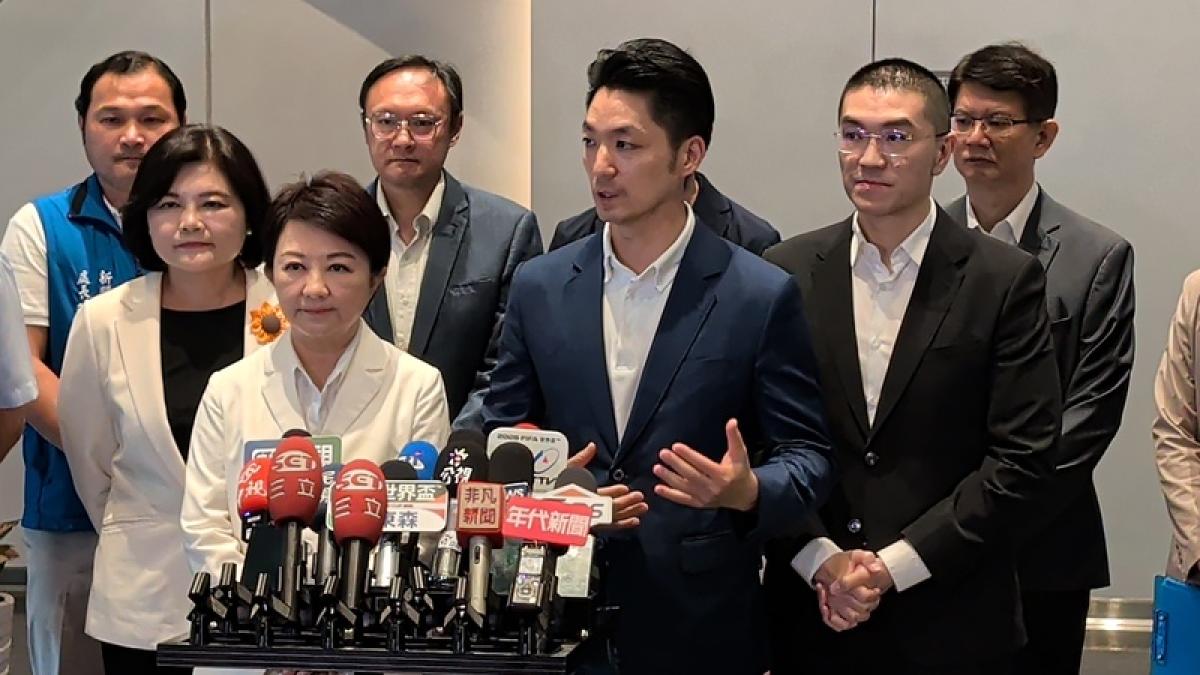
'It's not like I forced you to eat!' 'It hasn't killed anyone!' These two sentences came from the mouth of the ruling party's spokesperson and city councilor. The time is July 2026, and the topic is the 'Zhonglian carcinogenic poison oil' storm that has the whole country in a panic. When 1300 tons of oil containing a first-class human carcinogen may have already entered the market and been eaten by you and me, what people will remember is not the government's crisis management, but the two lessons given by the ruling party's public officials and representatives to the victims. These two sentences are more suffocating to this society than the poisonous oil. If it were just a slip of the tongue, people might forgive it; but when similar arguments keep appearing, outsiders naturally question whether this reflects the true attitude of the ruling authorities towards food safety incidents. Time and space comparison: 2014's indignation, 2026's sarcasm Let's rewind time to 2014. That year, the Weixin gutter oil case broke out, and the whole island was once again plunged into food safety panic. At that time, the opposition party (today's Democratic Progressive Party) from the top down, from the king to the legislators, all scolded the then President Ma Ying-jeou and Premier Jiang Yihua 'incompetent', and even sued the court for 'attempted murder'. Media person Huang Yangming in the program bitterly stated that at that time he was on the front line chasing black-hearted manufacturers, scolding politicians until they were covered in blood---those who are now saying 'not forced to eat' in front of the camera, at that time regarded 'escorting Weixin' as a political ATM, scolding with righteous indignation. However, in 2026, the positions have changed, and the standards have changed with them. When asked why they did not severely condemn Fushou, Fuma, and Zhonglian and other manufacturers, the reaction of the DPP spokesperson Wu Zong was to shout at the media: 'What are you shouting about? It's not like I forced you to eat!' When the outside world questioned the harm of the carcinogen benzo[a]pyrene to the human body, the DPP councilor Lin Bingyu blurted out: 'It hasn't killed anyone.' The same food safety incident, the same possibility that people may have eaten problematic oil, the standards of 2014 and 2026, why are they so different? In 2014, they treated 'possible carcinogenicity' as a political bullet, hitting the Ma government to pieces; in 2026, they treated 'it hasn't killed anyone' as a shield to shift responsibility, blocking the mouths of the victims. Please ask, those 'not excluding murder' roars back then, was it because there were 'dead people' in 2014? Double standards to this extent make one nauseous. Logic collapse: According to Lin Bingyu's standard, Taiwan does not need a food safety law Lin Bingyu's 'it hasn't killed anyone' is the most cold-blooded and most absurd statement in this turmoil. According to his logic, as long as 'no one has died on the spot', everything can be forgiven. Then: Night market vendors do not need to verify Sudan red, after all, eating for a few years will not die immediately. Factories do not need to manage exhaust gas, after all, lung cancer is a matter of 20-30 years later. Lai pigs and nuclear food also do not need to be controversial, after all, 'it hasn't killed anyone'. Is this the food safety standard that a city councilor of the ruling party should have? Or is it that in the eyes of the DPP, the health standard of the people is 'as long as you are alive, it's okay if you die slowly'? If 'not causing immediate death' can be used as a standard to measure the severity of food safety incidents, then the most important function of the food safety system - preventing risks - will be completely meaningless. Benzo[a]pyrene is listed as a Group 1 human carcinogen by the International Agency for Research on Cancer (IARC). Once it enters the human body, it will combine with DNA and cause irreversible damage. It will not kill you tomorrow, but it will come to settle the score with you in 10 or 20 years in the form of lung cancer, liver cancer, and gastrointestinal cancer. Lin Bingyu chose to trivialize it with 'it hasn't killed anyone'. But whether or not he had such an intention, such statements can easily make society produce a dangerous misconception: 'No immediate casualties, so it's not serious.' From 'June notification' to 'July sealing': the systemic arrogance behind the shocking sentences Wu Zong and Lin Bingyu's 'shocking sentences' are not accidental, nor are they a single case. They are the inevitable product of the entire ruling system's attitude of 'drag as much as possible, cover up as much as possible' when facing food safety crises. Taipei Mayor Chiang Wan-an has pointed out the cruel timeline: In June, the Food and Drug Administration of the Ministry of Health and Welfare received the notification. On July 3, the Food and Drug Administration held a press conference but chose to 'seal' and did not disclose the list of downstream businesses (the Executive Yuan denied and emphasized that only the businesses were hiding). On July 6, Premier Zhuo Rongtai made his first public appearance. What was the central government doing during this 'golden silence'? When the problematic oil had already entered the market and a first-class carcinogen may have been eaten by consumers - what was the government waiting for? Waiting for more data? Waiting for businesses to cooperate voluntarily? This is not just an administrative efficiency issue. This is a fundamental value choice: when people's health risks and business interests conflict, what kind of risk management principle does the government adopt? The result is: 1300 tons of problematic oil, only about 17 tons have been recalled by mid-July. Most of the poisonous oil has already been eaten by the public. When local governments (such as Taipei City and Kaohsiung City) were forced to take the initiative to conduct 'preventive comprehensive recalls', the central government's response was the spokesperson's 'not forced to eat' and the councilor's 'it hasn't killed anyone'. This is not handling a crisis; this is humiliating the people and reviewing the victims. They didn't force you to eat, but they forced you to swallow fear and arrogance Wu Zong is right, 'he didn't force you to eat'. Because the ones who really forced you to eat this poisonous oil are the incompetent source management; the administrative delay of notification in June and action in July; the information black box of not willing to disclose the list; the 'Taiwan-US relations' concerns that neither blue nor green dare to touch. And when you question all this, their response is not an apology, not a reflection, but to turn around and teach you a lesson: 'It's not like I forced you to eat', 'It hasn't killed anyone'. These two sentences are the deepest contempt of the rulers for the people. It is more poisonous than benzo[a]pyrene because it corrodes the most basic trust of the people in the government. Food safety can be amended by law, institutions can be reformed, and standards can be re-examined. But if, when facing the anxiety of the people, the government first thinks of excuses rather than understanding, of cutting off rather than taking responsibility - then what is lost is not only food safety, but also the most basic trust of the people in the government. Now, out of 1300 tons of problematic oil nationwide, only 17 tons have been recalled. Where is the rest? In bento shops, in night market stalls, in your kitchen at home. No one can guarantee that the next one found to contain carcinogens will be what. Also, no one can guarantee that when you are angry and question next time, you will not hear a sentence again: 'It's not like I forced you to eat.' This is not just a food safety issue. This is a question of how a ruler views the people. And what is really worrying is not one or two slips of the tongue - but the people begin to doubt: when the next food safety incident occurs, what the government first thinks of is to protect the people, or to protect themselves?
FACT BOX
- Source: PR Times
- Category: 其他