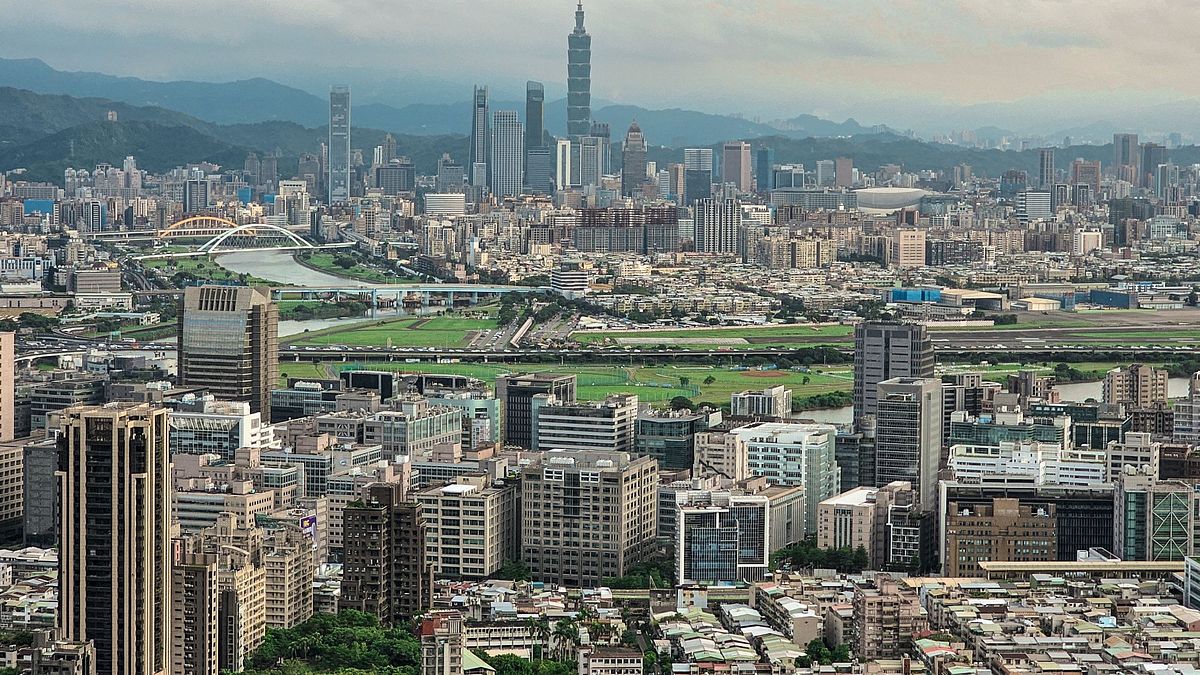
Taiwan's Ministry of Finance will officially launch 'Youth Safety 3.0' in August, introducing new eligibility criteria that exclude high-income and older applicants—individuals must earn less than NT$2 million annually and be under 50 years old. Based on data from the Credit Information Center, 住商機構 analyzed first-quarter homebuyers across Taiwan who meet these conditions. The results show that eligible buyers are concentrated in central and southern counties. In contrast, Taipei, New Taipei, and Hsinchu cities have lower qualification rates, with Taipei City seeing over half of its buyers disqualified from Youth Safety 3.0.
Lai Chih-chang, Assistant Public Relations Director at Da-Jia Real Estate's Planning and Research Department, analyzed that under the current uniform eligibility rules, even with mortgage subsidies, high housing prices in cities like Taipei and Hsinchu make affordability difficult. These areas may become 'Youth Safety islands' in the future.
Taipei City Ranks Lowest in Eligible Youth Safety Buyers
Using Credit Information Center data, 住商機構 examined the proportion of first-quarter homebuyers in each county who meet Youth Safety 3.0's income and age criteria. The results show that the highest eligibility rates are in Penghu County, Kinmen County, Chiayi County, Changhua County, and Pingtung County. Only four counties—Taipei, New Taipei, Hsinchu City, and Hsinchu County—have eligibility rates below 70%. Taipei City has the lowest rate at just 48.4%, less than half of all buyers.
Lai explained that Taipei's home prices, often reaching tens of millions of NT dollars, have reshaped the buyer demographic. Now, over half of Taipei's buyers are either over-50 upgrade buyers or high-income earners exceeding NT$2 million annually. As for New Taipei City, once known for first-time buyer hotspots, rising prices driven by Taipei's high costs and recent development projects have pushed prices higher, leading to an aging and higher-income buyer base.
Hsinchu Residents May 'See But Not Access' Youth Safety 3.0
Looking at Hsinchu City and County, Hsinchu City has only 58.4% of buyers eligible—the second-lowest in Taiwan—while Hsinchu County ranks third-lowest at 62.5%.
Lai pointed out that the main reason for low eligibility in Hsinchu is the dominance of Hsinchu Science Park workers, many of whom earn over NT$2 million annually. This means a significant portion of Hsinchu buyers are 'within sight but out of reach' of Youth Safety 3.0 benefits.
Beyond Age and Income: What Buyers Should Also Consider
Hsu Chia-hsin, Executive Director of 住商不動產's Planning and Research Department, analyzed that Youth Safety 3.0 sets multiple thresholds to prevent high-income individuals from using subsidized loans for speculative purchases. By precisely targeting subsidies, the interest rate support is intended to benefit young buyers with genuine self-occupancy needs. Central and southern counties are the biggest beneficiaries, with over 75% of buyers in cities like Taoyuan and Kaohsiung qualifying.
However, Hsu emphasized that beyond age and income, buyers must also pre-calculate whether their desired property's total price exceeds Youth Safety 3.0's regional price caps. Given the current tight lending environment, buyers should also prepare extra down payments to avoid insufficient loan-to-value ratios due to appraisal gaps.
FACT BOX
- Source: PR Times
- Category: Survey