Semiconductor-related stocks have recently become the absolute focal point of Wall Street. While the market hopes that a few dozen high-valued chipmakers will contribute nearly half of the S&P 500's second-quarter profit growth, the share prices of these related stocks have been extremely volatile this month, leaving investors on edge.
Driven by soaring stock prices of giants such as Micron Technology, AMD, and Broadcom, the Philadelphia Semiconductor Index (PHLX Semiconductor Index) has posted an astonishing rise since the beginning of the year. However, this benchmark index, composed of 30 constituent stocks, has recently experienced roller-coaster-like volatility.
Stock price swings 'shocking': Nearly 20% pullback from July highs
As of now, the Philadelphia Semiconductor Index has risen 65% year-to-date, far outpacing the S&P 500's 9% gain. However, the index pulled back sharply by 18% in July alone. In the 12 trading days that July has opened so far, half of the days saw single-day swings exceeding 3 percentage points. Compared to the record closing high reached in late June, the index's pullback has slightly exceeded the 20% threshold.
As market doubts grow over the sustainability of artificial intelligence (AI) chip demand, coupled with the semiconductor industry's characteristic 'boom-and-bust' trading style, investors have begun re-evaluating the sector's investment value.
Although upcoming earnings reports are expected to show strong data, will this be enough to reverse the summer downturn? If semiconductor stocks fail to support the market, considering the sector's massive weight, will other U.S. market sectors face even harsher tests this summer?
Rick Meckler, partner at Cherry Lane Investments, a family investment firm based in New Vernon, New Jersey, said: 'It's truly shocking that companies of such massive scale can experience daily price swings of this magnitude. Can earnings reports change this situation? If the outlook is disappointing, it will certainly bring shockwaves.'
Profit forecasts surge 133%: The biggest pillar of U.S. market growth
According to data from Tajinder Dhillon, Head of Earnings Research at London Stock Exchange Group (LSEG), semiconductor and semiconductor equipment companies within the S&P 500 are expected to see second-quarter earnings surge 133% year-on-year. This group of chipmakers is projected to contribute around 44% of the S&P 500's overall profit growth.
Overall, LSEG data as of July 17 indicates that S&P 500 component companies are expected to report 26% year-on-year profit growth for the second quarter.
On the U.S. chip front, Intel and Texas Instruments will release their earnings reports this week, while industry leader NVIDIA will not report until late August. However, judging from recent market reactions following earnings announcements by several key companies, investor sentiment has clearly shifted:
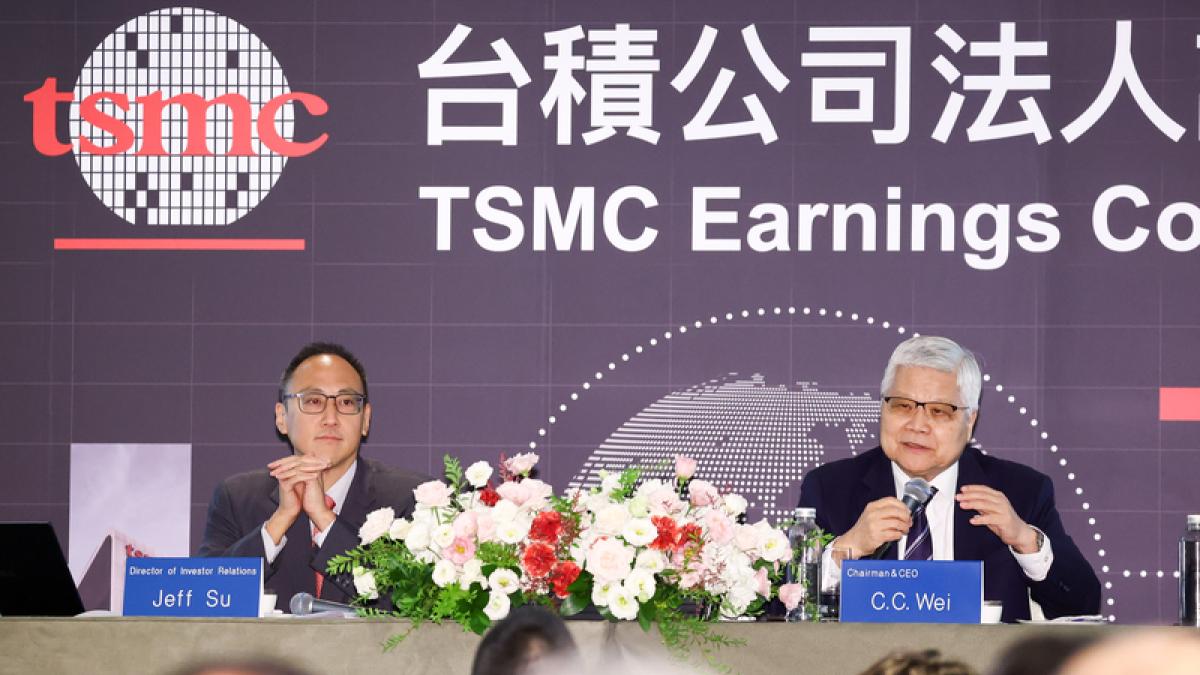
TSMC: TSMC, the world's leading semiconductor foundry, reported a 77% year-on-year increase in net profit for the second quarter on July 16, exceeding market expectations. However, its ADR shares traded in the U.S. still declined.
Samsung Electronics: Earlier this month, South Korea's Samsung Electronics announced a 19-fold year-on-year increase in second-quarter operating profit, but its stock price subsequently faced heavy selling pressure.
Retail investor participation and leveraged ETFs fuel the fire: Echoes of the 2000 tech bubble emerge
Market analysts believe that one reason for the extreme volatility in the semiconductor index and its constituent stocks is that these stocks have become favorites among retail investors, fueling explosive growth in single-stock leveraged ETFs. Leveraged ETFs significantly amplify normal stock volatility by creating additional buying during price increases and triggering more selling during declines.
Meckler noted: 'A major factor driving the sharp rise and fall of these stocks is retail investors' enthusiasm for options trading. This is a key factor causing stock volatility to become so extreme.'
To address the severe market volatility caused by single-stock leveraged ETFs, South Korea's financial regulators announced relevant control measures on July 16. South Korea launched leveraged ETFs linked to chip giants such as Samsung Electronics and SK Hynix at the end of May this year.
Wall Street financial firm BTIG recently issued a report warning: 'Although the semiconductor sector's rally is remarkable, its volatility is equally astonishing.' BTIG added that the market is now showing some ominous signs, 'many of which are strikingly similar to the peak of the dot-com bubble in March 2000.'
Market demand cannot remain in a state of explosive growth forever
Jake Dollarhide, CEO of Longbow Asset Management in Tulsa, said that while the wave of AI spending has indeed fueled chip mania, the market is now widely concerned that this optimism has become excessively heated. Dollarhide warned: 'Market demand for AI chips cannot remain in this state of explosive growth forever. Any company that delivers a disappointing outlook during earnings season will face a brutal stock price correction.'
However, Daniel Morgan, portfolio manager at Synovus Trust, holds a more optimistic view. He pointed out that the forces supporting chip demand extend beyond data centers to include industrial electronics, wireless communications, and automotive chips. 'Market demand is spreading to more areas,' he said.
Morgan added: 'The only area I currently see as consistently weak is smartphone application chips.' He specifically mentioned that Qualcomm is one of the chipmakers affected by this sector.
Editor: Hsu Yung-hsiang
More exclusive Focus News: · Planning to build 13 more factories in Taiwan: TSMC reveals reasons for continued 'Taiwan-first' strategy despite increased U.S. investment · Who's next after Bezos? Global capital scrambles for 'space computing' market as space industry becomes mainstream asset · Attracted $16.8 billion in six months, spawned 10,000 defense startups in two years: Market warns of bubble from Pentagon reform
FACT BOX
- Source: PR Times
- Category: News
- Organizations: Micron Technology / AMD / Broadcom