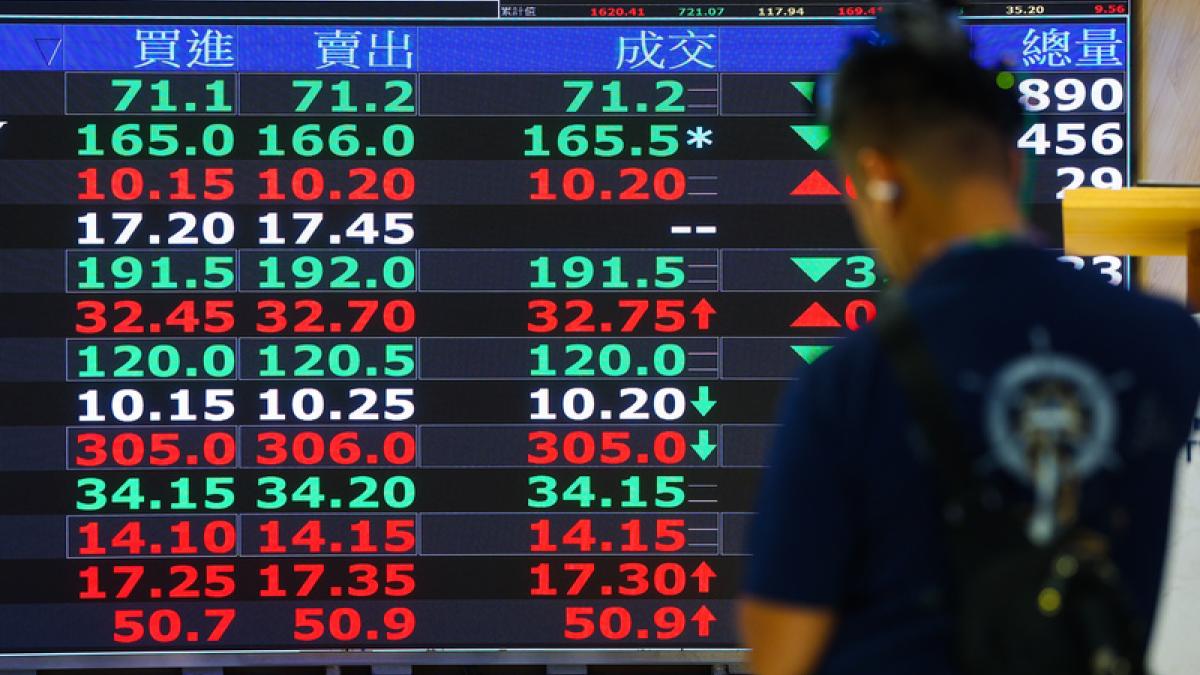
After Taiwan's stock market recorded the largest single-day decline in history, the weighted index surged 1,783 points on the 21st, marking the biggest single-day gain ever. Analyst Chen Wei-tai, appearing on the financial program 'Wealthy Journey,' predicted that a strong short-term rally is unlikely. Instead, the market is more likely to fluctuate up and down several times before stabilizing. Investors should closely monitor high-performing stocks like MediaTek on the 22nd to see if they can at least maintain the gains from the 21st. Only when investor positioning stabilizes can individual stocks begin to bottom out.
Chen noted that the market structure on the 21st suggests a 'sideways-with-downtrend' pattern, meaning a quick rebound is unlikely. The 1,783-point surge marked the first meaningful rebound in this downturn phase. Many of the sharply rising stocks were well-known high-quality names still reflecting fundamental strength. Taiwan's fundamentals remain solid, with export orders continuing to deliver strong results. As long as the market reflects fundamentals, consecutive sharp declines are theoretically unlikely.
Why did the market surge 1,783 points on the 21st?
Chen analyzed that despite the massive gain, trading volume was only NT$835.6 billion, indicating investors were unwilling to chase prices—a natural reaction. Investors who sold just the day before are unlikely to buy back immediately. Those who bought and got trapped the next day are likely stunned and inactive in the short term. This explains the low volume behind the rebound.
Chen explained that while the 21st's rally was largely fundamentals-driven, follow-up buying was weak. So why such a big gain? Because margin debt dropped sharply for two consecutive days, reducing nearly NT$70 billion across listed and OTC markets. With margin liquidation easing short-term selling pressure, the market rose with less resistance.
Which stocks face covering-related selling pressure?
Chen pointed out that some stocks rebounded but now face heavy covering selling pressure. While they may be fundamentally sound companies, their previous rally pushed prices to reflect next year's EPS, driven by overly optimistic sentiment. As these stocks rise again, they will likely encounter selling from earlier optimistic investors looking to break even. Given current volume and market sentiment, a strong, sustained breakout is unlikely. Instead, a back-and-forth pattern is more probable.
Chen warned that a premature rally could trap new investors, leading to a wave of selling. If market sentiment remains weak, this merely transfers shares from one group (A) to another (B), prolonging the bottoming process. The current market structure favors a 'sideways-with-downtrend' scenario.
Chen emphasized that the performance of quality stocks on the 21st is crucial, particularly CCL (copper-clad laminate) stocks. On July 17—the day of the 'epic crash'—Lamtex opened low but closed higher, showing resilience. This sparked Chen's curiosity. Each company has its own pricing catalysts, making them key watchpoints. If Lamtex can lead stocks like TPC or Taiming upward, it could create a bullish sector, attract momentum buyers, and strengthen the overall market bias.
Chen also highlighted other strong performers on the 21st, including MediaTek, stressing that their ability to hold gains on the 22nd is critical. Only after margin debt declines and investor positioning stabilizes can stocks truly bottom out. If positioning remains volatile and margin debt surges again, sector rotation will accelerate, making it harder for retail investors to navigate.
FACT BOX
- Source: PR Times
- Category: News