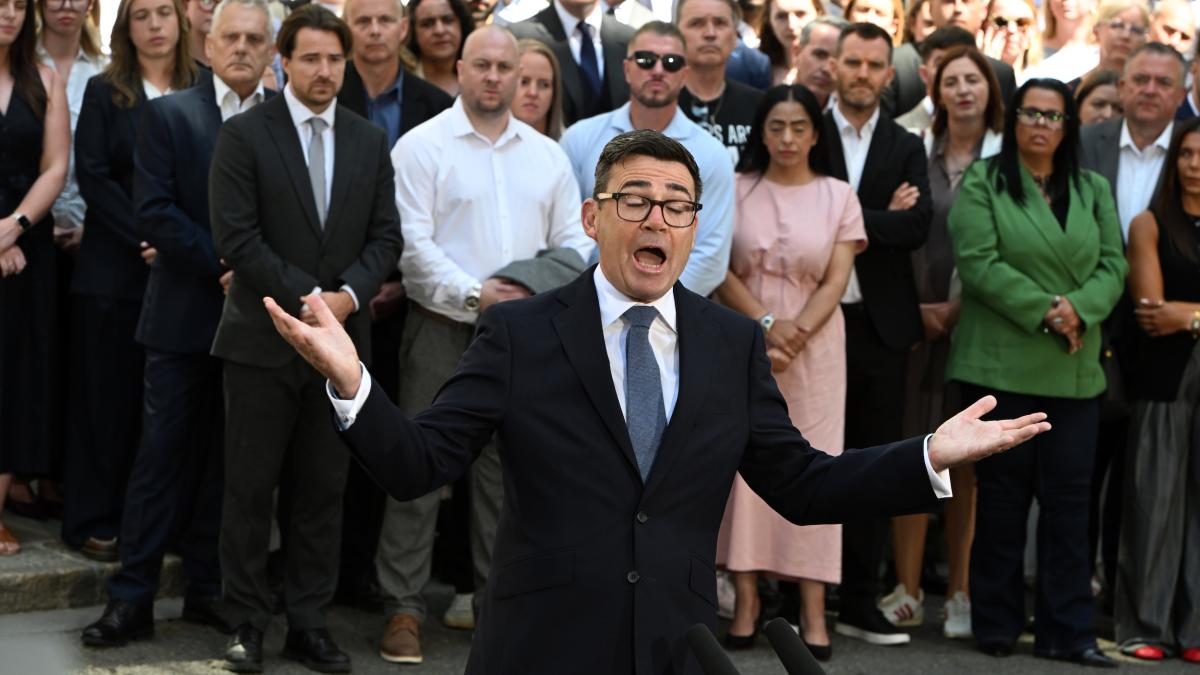
Andy Burnham, the former Mayor of Greater Manchester and a Labour Party member, has officially been sworn in as the UK's seventh Prime Minister in a decade, taking up residence at 10 Downing Street. This change in power not only marks the end of an era led by former Prime Minister Keir Starmer, who brought the Labour Party back to power, but also signifies that the UK political scene is about to undergo a potentially profound structural change: stronger local empowerment (Devolution) and the 'Rise of Northern England.'
A political leader from the North who advocates for bidding farewell to the 'Greater London Spirit,' his municipal experience helped him gain the nomination of hundreds of party members and successfully become the Prime Minister. The newly elected Labour MPs also have high hopes for Burnham. However, the UK government has long faced structural financial problems, and there are limited options for economic stimulus. At the same time, Labour Party factional infighting often becomes apparent during election losses, and Burnham will face many constraints if he is to continue in power over the next three years and produce results.
Burnham's Political Experience and 'Manchesterism'
From 2001 to 2017, Burnham served as the Member of Parliament for Leigh in Greater Manchester and held key cabinet positions such as Chief Secretary to the Treasury, Culture Secretary, and Health Secretary during Gordon Brown's Labour government in the 2000s. After the Labour Party lost power in 2010, Burnham ran for party leader twice but lost to Ed Miliband and the far-left Jeremy Corbyn.
After two failed attempts to become party leader, Burnham decided in 2017 to 'go local' and ran for Mayor of Greater Manchester, winning the election. His political charm lay in successfully shaping the image of a 'northern working-class spokesman' during his tenure as mayor, washing away his elite image of being a Cambridge University graduate and having served as a minister in London. The political ideology he advocates is called 'Manchesterism,' which he defines as 'business-friendly socialism.'
One manifestation of 'Manchesterism' is Burnham's decision to bring buses under municipal ownership and integrate the bus, tram, and regional train networks into the 'Bee Network' public transportation system, unifying ticket prices and visual identification. The Manchester City Government grants exclusive operating rights to private bus companies to maintain profitability, allowing citizens to enjoy affordable ticket prices. During the Wuhan pneumonia pandemic, he publicly opposed the Conservative Party's national government's lockdown policy on camera to ensure the survival of businesses. Burnham's decisive action to 'stand up to London' for the sake of the locality, and his skill in using emotionally charged language, create a stark contrast with Keir Starmer's lukewarm bureaucratic style as a lawyer, earning him the reputation as the most politically charismatic communicator in the Labour Party.
From 'Being Silenced' to 'Crowned'
After the Labour Party returned to power in 2024, Starmer's policies diverged from the election manifesto in multiple areas, most notably in the abandonment of the 'Two-Child Benefit Cap' and the reduction of the 'Winter Fuel Payment,' putting newly elected backbenchers under significant pressure during grassroots campaigns.
Even as calls for change within the party grew louder, Burnham's path to the leadership was not smooth. At the beginning of this year, Starmer, using his control over the Labour Party National Executive Committee (NEC), brutally silenced Burnham's candidacy for the Gorton and Denton by-election and his path back to Parliament with an 8-1 vote. This move led to Angela Rayner, who had served as Deputy Prime Minister in Starmer's cabinet, to publicly express her dissatisfaction, while the voters of Gorton and Denton punished the Labour Party under Starmer's administration by electing a non-Labour representative to Parliament for the first time in nearly a century. However, as pro-Beijing former British Ambassador to the US Peter Mandelson was exposed for leaking confidential documents related to American pedophile Jeffrey Epstein and subsequently arrested, Starmer's reputation took a significant hit. The Labour Party also suffered a devastating loss of 1,498 seats in the May local elections, losing control of 38 councils. Just as the Labour Party was brewing a coup against Starmer, Josh Simons, the MP for Makerfield in the Greater Manchester metropolitan area, voluntarily resigned in mid-May to 'pave the way' for Burnham. At this point, Starmer and the NEC no longer had the confidence to block Burnham. On June 18, Burnham won the by-election with 54.8% of the vote, defeating the Reform Party representative by approximately 20 percentage points, and successfully returned to Parliament.
On the same day that Burnham traveled to London to be sworn in as a Member of Parliament, Starmer announced his resignation as Prime Minister. The Labour Party parliamentary group then triggered the watermelon effect, with potential leadership rival Wes Streeting, the former Secretary of State for Health, quickly announcing his withdrawal and shifting his support to Burnham's premiership. Chancellor of the Exchequer Rachel Reeves even posed for a group photo with hundreds of Labour MPs and Burnham in Parliament, rather than standing by Starmer at Downing Street to offer support or condolences. Some British media described Burnham's premiership as a 'coronation,' while his Manchester achievements became the 'savior' that many newly elected MPs and grassroots Labour members commonly looked forward to.
Governance Cannot Rely on Charisma Alone: A Thorny Path to Re-Election in 2029
Burnham has promised to break the monopoly of national resources by the 'Greater London Spirit.' His new policy blueprint is highly anti-London in color.
First, he proposed the establishment of a Northern Prime Minister's Office (No. 10 North) to accelerate the publicization of water and electricity services, speed up the reindustrialization and urban renewal of the North.
Second, he is inclined to restart the northern section of the second high-speed rail (HS2) connecting Birmingham and Manchester, which was cut by the Conservative Party.
Third, he plans to shelve the controversial third runway project at London Heathrow Airport for more than a decade and use the budget for northern infrastructure.
Although many Labour MPs have high hopes for Burnham's government, governance cannot rely on charisma alone. Burnham's government faces the same difficulties as when Starmer took office. The UK's public debt and interest costs remain high, making it difficult to borrow to stimulate the economy. Closer cooperation with the EU is on the horizon, but related conditions such as immigration and market opening are likely to be box office poison for working-class voters in northern England. Within the party, Burnham's inclusion of Miliband in the cabinet means he must maintain Miliband's zero-carbon target to maintain the alliance, making it difficult to develop North Sea oil fields to reduce prices. At the same time, he must be wary of the Blairite faction using potential tax increases and the transfer of power away from London for political manipulation, attempting to undermine the cabinet's executive power and reputation.
How far Burnham can go depends on whether he can break away from the factional division of spoils during Starmer's administration, appoint his confidants, and produce results in a short period. During Starmer's tenure, he appointed representatives from different factions to cabinet positions but brought the party's nearly 'toxic' factional politics to the surface, then each time suppressed it with an iron party discipline. However, many factions that are dissatisfied with Starmer are not vegetarians. For example, they may use legislative procedures to obstruct the Prime Minister's Office schedule. This also explains why in Starmer's final days, there were almost no party friends willing to openly support him, preferring the scene of a big photo with Burnham.
With only three years left until the next general election, it is a thorny path for the Burnham government to produce results that the British people can feel under various constraints, using his Manchester experience, so that a group of newly elected MPs can support him until the next general election.
FACT BOX
- Source: PR Times
- Category: 政治