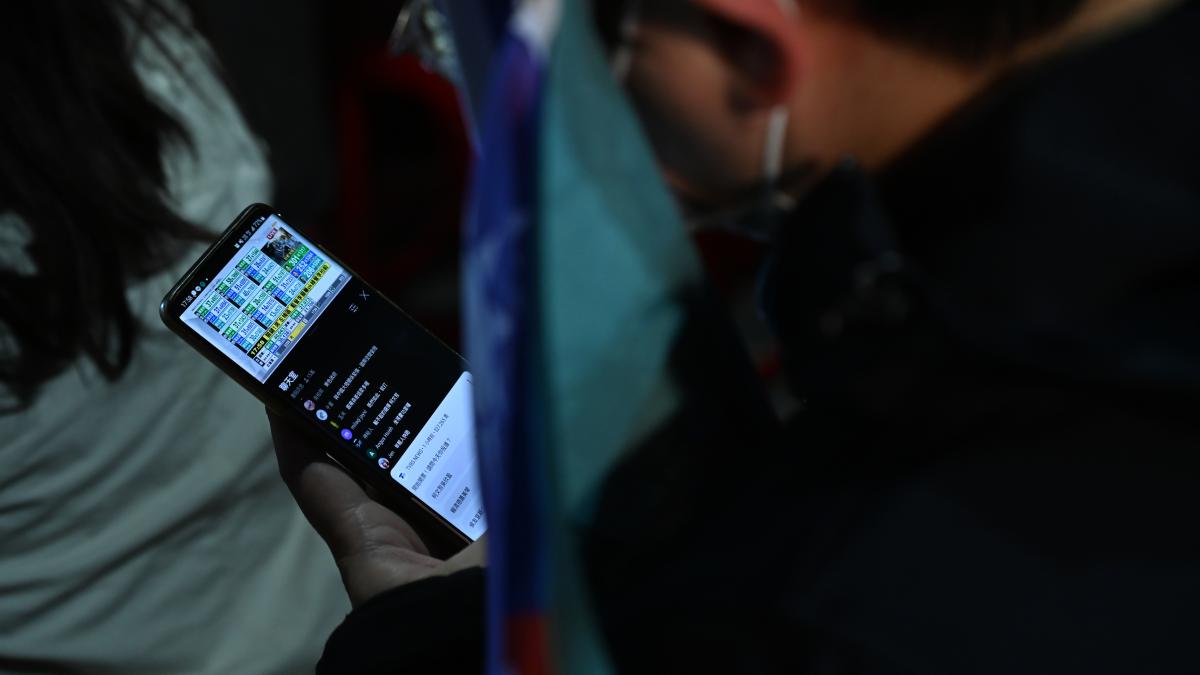
The 2026 'Urban Resilience Drill' will take place from August 10 to 13, featuring for the first time a simulation of mobile network disruptions during war or major disasters. In northern and central Taiwan, a 30-minute 'mobile communication slowdown' will be implemented on the drill days, during which mobile connectivity will be limited to voice calls and SMS only.
In response, Chi Chi-Hung, Chairman of Saint Yang Technology, stated that this level of simulation is insufficient to reflect actual wartime conditions, comparing it more to poor signal quality than a real crisis. He proposed an alternative exercise: a '5-minute nationwide disconnection from overseas internet,' arguing that only such a test could expose Taiwan’s true systemic vulnerabilities.
Chi posted on Facebook criticizing the National Communications Commission (NCC)'s plan. This year’s drill will slow down internet speeds for 30 minutes in 14 counties and cities—central Taiwan on August 10 and northern Taiwan on August 13. While internet access may become severely limited or even unavailable, voice calls, SMS, and emergency alerts will remain functional. Officials have reassured the public: 'There is no need to panic; services will return to normal after the drill.'
Chi questioned the realism of this scenario: 'How is this like war? It’s more like poor signal during a typhoon.' Anyone who has lived in Taiwan knows the experience of struggling for network access on New Year's Eve, when a million people try to send a single LINE sticker that takes three minutes to load. That too is a 30-minute period of 'severely degraded network speed.' To issue public notices, divide regions, and make headlines over this, branding it as the 'first-ever wartime internet disruption drill,' is, in his view, disrespectful to the word 'war.'
He pointed out that southern Taiwan is excluded from the drill because it coincides with the 'Wan An Exercise,' which overlaps with stock market trading hours. Authorities cited concerns about financial market impact as the reason for excluding the south. Chi sarcastically asked: 'Will the enemy kindly wait until after market close before cutting the submarine cables during actual war?'
This, he said, reveals the first problem: while we claim to prepare for war, every action is taken under the premise of 'not causing real pain.' Such drills do not prepare for worst-case scenarios but instead confirm how mild a situation we can still tolerate—exactly the opposite of genuine preparedness.
The government has acknowledged that 'in war, submarine cables will be cut.' In 2023, two submarine cables near Matsu were accidentally severed by Chinese vessels, forcing the region to rely on microwave backup for over 50 days, with internet functionality nearly unusable. This was not a simulation—it was real. So why does the drill simulate a 'cables intact but bandwidth limited' scenario instead?
Chi proposed a new drill: 'At 6 a.m., simulate a 5-minute complete disconnection of Taiwan from overseas internet—not just slowdown, but a total block on all outbound traffic. Domestic networks remain, but any packet attempting to leave the island times out.' We currently have no idea which systems would fail and which would survive. That’s precisely why such an exercise is needed.
'This 5-minute blackout would shock many,' Chi warned. The first to be impacted would be services assumed to be 'local.' Take LINE, the nervous system for over 20 million Taiwanese, whose main servers are in Japan and South Korea. What happens when international links are severed? It might crash entirely, experience delays, fail to send stickers, or partially function—but no one can guarantee.
Look inside offices: countless companies store critical data in the cloud, relying heavily on overseas data centers and cross-border networks. If submarine cables are cut, entire companies might be unable to access email, open files, or log into systems. Many executives still believe 'being on the cloud is safe,' unaware that the 'pipe' to that cloud runs under the sea. The more thoroughly a company relies on the cloud, the greater its risk when overseas connections fail.
Even this basic issue remains a guessing game. Simply turning this question into a clear 'yes' or 'no' would justify the entire drill’s cost, as it forces us to confront a long-avoided question: should wartime communications depend so heavily on commercial apps whose core infrastructure lies overseas?
The second major impact would be on payments. Credit card authorizations heavily rely on international clearing systems like Visa and Mastercard. When overseas links are severed, transactions depending on cross-border clearing could fail. Mobile payments linked to credit cards would suffer too. More resilient alternatives include cash, stored value on EasyCards, or closed-loop local transfer systems—suddenly making convenience store clerks experience 'resilience gaps' firsthand.
A more insidious phenomenon could mislead people into thinking 'it’s not that bad.' Websites using Cloudflare or Akamai may still load cached static content in Taiwan, but any action requiring login, API calls, or fetching new data from origin servers will fail. The screen may appear connected, but nothing functional works. This 'visible but unusable' state is actually closer to real wartime conditions than a complete blackout.
After 5 minutes, the internet recovers. But the real output of the drill would be the list of services that failed, businesses that halted, and government systems secretly hosted on overseas clouds—finally forcing accountability for long-ignored dependencies.
Cloud providers must first clarify to customers: if Taiwan’s submarine cables are fully severed, will your email still work? How is traffic rerouted? If the answer is 'via satellite,' then satellite systems must be ready. Meanwhile, the long tail of listed companies and supply chain backbone firms—have they ever run such drills? Has anyone asked them, 'What happens when overseas links are cut?' Most likely not.
Small and medium enterprises aren’t exempt either. Is your inventory system in the cloud? Does your payment processing run internationally? Where are your customer records stored—on a foreign vendor’s server? During those 5 minutes, can your business still operate? No one will answer for you—you must prepare yourself.
Chi acknowledged that a 5-minute morning blackout would cause chaos: meetings couldn’t start, orders couldn’t be placed, transactions failing at convenience store counters. There would be complaints, news coverage, and legislative inquiries. But that, he insists, is what preparedness should look like. Real drills must step on toes, expose hidden dependencies, and break systems that falsely believe they’re secure.
'If after a drill, everyone emerges unscathed, happy, and declaring success, then it likely measured nothing.'
FACT BOX
- Source: PR Times
- Category: News
- Organizations: Saint Yang Technology / NCC / Visa
- Products / services: LINE