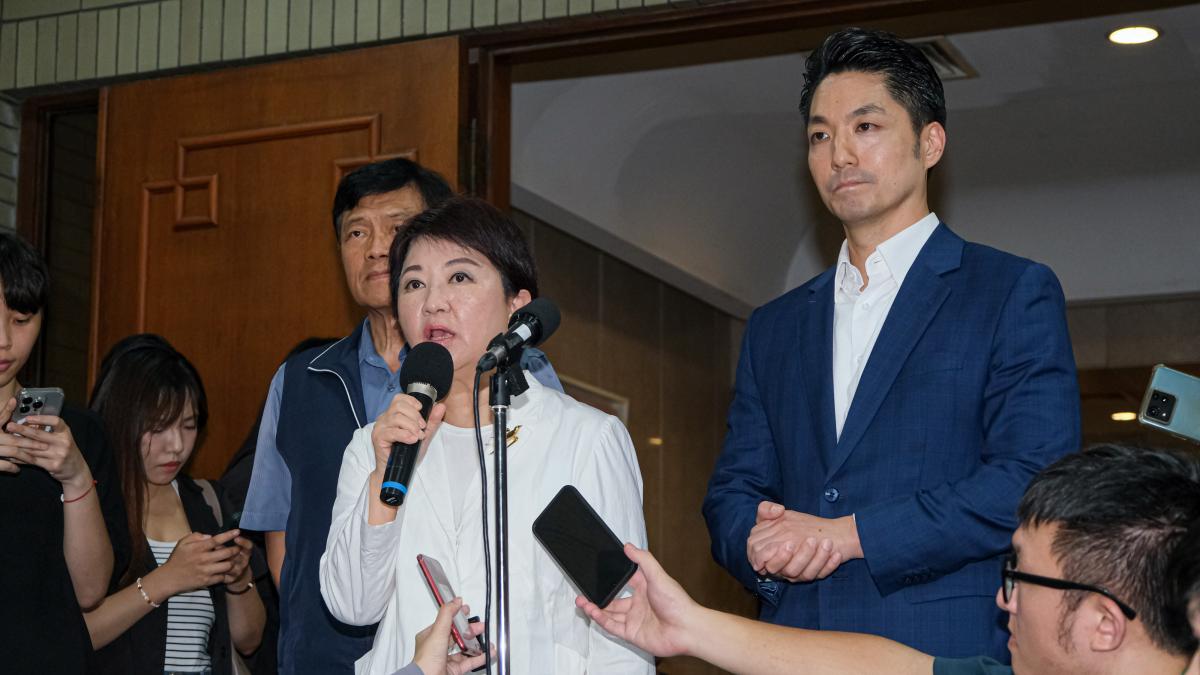
On the 21st, Chen Shih-chung, Minister without Portfolio of the Executive Yuan, convened a meeting with the mayors of Taiwan's six major cities to discuss the Executive Yuan's proposed amendments to the Food Safety Act. After the meeting, Taipei Mayor Chiang Wan-an criticized the draft legislation, stating that it still requires significant refinement. Taichung Mayor Lu Hsiu-yen also expressed concern, noting that the Ministry of Health and Welfare (MOHW) suddenly presented numerous items at the last minute, leaving other ministries and local governments unable to conduct thorough reviews. 'The legislative revision process should not be so rough,' she said. 'We are also very troubled.'
Chiang Wan-an explained that local governments had actively participated in the Food Safety Act revision discussions and submitted their recommendations. Earlier that morning, Mayor Lu had convened an online meeting with local governments to consolidate their input, which was then presented to the Executive Yuan for reference. However, Chiang emphasized that the draft legislation provided by the Executive Yuan still requires more detailed revisions. He added that if the executive branch had better integrated its proposals beforehand, the legislative process could have been more efficient and expedited.
Mayor Lu expressed appreciation for Chen Shih-chung's initiative in inviting the six metropolitan mayors but revealed that upon entering the meeting, all mayors were surprised by the MOHW's sudden presentation of numerous documents. Not only local governments but also other central ministries were unaware of the content. The Ministry of Justice raised many questions, indicating that the Executive Yuan's cabinet ministries had not fully reviewed or coordinated the materials. Lu criticized the legislative process as overly hasty and lacking proper inter-ministerial coordination.
Lu pointed out that local governments had previously received certain materials from the central government, but on the 21st, many new and different items were presented, making it difficult to review everything on short notice. 'We are also very troubled,' she repeated. She urged that legislative revision is a critical matter and recommended that central ministries first reach a consensus and jointly develop a unified draft. This consolidated version should then be sent to local governments for further discussion. Presenting numerous last-minute items risks overlooking important details.
Lu acknowledged the good intentions behind the meeting but stressed that the central government was unprepared. Internal disagreements among ministries and the absence of a unified cabinet draft indicated insufficient preparation. She suggested that the central government should first integrate its proposals, prepare adequately, and provide a new version for local governments to study. Only then can the law be revised comprehensively and effectively. Proceeding with such poor preparation, she warned, is 'very dangerous.'
Chen Shih-chung, on the other hand, stated that the meeting achieved consensus on the overall direction of the amendments. Key topics included source management, process management, and digital governance. The seventh article, concerning monitoring plans, risk classification, risk assessment, and risk control, received significant attention. These elements may need further elaboration in the main legislation or future subordinate regulations. The central government plans to issue announcements requiring stricter self-management for high-risk or large-scale businesses, while smaller operators will follow established guidelines.
Regarding allegations of internal disagreement, Chen clarified that differences in legal phrasing do not reflect policy disagreements among ministries. Originally, the plan was to delegate approval and filing responsibilities to local governments, but they expressed concerns about capacity. As a result, the central government retained these functions. Since the original law did not include terms like 'approval' or 'filing,' the Legal Affairs Committee noted that the drafting specifications would naturally differ—a technical issue, not a conflict of opinion.
FACT BOX
- Source: PR Times
- Category: News