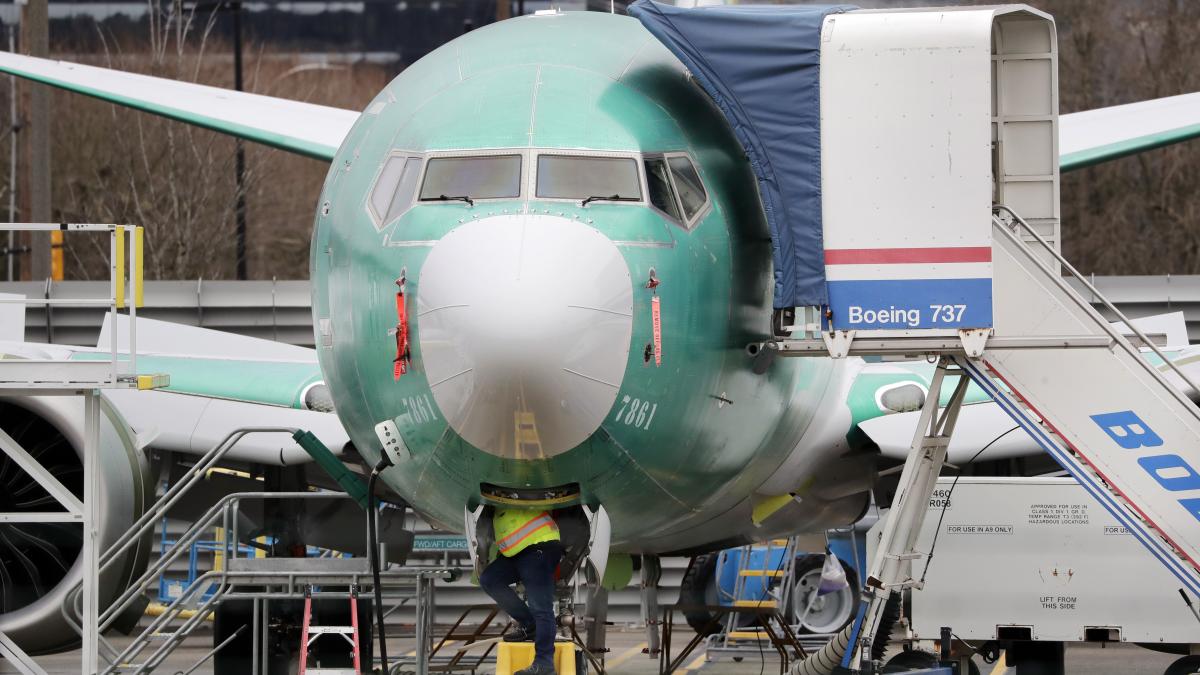
The United States Court of Appeals for the Fourth Circuit ruled on July 20 to vacate class certification in a shareholder class action lawsuit against Boeing. The lawsuit alleges that Boeing prioritized profits over flight safety for years and made misleading public statements exaggerating its commitment to aircraft safety, causing investors to suffer losses based on false information. The court determined that the plaintiffs failed to present a sufficient and consistent methodology to calculate common damages across all shareholders, thus failing to meet the legal requirements for class certification.
This decision, issued by the 4th U.S. Circuit Court of Appeals, sends the case back to the lower court for reconsideration. The previously approved class certification has been revoked, marking a significant procedural shift in the litigation.
'Door Plug' Suddenly Detaches, Shocking the Global Aviation Industry
The case stems from the Alaska Airlines Flight 1282 incident on January 5, 2024. On that day, shortly after takeoff from Portland, Oregon, a 'door plug'—a panel sealing a deactivated emergency exit—on a Boeing-manufactured 737 MAX 9 aircraft suddenly detached, causing rapid cabin depressurization.
Following the incident, the flight crew immediately declared an emergency and successfully returned to Portland International Airport for a safe landing. The event resulted in minor injuries to seven passengers and one flight attendant. While no fatalities occurred, the incident shocked the global aviation industry and reignited intense scrutiny over the safety of the 737 MAX series.
Subsequent investigation by the National Transportation Safety Board (NTSB) revealed that four critical bolts required to secure the door plug were not installed, allowing it to detach during flight. This finding has raised questions about potential major deficiencies in Boeing’s production processes, quality control, and safety inspection oversight.
The Boeing shareholders who filed the lawsuit are led by the Rhode Island State Treasurer. They argue that after the two 737 MAX crashes in 2018 and 2019, Boeing continued issuing misleading public statements, claiming the company had fully improved its safety culture and placed flight safety as its top priority. In reality, however, the company allegedly continued to prioritize profit and production efficiency over safety.
Longstanding Safety Controversies Surrounding the 737 MAX Series
Plaintiffs assert that Boeing’s public statements artificially inflated market confidence in the company, driving up its stock price and leading investors to purchase shares based on false information. After the 2024 Alaska Airlines incident, the market reassessed Boeing’s safety management capabilities, causing its stock price to drop and resulting in investor losses. Shareholders therefore argue Boeing should be held liable for compensation.
This shareholder lawsuit is rooted in the long-standing safety controversies surrounding the 737 MAX series. In October 2018, Lion Air Flight 610, and in March 2019, Ethiopian Airlines Flight 302, both crashed due to flight control system issues, resulting in 346 fatalities. These accidents led to a global grounding of the 737 MAX fleet, and Boeing faced multiple criminal, civil, and regulatory investigations.
In March 2025, U.S. District Judge Leonie Brinkema in Alexandria, Virginia, had previously ruled that investors who held Boeing stock between January 7, 2021, and January 8, 2024, could form a class action to seek damages from Boeing.
However, the appeals court has now overturned that decision, ruling that while plaintiffs claim shareholders were uniformly misled, they failed to present a common method to calculate damages applicable to all investors—thus failing to meet the legal standard required for class certification. The case is now remanded to the lower court, where Judge Brinkema will proceed based on the appeals court’s guidance.
Class Action System Enhances Judicial Efficiency and Collective Recourse
As of now, the legal team representing shareholders has not commented on the court’s ruling. Boeing and its legal team have also not immediately responded to media inquiries.
The class action system in U.S. law is designed to allow numerous individuals affected by the same event to file a joint lawsuit, reducing individual litigation costs while enhancing judicial efficiency and collective recourse. If class certification is denied, plaintiffs may have to pursue individual lawsuits, increasing legal costs and potentially discouraging some investors from seeking compensation.
FACT BOX
- Source: PR Times
- Category: News
- Organizations: Alaska Airlines / Lion Air / Ethiopian Airlines
- Products / services: 737 MAX