Taiwan's external communications heavily rely on several undersea cables, which have recently suffered frequent abnormal damages suspected of involving gray-zone tactics, drawing significant attention to the resilience of Taiwan's communication infrastructure. Amid this backdrop, the Legislative Yuan passed the amendment to the Telecommunications Act on the 21st, relaxing regulations on the nationality of chairpersons and foreign ownership limits for satellite communication network operators. Going forward, with approval from the competent authority, operators may be exempted from current legal restrictions, removing barriers for international satellite operators like Starlink.
Starlink, led by Elon Musk, founder of the U.S. space exploration company SpaceX, has played a critical role as a communication backbone during the Russia-Ukraine war and is already providing services in over 100 countries worldwide. However, its service launch in Taiwan has been delayed due to restrictions under Taiwan's current laws. According to Article 36 of Taiwan's Telecommunications Act, public telecommunications network operators must be joint-stock companies, with chairpersons required to hold Republic of China nationality. Additionally, the total number of shares directly held by foreigners must not exceed 49%, and the combined direct and indirect holdings must not exceed 60%.
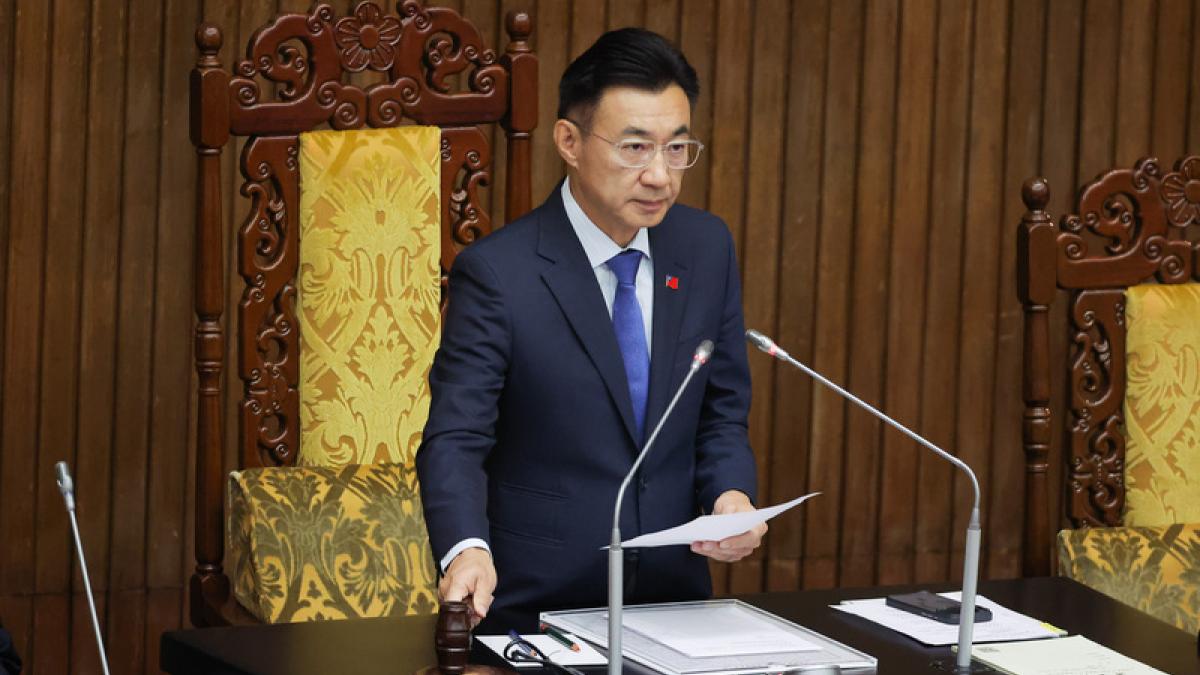
However, legislators from the three major parties in the Legislative Yuan jointly proposed the amendment, which underwent clause-by-clause review by the Transportation Committee and reached a consensus. The bill passed its second and third readings today, with Legislative Yuan Vice President Chiang Chieh-chien presiding over the session and announcing the passage of the amendment. According to the third-reading version, applicants seeking to establish public telecommunications networks using satellite communication technology may, upon approval by the competent authority after review of seven criteria, be exempt from the current restrictions on the chairman's nationality and foreign ownership limits (49% direct, 60% total).
The third-reading text specifies that the National Communications Commission (NCC) shall approve applications after reviewing national security, public telecommunications network security, use of telecommunications resources, overall planning and promotion of telecommunications networks, development of the telecommunications industry and market, and other public interest considerations. The amendment also stipulates that the NCC shall establish detailed regulations regarding application procedures, conditions, required documents, review criteria, and other related matters.
Additionally, the Legislative Yuan adopted two supplementary resolutions during today's amendment. The first resolution notes that direct satellite connectivity for mobile phones and devices involves major public interests, including substitution of mobile communication services, transmission of user communication and location data, cross-border network governance, execution of communications surveillance, information security management, and market competition order. Since the NCC has not yet established a complete regulatory framework, national security review mechanisms, cybersecurity standards, data governance requirements, communications surveillance cooperation obligations, disaster prevention and emergency communication mechanisms, or fair market competition rules, the resolution urges the NCC to widely solicit opinions from industry, government, and academia and reach consensus before formulating relevant measures, prior to finalizing policy directions and legal systems.
The second supplementary resolution states that the amendment to Article 36 of the Telecommunications Act significantly relaxes foreign investment in Taiwan's telecommunications market, which will impact Taiwan's regulatory system, national security review mechanisms, cybersecurity standards, data governance requirements, communications surveillance cooperation obligations, and disaster prevention and emergency communication mechanisms. Therefore, it demands that the NCC make the establishment of satellite ground receiving stations and the requirement for data to be stored within Taiwan's territory key considerations in the approval process.
FACT BOX
- Source: PR Times
- Category: News
- Organizations: SpaceX