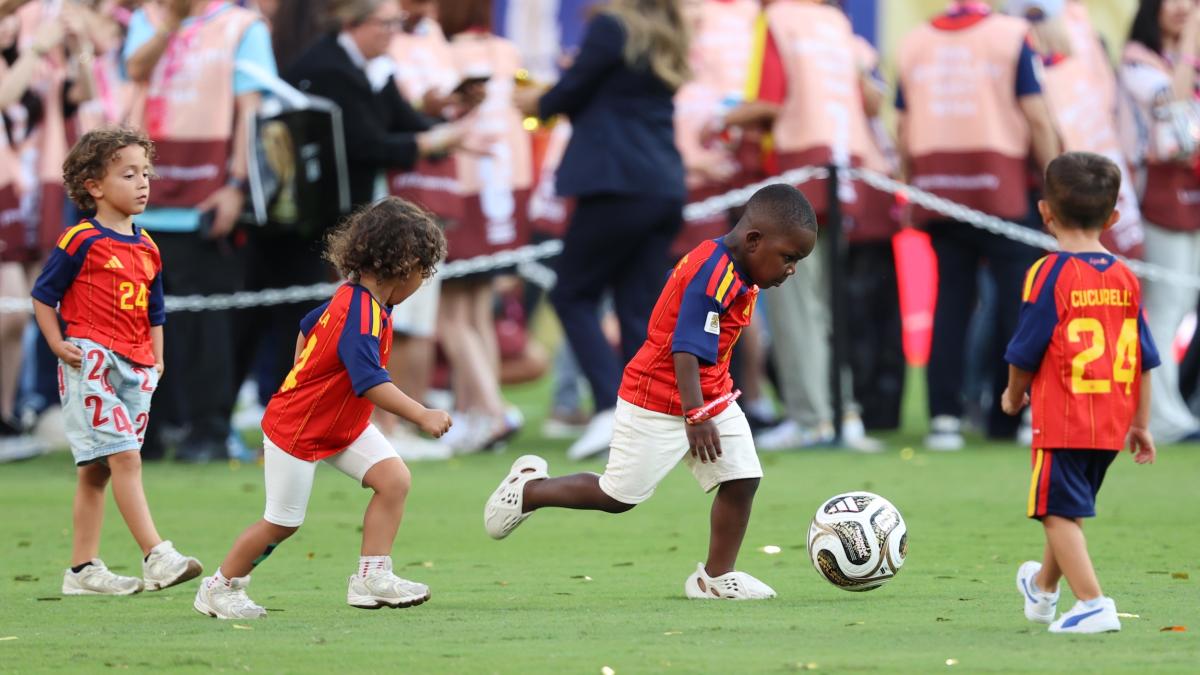
FIFA President Gianni Infantino previously promised that the 2026 World Cup would become 'the biggest event in human history.' Infantino compared the tournament, hosted across the United States, Mexico, and Canada, to 104 'Super Bowls' played over one month. It was a bold declaration—did it deliver?
On July 19, 2026, Spain defeated Argentina to win the World Cup. (AP)
For the first time in World Cup history, 48 teams participated, with Curaçao, Cape Verde, Jordan, and Uzbekistan making their debut appearances. But did this dilute the quality of the competition?
Additionally, the mandatory three-minute 'hydration breaks,' enforced regardless of weather conditions, became a point of contention. These breaks allowed broadcasters to insert advertisements, raising concerns about commercialization.
High ticket prices sparked major controversy—did they deter fans? Despite concerns, FIFA reported an average stadium occupancy rate of 99.7% after the quarterfinals, with a record-breaking total attendance of 6,527,410.
The World Cup was politicized even before kickoff, with visa issues and Iran's participation. Former U.S. President Donald Trump intervened by overturning Folarin Balogun's red card.
Pierluigi Collina, FIFA's Head of Refereeing, launched a campaign against time-wasting and introduced rule changes to speed up throw-ins, goal kicks, and substitutions. The average match duration dropped from 101 minutes 22 seconds in 2022 to 96 minutes 24 seconds in 2026, while effective playing time increased slightly from 58 minutes 3 seconds to 58 minutes 15 seconds—raising the ratio from 57.4% to 60.4%.
The group stage delivered compelling narratives. Cape Verde, a small Atlantic island nation with only 530,000 people, drew with Spain, Uruguay, and Saudi Arabia, finishing second in their group. Curaçao, despite a 7-1 loss to Germany, earned a draw against Ecuador. The Democratic Republic of Congo drew with Portugal and advanced.
With 72 matches eliminating only 16 teams, and eight third-placed teams qualifying, some group stage matches—like Australia vs. Paraguay and Austria vs. Algeria—ended in mutually beneficial draws, raising fairness concerns.
The knockout stage brought drama: Cape Verde pushed Argentina to extra time, losing 3-2. This meant Cape Verde held two eventual finalists to draws within 90 minutes.
FIFA adjusted seeding rules to prevent top teams from meeting early. Argentina, England, France, and Spain were placed in separate halves. A bracket reshuffle ensured Argentina and Spain could only meet in the final. Without this, England would have faced France, and Argentina would have played Spain in the semifinals.
Hydration breaks, justified as player welfare measures, became tactical timeouts. Coaches used tablets to relay strategies. In the U.S., a 30-second ad slot during World Cup broadcasts cost $200,000–$750,000, making it a lucrative revenue stream.
UEFA has ruled out adopting hydration breaks, but future World Cups are likely to retain them.
FIFA earned significant revenue through its secondary ticketing platform, charging a 30% commission per transaction. However, it faced subpoenas from New York and New Jersey attorneys general over ticket pricing, sales methods, and seat accuracy.
Fans were initially banned from bringing water bottles into stadiums but FIFA reversed the policy after backlash. Transportation costs to New Jersey and Boston were also reduced after public outcry.
Political issues emerged early: Somali referee Omar Al-Taan was denied entry at Miami Airport. Iran's team was granted entry only 24 hours before and after each group match. After Iran's elimination, U.S. Homeland Security Secretary Mark A. Morgan said he 'jumped for joy,' sparking criticism.
FACT BOX
- Source: PR Times
- Category: Event
- Organizations: FIFA / Fox Sports / UEFA