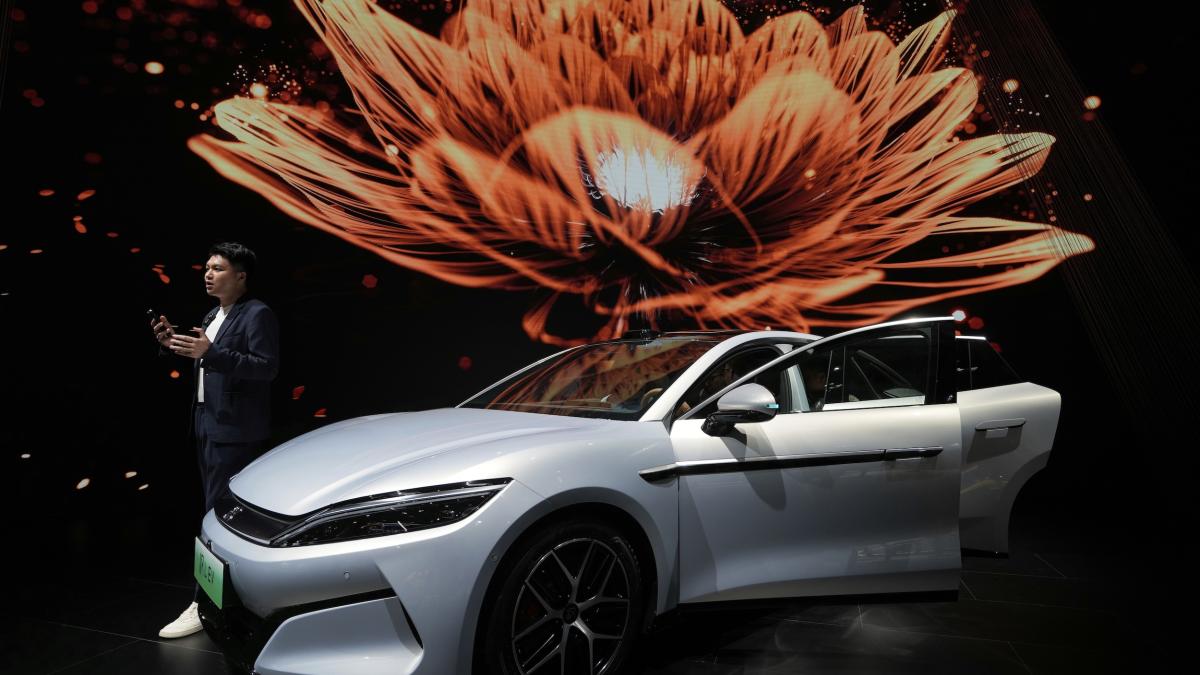
Ford Motor's Executive Chairman said Tuesday (July 14) that the U.S. auto industry must prepare to compete with highly competitive Chinese automakers and anticipate that these companies will eventually enter the U.S. market.
"We have to compete head-on with China," Bill Ford, the automaker's Executive Chairman, said Tuesday at an Axios event in Washington, D.C. "We can't count on keeping them out forever. We have to be able to beat them on their own turf."
Ford made these remarks as a bipartisan bill aiming to effectively exclude Chinese-made vehicles from the U.S. market advances in Congress. Ford Motor has stated it supports the legislation and its goal of protecting the U.S. industrial base.
Backed by massive state subsidies and advanced technology, Chinese automakers have already replaced competitors in many global markets but are currently blocked from the U.S. market due to tariffs and national security restrictions.
A Senate committee voted on the anti-China auto bill on Wednesday (July 15). A similar bill is pending in the House of Representatives.
Nevertheless, Ford said U.S. automakers must prepare for the possibility that Chinese automakers may eventually find a way in. Ford Motor is preparing to launch a new $30,000 all-electric compact pickup truck designed to compete with the affordable electric vehicles offered by Chinese automakers.
Ford's comments highlight the widespread anxiety across the U.S. auto industry about the rise of Chinese automakers. Over the past year, companies like BYD and Geely have seen their global exports surge and rapidly gain market share in key regions. According to data from the China Passenger Car Association, Chinese automakers' exports of electric and hybrid vehicles more than doubled in June, reaching approximately 877,000 units.
Existing restrictions on Chinese automakers have already created a "casualty" in the U.S.: electric vehicle maker Polestar. In June, the company announced it would cease selling vehicles in the U.S. due to a ban on Chinese vehicle connectivity software.
The company, which is controlled by Zhejiang Geely Holding Group, said it had sought authorization from the U.S. Department of Commerce to continue sales under the regulation but was denied.
Volvo, also owned by Geely, received approval from Commerce Department officials in May to continue operations in the U.S.
While most automakers besides Tesla still struggle to profit from EVs, Ford's new truck is designed to compete with Chinese automakers on cost. The truck is being produced at a factory in Kentucky using a new "assembly tree" design that divides the vehicle into front, rear, and battery sections, assembling them at the end of the production line.
The assembly line is designed to eventually produce other models, including small sedans and commercial vans. Ford's compact electric pickup is scheduled to go on sale in 2027.
The automaker is already facing competition from Chinese manufacturers in other regions. In Europe, Ford is partnering with French automaker Renault to produce two new small electric vehicles for that market.
Bill Ford, the great-grandson of company founder Henry Ford, said Tuesday (July 14) that U.S. strategy must include an industrial policy to maintain competitiveness against major automotive centers like China, Japan, and South Korea. He added that such a policy must withstand political shifts caused by elections.
"Our planning cycles are longer than political cycles," Ford said. "I think we need a bipartisan industrial policy—even if that sounds impossible today, we really do need it."
FACT BOX
- Source: PR Times
- Category: News