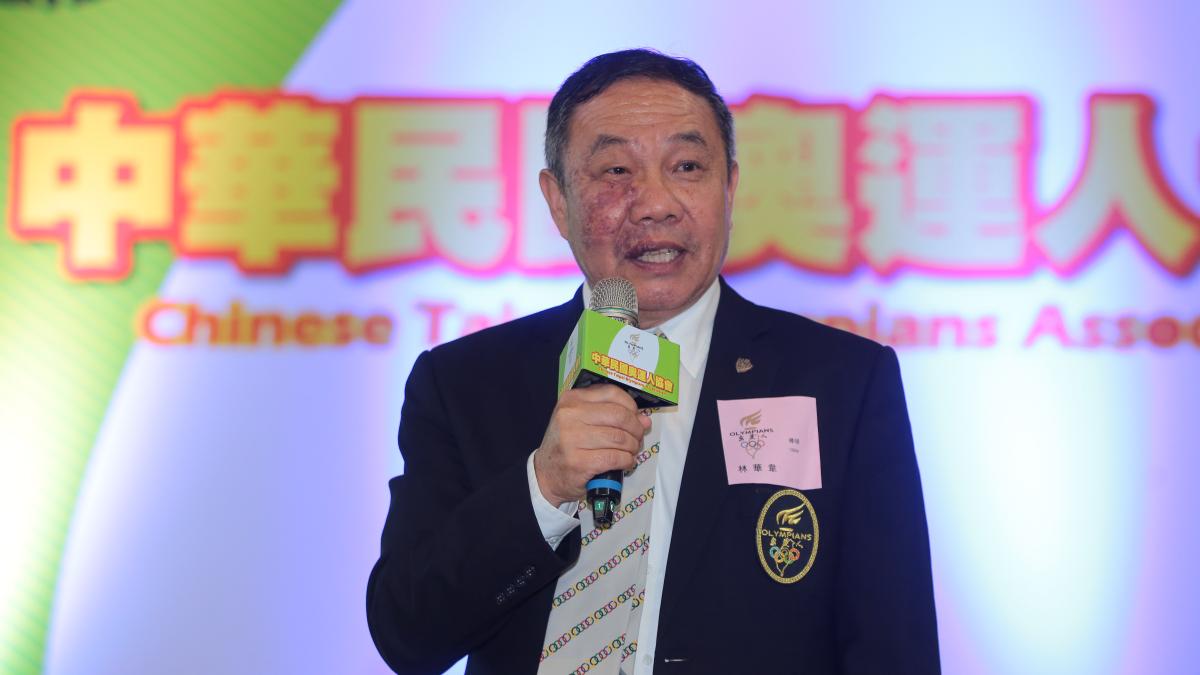
The 14th board election of the Chinese Taipei Baseball Association (CTBA) will be held on August 2. Incumbent Vice President Lin Hua-wei has publicly declared his candidacy for president. Media outlets often describe him as a veteran baseball figure, national team coach, former president of National Taiwan University of Sports (NTUS), and a member of the Baseball Hall of Fame, emphasizing his long-standing contributions to Taiwan's baseball scene. While Lin is undoubtedly experienced, his public image is far from positive. Fans commonly refer to him with the derogatory nickname 'Principal,' mocking the numerous scandals during his tenure at NTUS, where he was even dubbed the 'Tyrant of NTUS.' Despite his seniority, many fans believe he is unfit to lead the CTBA and hope he retires soon. Can there be reform and progress if board elections remain monopolized by the CTBC group? The CTBA holds significant influence in Taiwan. Traditionally, its president has been a business leader or political figure capable of mediating interests and securing resources. Lin Hua-wei is neither; he is a classic player-and-coach-turned-administrator. He has served as a CTBA selection and training committee member, convener, and has led national teams multiple times. Since 2018, he has been vice president. Given Lin’s lack of resource mobilization capability, the public naturally scrutinizes his performance in player selection and training systems. However, the CTBA has long faced criticism over national team selection, overseas player recruitment, coordination with professional teams, and decision-making transparency. The only widely recognized authority—the organization of top-tier international competitions—has already been handed over to the Chinese Professional Baseball League (CPBL), indicating that Lin, despite holding substantial selection power, has failed to resolve the CTBA’s persistent issues. This so-called 'election' merely represents a regression to the old 'Baseball Evil' clique’s backroom dealings. The CTBA’s core problem has never been a lack of veteran baseball figures, but rather the concentration of key decisions in the hands of a few, without transparent rules or accountable procedures. In 2018, Ko Ching-hsiang was elected CTBA president, with Lin Hua-wei, Yu Cheng-hsien, and Chao Shih-chiang becoming vice presidents, and Lin Tsung-cheng remaining as secretary-general. Ko publicly stated that the vice presidents and secretary-general were 'all on the same page.' In reality, Ko, Lin Hua-wei, and Lin Tsung-cheng formed the true core. Ko not only controls the CTBA but is closely tied to Lin Hua-wei and Lin Tsung-cheng: Ko serves as president of the Baseball Federation of Asia (BFA), Lin Tsung-cheng as BFA executive director, and Lin Hua-wei as BFA secretary. Under Ko’s leadership, top-tier events were delegated to the CPBL, while the trio focused on developing the China Baseball City League (CPB). Meanwhile, non-top-tier events like the Asian Games and grassroots baseball in Taiwan were seemingly neglected. When Asian Games preparations begin, professional players are often hastily recruited, causing frustration for teams and players and discouraging amateurs. As vice president, former selection committee member and convener, and trusted BFA secretary under the CTBC system, Lin Hua-wei has never publicly advocated for reforming the current administrative or selection systems. Instead, he is positioning himself to succeed with CTBC’s backing. If the existing administrative framework, selection mechanisms, and recruitment methods remain unchanged—and the board remains under CTBC control—what real change can Lin’s election bring? It is precisely this pattern—'changing the president while keeping the secretariat intact; changing titles but not systems'—that has turned the CTBA into 'Baseball Evil.' The Asian Games recruitment controversy highlights the flaws of the old system. The Asian Games is meant to be a platform for CPBL’s second-tier and amateur players. Yet, for major events, the CTBA habitually handles disputes through ad hoc communication and media statements. The secretariat claims that rosters are decided by coaching staff, and when teams voice concerns, they are told coordination is ongoing. The public only sees the final roster, not the decision-making process, nor are there detailed records to assign responsibility. The Nagoya Asian Games roster controversy exposed the long-term problems caused by the CTBA’s vague 'coordination.' Initially, the CTBA planned for each of the six CPBL teams to contribute one player, with the coaching staff targeting Fubon Guardians catcher Dai Pei-feng and TSG Hawks shortstop Tseng Tzu-yu. During discussions, both teams proposed alternative players based on roster needs and player conditions. Ultimately, neither Dai nor Tseng, nor the proposed alternatives, made the list. Fubon and TSG became the only teams without any players selected, while Uni-President Lions provided another catcher, Chang Hsiang. The CTBA initially stated that due to special circumstances at some teams, adjustments were made with coaching staff approval. However, Fubon and TSG later publicly stated they never refused to support the national team—they only offered alternative candidates. If the CTBA had insisted on the original picks, both teams would have complied. Upon hearing this, Lin Tsung-cheng expressed surprise, revealing that Dai was initially chosen for his international experience and Fubon’s depth at catcher, but after Fubon raised concerns, Uni-President was asked to provide another catcher. The real issue is no longer just about who was selected, but how the CTBA communicates with teams. If neither team explicitly refused, why were the original picks withdrawn? If teams only offered alternatives, why weren’t any accepted? If the CTBA believed teams were unwilling to release players, why was there no formal confirmation, written response, or clear deadline? Lin Tsung-cheng oversees administrative procedures, while Lin Hua-wei holds de facto decision-making power over selection. The botched Asian Games recruitment process shows that despite their seniority, these two figures are no longer fit for leadership. Reform should not be based on seniority, but on capability and vision. Lin Hua-wei has national team experience from his youth and served as national team coach through the 1990s—ideally, he should understand player development challenges. Yet after 20 years at NTUS, his tenure as Fubon Guardians general manager was marked by repeated losses. While not solely his fault, it reflects that Lin’s ideas, knowledge, and leadership have become outdated. His only support comes from the CTBC group and the old CTBA establishment, a power structure that worries fans. Where are the accountability systems and transparency measures to address chronic administrative inertia and recruitment chaos caused by the long-serving secretary-general? Lin appears indifferent to these issues. Taiwan baseball needs reform—no more hiding behind traditions or substituting seniority for performance. How can an outdated figure, elevated by entrenched old-guard forces and dependent on Ko Ching-hsiang’s patronage for resources, possibly lead the CTBA effectively? *Author is a sports professional.
FACT BOX
- Source: PR Times
- Category: News