As summer temperatures continue to hit record highs, Japanese workplaces are undergoing a 'dress code revolution.' To cope with extreme heat and energy price surges causing power shortages, the Tokyo Metropolitan Government is strongly promoting the 'Tokyo Cool Biz' energy-saving campaign, encouraging companies of all sizes to allow employees to ditch traditional suits and ties in favor of T-shirts, sneakers, or even shorts that expose both legs. However, this policy—primarily intended to enhance personal comfort and reduce electricity use—has, after several months of implementation, sparked a polarized gender debate within Japanese society, with many female employees criticizing that they are experiencing 'leg hair harassment'.
According to BBC, the policy was well-intentioned, launched in April by Tokyo Governor Yuriko Koike as an upgraded heat-relief measure. As early as 2005, during her tenure as Environment Minister, she vigorously promoted the 'Cool Biz' campaign, encouraging civil servants to go without ties and having then-Prime Minister Junichiro Koizumi lead by example. By 2026, facing the dual pressures of extreme climate and energy crisis, the Tokyo Metropolitan Government directly relaxed standards, allowing employees to wear shorts into the office.
Women Complain of 'Leg Hair Harassment'
However, this rule-breaking policy has stirred waves within Japan's conservative workplaces. According to a recent public opinion survey by Gorilla Clinic, 53.5% of respondents oppose wearing shorts to work in summer, while only 46.5% support the proposal. The core concern among opponents centers almost entirely on body hair exposure, with women showing significantly higher opposition than men, indicating female employees' notable resistance to directly viewing male colleagues' exposed legs.
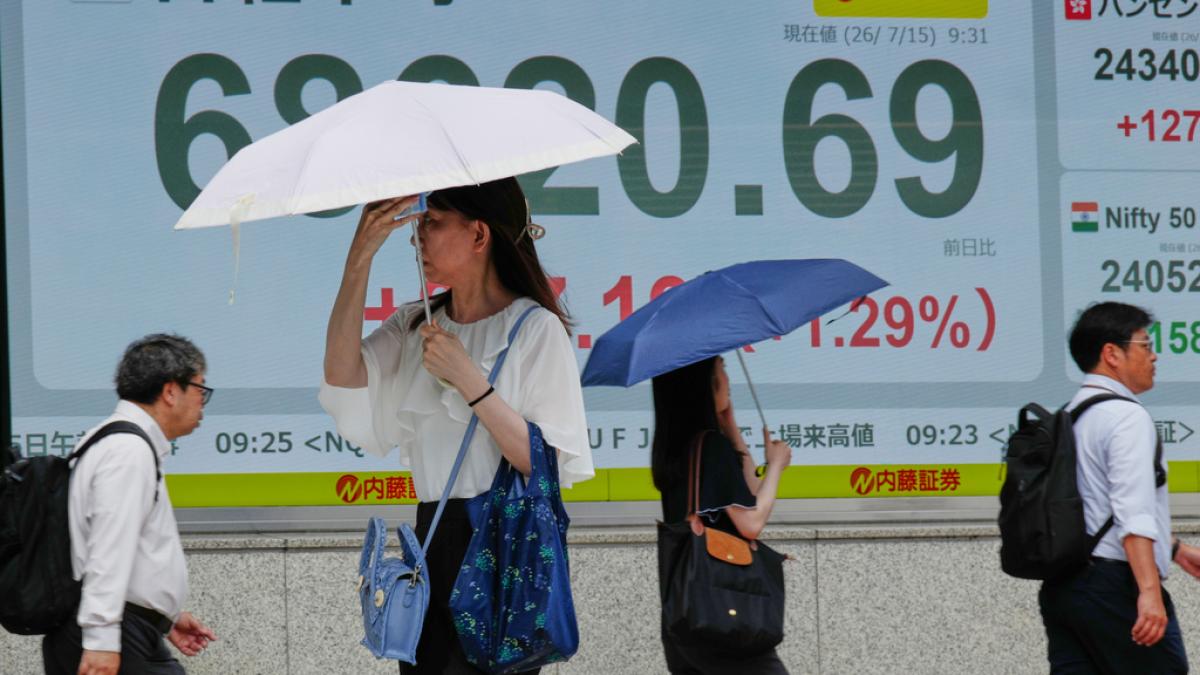
People and office workers on the streets of Tokyo, Japan. (AP)
Moreover, a new term 'leg hair harassment' (sunehara) has even emerged on social media, specifically referring to female employees' discomfort from being 'forced to view colleagues' leg hair' in the workplace. Additionally, many commentators point out that the policy creates serious gender inequality, as many female office workers are still expected to wear stockings when exposing their legs. In response to various controversies, the Tokyo Metropolitan Bureau of Environment stated that the government's original intention was to provide more choices for the public under harsh high temperatures, and as long as it does not cause discomfort to others, personal comfort should be respected.
Heat-Resistant Attire Fuels a New Wave in Medical Aesthetics
Faced with social scrutiny, many male office workers have begun to feel anxious about their leg hair. Dr. Akira Funatsu, director of Gorilla Clinic, pointed out that the number of male customers undergoing laser hair removal has significantly increased recently. Many now view 'removing leg hair' as a workplace etiquette when wearing shorts, hoping to avoid making their colleagues feel uncomfortable.
With the Japan Meteorological Agency defining temperatures exceeding 40 degrees as 'extreme heat days,' in addition to adjusting clothing and hair removal, Japanese citizens are increasingly purchasing fan-embedded clothing, UV-blocking sun umbrellas, and portable fans as heat-prevention tools. Experts warn that the body needs several weeks to adapt to high temperatures, and heatstroke prevention should begin during the rainy season.
FACT BOX
- Source: PR Times
- Category: News