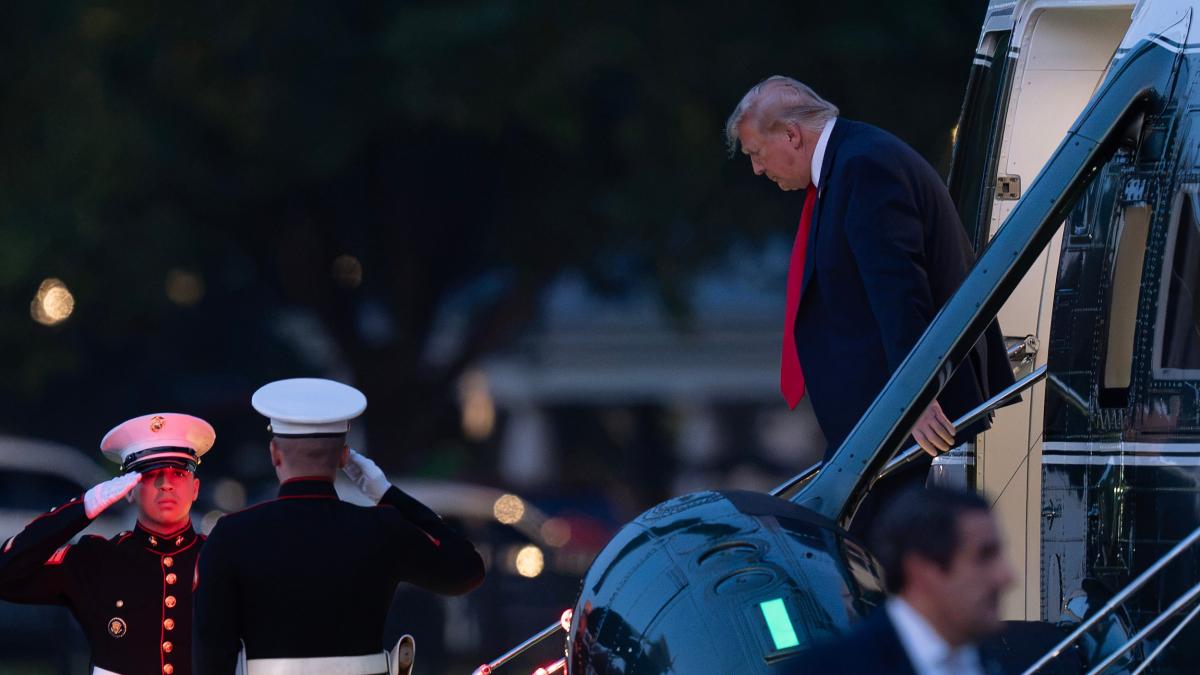
Following the collapse of Middle East peace negotiations, the U.S. Central Command confirmed that U.S. forces completed their 11th wave of airstrikes on Iranian territory in the early hours of the 22nd, targeting aircraft hangars and drone storage bases. President Trump subsequently issued a strong warning from the White House, revealing that U.S. forces are preparing to strike heavily fortified underground facilities near Iran's primary uranium enrichment sites, while also dismissing Pakistan's mediation efforts, stating bluntly that the U.S. has 'no interest in meeting.'
As U.S.-Iran tensions escalate sharply, Houthi militants have announced a ban on Saudi Arabian vessels passing through the Bab el-Mandeb Strait, placing both the Persian Gulf and Red Sea maritime energy corridors in crisis. International crude oil prices surged past $92 per barrel on the 22nd. The number of U.S. military fatalities has officially risen to 18, with over 500 wounded, turning this conflict into a major crisis impacting the global economy.
Trump Warns of Strike on Iran's Underground Nuclear Facilities
According to the Associated Press, Iran's Interior Minister Eskandar Momeni made an emergency visit to Pakistan on the 21st, holding closed-door talks with Pakistan's Army Chief and Field Marshal Asim Munir, as well as Prime Minister Shehbaz Sharif. Pakistan had served as a key mediator last month, facilitating a temporary ceasefire agreement between the U.S. and Iran. However, that agreement has now been completely shattered as Iran resumed attacks on commercial vessels in the Strait of Hormuz.
On July 21, 2026, U.S. Defense Secretary Hegseth and Chairman of the Joint Chiefs of Staff General Caine testified before the Senate Appropriations Committee, with many anti-war activists present at the hearing. (AP)
Pakistan's Prime Minister Shehbaz Sharif later issued a statement expressing concern over the escalating U.S.-Iran situation and urging all parties to exercise restraint to prevent further regional destabilization. However, the U.S. stance remained firm. President Donald Trump stated clearly at the White House on the 21st: 'Iranian officials are extremely eager to meet. But until they are ready for a meaningful meeting, we have no interest.'
Trump further warned that U.S. airstrikes are about to escalate, with targets shifting toward the 'Pickaxe Mountain' underground fortress near Iran's primary uranium enrichment facilities. Iranian state media cited military leaders' statements, warning that any attack on nuclear facilities or 'other sensitive sites' would be viewed by Tehran as an extremely serious escalation.
Strait of Hormuz and Red Sea Both Blocked
The U.S.-Iran conflict has now evolved into a battle for control over the heart of the world's energy supply. The UK Maritime Trade Operations Office (UKMTO) reported that an oil tanker was attacked early on the 22nd off the coast of Oman in the Strait of Hormuz, forcing the crew to abandon ship. The Iranian Revolutionary Guard claimed responsibility for the attack. The U.S. Central Command posted on X, stating that in enforcing no-sail zones and anti-blockade measures in the Strait of Hormuz, U.S. forces have forcibly redirected eight commercial vessels and disabled one ship.
On July 17, 2026, supporters of the Houthi movement held a rally in Sana'a, Yemen's capital, protesting against the Saudi-led coalition. A banner in Arabic reads: 'All Saudi oil facilities are targets for our missiles and drones.' (AP)
In addition to the deteriorating situation in the Persian Gulf, Iran-backed Houthi forces in Yemen have opened a new front on the other side of the Arabian Peninsula, announcing a maritime blockade against Saudi Arabia and warning international shipping companies to avoid the Bab el-Mandeb Strait at the entrance to the Red Sea. Houthi officials revealed that six vessels have already been forced to reroute due to the warnings. With the Strait of Hormuz in the Persian Gulf already blocked, Saudi Arabia had previously relied heavily on cross-border pipelines to transport millions of barrels of crude oil to Red Sea export terminals. The Houthi move has directly severed Saudi Arabia's only alternative energy export route.
Due to the escalation of hostilities, the international benchmark Brent Crude oil price surpassed $92 per barrel on the 22nd, while the average price of regular gasoline in the U.S. surged to $4 per gallon. With the U.S. midterm elections approaching, public opinion polls show a sharp increase in voter anxiety over high fuel prices and U.S. military casualties, creating significant political pressure over the conflict.
U.S. Military Fatalities Rise to 18
Regarding U.S. military casualties, the Pentagon confirmed on the 21st the identity of a U.S. service member previously reported missing after an Iranian missile and drone attack on a base in Jordan. The soldier was 28-year-old Sergeant Angel S. Rampersad from New York State. The military stated that Sgt. Rampersad belonged to the 10th Army Air and Missile Defense Command (based in Ansbach, Germany) and is currently listed as 'Duty Status – Whereabouts Unknown (DUSTWUN),' with a presumption of death.
This brings the total number of U.S. military fatalities since the start of the U.S.-Iran conflict to 18. The Pentagon had previously announced the identities of two other soldiers killed in the same Jordan attack: 25-year-old 1st Lt. Tyler James Feehan and 19-year-old Pvt. Isabella Gonzales.
Additionally, the U.S. military confirmed that 30-year-old Army Sgt. Michael Emmanuel Swinton died while carrying out a mission to remotely detonate Iranian drones at the Erbil Air Base in Iraq. Sgt. Swinton, who served nearly ten years, leaves behind a wife and two young children. The military will posthumously award him the Bronze Star and Purple Heart medals and promote him to Staff Sergeant.
An unnamed U.S. military official told the Associated Press that the number of U.S. personnel wounded in this round of U.S.-Iran conflict has 'far exceeded 500.' While the Pentagon's Defense Casualty Analysis System (DCAS) currently shows 482 wounded in its publicly available data, the official clarified that this is due to reporting time lags, not intentional data concealment. Iranian officials claimed that the past three weeks of U.S. airstrikes have caused at least 50 deaths and over 500 injuries within Iran.
The U.S. State Department also issued a new global security alert, warning U.S. citizens abroad that Iran and its affiliated armed groups may launch retaliatory attacks against U.S. institutions and personnel worldwide.
FACT BOX
- Source: PR Times
- Category: News