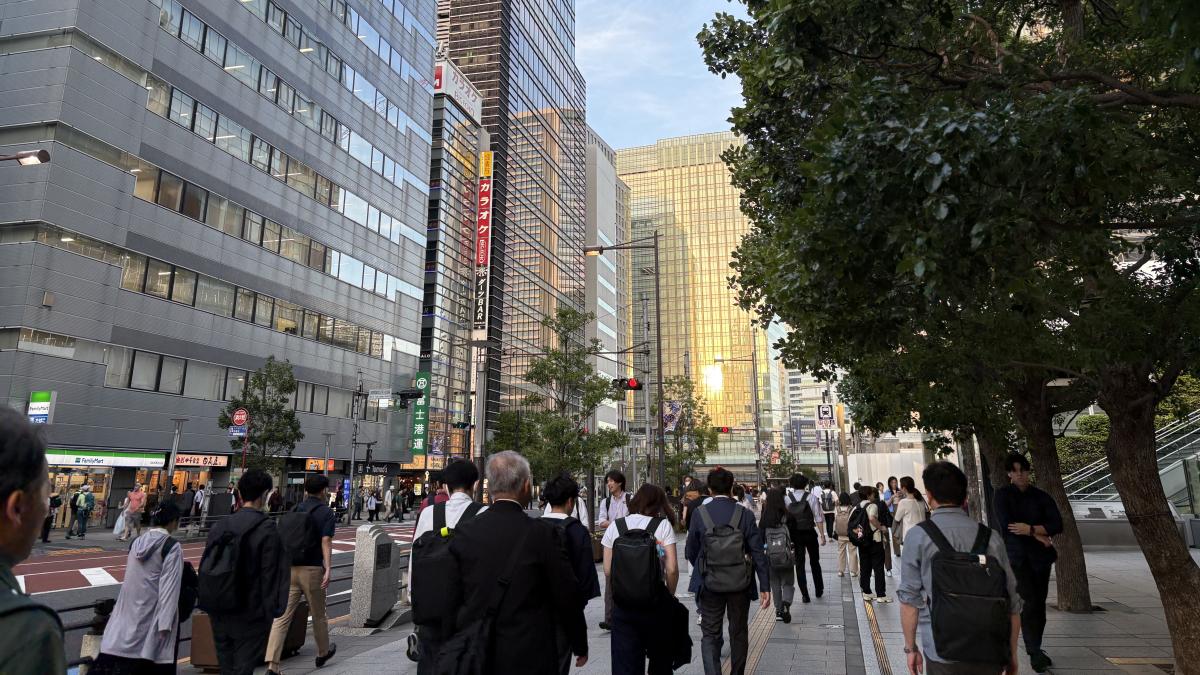
Japan's summer temperatures continue to soar, prompting the Tokyo Metropolitan Government to publicly encourage employees to wear T-shirts, sneakers, and even shorts to work—moving away from traditional heavy business suits. However, this new policy, originally intended to prevent heatstroke and save energy, has unexpectedly sparked a heated debate in Japanese society over whether men should be allowed to show their leg hair in the office. Some office workers welcome the comfort and reduced air conditioning use that shorts bring. Others, particularly women, point out that traditional Japanese workplaces often still require women to wear pantyhose, while men can freely expose their legs—highlighting an unfair double standard. Some netizens have even coined the term "sunege harassment" ("sune hara" for short), referring to the discomfort caused by seeing men's thick leg hair in professional settings.
Koike Reintroduces 'Tokyo-Style Cool Biz,' Shorts Officially Enter the Office
Tokyo Governor Yuriko Koike announced in April an expansion of the "Tokyo Cool Biz" initiative, encouraging workers not only to ditch suits and ties but also to wear more comfortable clothing such as polo shirts, T-shirts, sneakers, and shorts, depending on their job and workplace context. Koike stated that Tokyo aims to transform "Cool Biz" from a simple dress code change into a broader workstyle reform, including flexible hours, remote work, and heatstroke prevention habits. The Tokyo Metropolitan Government is leading by example, allowing staff to wear shorts as long as it doesn't interfere with their duties or professional etiquette. On April 22, the government showcased office scenes of employees working in shorts to the media.
Koike first promoted Japan's nationwide "Cool Biz" campaign in 2005 as Environment Minister, initially just encouraging workers to remove jackets and ties. As Japan grows hotter, the policy has evolved under her leadership, now including shorts as an acceptable option.
The original 2005 Cool Biz campaign aimed to reduce energy consumption by encouraging companies to set air conditioning temperatures higher. After the 2011 Great East Japan Earthquake and nuclear disaster caused power shortages, the government introduced "Super Cool Biz," further relaxing workplace attire. This latest expansion of Tokyo's shorts policy also cites global energy supply concerns, including tensions in the Middle East, as part of its rationale.
Nearly Half of Public Opposes Men Wearing Shorts to Work
Despite the policy, shorts face significant resistance in becoming a workplace norm in Japan.
On June 17, 2026, the men's aesthetic clinic Gorilla Clinic conducted an online survey of 800 men and women aged 20 to 59. Results showed that 46.5% supported men wearing shorts to work in summer, while 53.5% opposed it—nearly split, but with opposition slightly higher.
Main reasons for opposition, in order, were: "concern about body shape or body hair" (45.5%), "lack of cleanliness" (43.9%), and "violation of social context and workplace etiquette" (40.6%). Notably, the concern about body or leg hair was significantly higher among women (30.0%) than men (18.8%). Overall, opposition was higher among women and increased with age.
Supporters' top reason was "heatstroke prevention and health management" (63.1%), followed by "improved focus and productivity" (48.1%) and "energy conservation" (37.3%).
Japanese media visiting the Tokyo Metropolitan Government offices found that only a minority of staff wore shorts, but some male employees wore knee-length shorts and female employees wore culottes. Some female staff said they were gradually getting used to seeing colleagues in shorts.
'Leg Hair Harassment' Sparks Controversy, Men Begin Viewing Hair Removal as Workplace Etiquette
As shorts enter the office, "sunege harassment" has become a trending term on Japanese social media. The controversy was partly triggered by media photos of male employees in shorts, prompting online reactions like "I don't want to see middle-aged men's legs at work" and "this could create a new form of harassment."
It's important to note that "sunege harassment" is not an official legal or workplace policy, but rather an internet slang term used by some netizens and female respondents to describe discomfort from being forced to see colleagues' thick leg hair in the office. Japanese media coverage typically includes both supportive and critical viewpoints.
In recent years, more men have been opting for laser leg hair removal—not just for fashion, but as a form of "social etiquette" when wearing shorts, fearing that thick leg hair might make female colleagues or clients uncomfortable.
Japanese media outlet ITmedia analyzed the topic under the headline "Why Are Men's Shorts So Unpopular?" and noted that leg hair removal among young men is becoming more common, quietly shifting societal standards for male body hair. While men showing legs was once unproblematic, there is now an emerging expectation to trim or remove leg hair before wearing shorts.
This has left many Japanese men confused: the government encourages them to dress more comfortably, yet society imposes new appearance standards regarding leg shape, skin tone, and hair.
Women Question Double Standards: Men Show Legs, Women Still Expected to Wear Stockings
The shorts debate highlights long-standing gender disparities in Japanese workplace dress codes.
Although not always formally written, many traditional offices still expect women to wear pantyhose with skirts. Open-toe shoes, bare legs, or overly casual outfits may still be seen as unprofessional.
Thus, some women argue that while men can now wear shorts due to the heat, women are still required to wear hot, uncomfortable pantyhose—revealing unequal expectations between genders.
On the other hand, some worry that labeling naturally grown male body hair as "harassment" could lead to a new form of appearance-based discrimination. Critics argue that as long as clothing is clean and appropriate for the workplace, personal hair volume and body shape should not be grounds for ridicule or exclusion.
Tokyo Environment Bureau official Noboru Watanabe, in an interview with BBC Tokyo correspondent Kurumi Mori, emphasized that the policy isn't about dictating what people wear, but about expanding clothing choices during extreme heat. As long as attire is respectful and doesn't offend others, it should be acceptable in principle.
Japanese Suit Brands Rush to Launch 'Business Shorts'
As the policy gains traction, Japan's apparel industry is racing to capture the business shorts market.
Men's fashion brand Aoyama (洋服の青山) launched its first business-oriented men's shorts on May 19, available at 100 designated Aoyama stores and its official online shop. The shorts are made from a nylon and polyurethane blend, featuring cooling touch and sweat-wicking technology. The length is designed to be knee-length to avoid excessive thigh exposure when sitting, and the tapered leg aims to maintain a sharp, professional look—reducing the overly casual impression of regular shorts.
The business-casual trend is also evident in other products. Japanese media FNN reports that sales of business T-shirts emphasizing "opacity, wrinkle resistance, and neat appearance" have surged due to rising temperatures and relaxed dress codes, with some brands seeing sales increase by up to 9.7 times.
However, media visits to companies reveal that even when bosses allow shorts, many client-facing employees still choose to wear long pants—not because of company rules, but out of concern for how clients might perceive them. Some even admit, "I'm afraid it might lower the chance of closing a deal."
Japan's Heatwave Intensifies, Forcing Changes in Dress Codes
Japan continues to experience extreme heat this year. According to preliminary reports from the Fire and Disaster Management Agency, 4,580 people were hospitalized due to heatstroke between July 6 and 12, with seven deaths confirmed in Nagano, Shimane, Nagasaki, Oita, and Okinawa prefectures—hospitalizations up about 3.3 times from the previous week. Beyond air conditioning and hydration, fan-equipped workwear, cooling towels, sun umbrellas, and handheld fans have become common summer tools in Japan.
In high-temperature and high-humidity environments, the traditional Japanese office culture symbolized by suits, ties, and dress shoes is facing unprecedented challenges. From the 21-year-old campaign of "no ties" to today's debate over "can men show their legs," Japan's workplace dress reform seems to require constant renegotiation of comfort, etiquette, gender, and appearance standards with each step forward.
FACT BOX
- Source: PR Times
- Category: News
- Organizations: Gorilla Clinic