The Ministry of National Defense's Armaments Bureau awarded a contract for RDX (Haisao Geng) explosives to Fumai International, an interior design company, at the end of last year. However, the deal collapsed when Fumai failed to secure export permission for RDX, leading the Ministry to terminate the contract and impose a total penalty of NT$83.98 million in forfeited deposits and fines. According to procurement officials, the reason for India's refusal to grant export approval was pressure from China, triggered by opposition lawmakers revealing during legislative questioning that India was the source of the explosives.
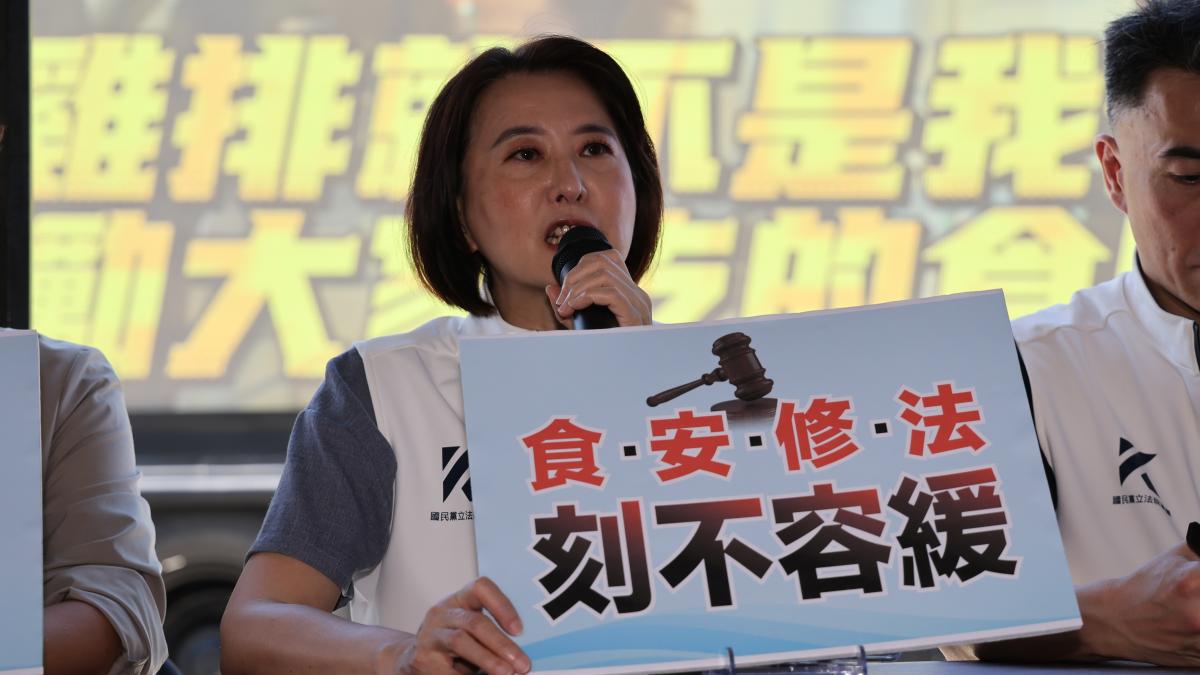
In response, KMT legislator Wang Hung-wei strongly rebutted the claim, stating that it was Fumai's own press release that exposed the origin of the explosives. Wang posted on Facebook that Fumai could not obtain export permission and thus sought to terminate its contract with the Ministry of National Defense. However, the DPP dismissed this scandal by blaming opposition parties for exposing the exporting country to China, thereby preventing Fumai from securing the necessary permit. Wang criticized this narrative as pouring oil on fire, further embarrassing the Ministry.
Wang emphasized that if this was truly a critical arms procurement, how could the Ministry and the contractor allow such an absurd situation where an interior design company that sells toilets won a military contract? This anomaly had already gone viral online, making it impossible for opposition lawmakers to avoid scrutiny. By failing to manage disclosure risks, the Ministry itself had maximized exposure.
Wang insisted she never disclosed Fumai's source country. However, Fumai's own public statement explicitly mentioned, 'The key raw material can only be exported from China and India.' Was this Fumai's own leak? Why would China need to learn from a legislative inquiry that the material was being purchased from India? Could it be that Fumai also imports military raw materials from China?
On the other hand, Huang Tzu-yi, Deputy Director of the DPP's News Department, reconstructed the timeline: Fumai's statement was issued on December 14, but KMT legislator Ma Wen-chun had already posted a graphic on December 11 labeling it 'Indian explosives.' Ma, along with Wang Hung-wei and Hsu Chiao-hsin, held a joint press conference on December 12. During the press conference, Ma stated, 'We received information that intermediaries were involved in coordinating the procurement of related materials from India.' Wang sat right next to Ma during the event—how could she possibly disassociate herself from Ma's statement?
FACT BOX
- Source: PR Times
- Category: News