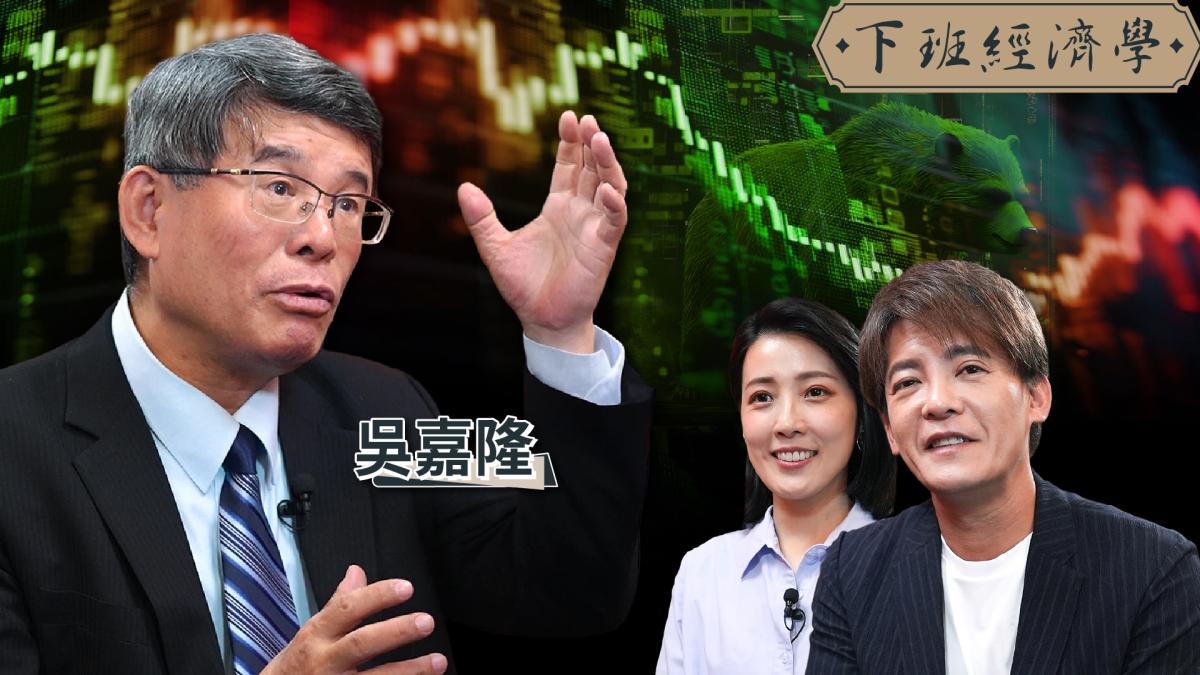
Many worry that TSMC's move to build factories in the U.S. will lead to technological hollowing out, turning Taiwan's 'national guardian mountain' into 'America's TSMC.' However, expert Wu Jia-Long argues this is actually a higher-level 'Silicon Shield Security Exchange' between the U.S. and Taiwan. The U.S. commits to militarily protecting Taiwan, while Taiwan provides a semiconductor-based security barrier by ensuring critical chip supply. TSMC's decision to double and disperse its production capacity within the U.S. is primarily to meet extreme military and national defense needs. This overseas production strategy does not weaken Taiwan’s value; instead, it tightly binds U.S. national interests to Taiwan’s survival. Should Taiwan be blockaded, global technology would collapse entirely—yet with foundational production now on U.S. soil, America gains greater strategic leverage to defend Taiwan.
Could the Taiwan stock market double again after breaking 50,000? A new historical high driven by the AI wave
As the stock market fluctuates wildly at over 40,000 points, panic sentiment like 'sell-off to escape' floods the market. Yet Wu Jia-Long shockingly predicts that amid the global AI revolution, Taiwan's stock index could potentially 'double again,' challenging the 100,000-point mark. Over the past year, the Taiwan market achieved a doubling in a remarkably short time, while neighboring South Korea and Japan also posted astonishing gains. As the core order hub for AI servers, Taiwan’s entire supply chain—from wafer fabrication and packaging/testing to investor-favorite liquid cooling, heavy electrical storage, and substrate boards—is facing severe supply shortages. With technology jointly monopolized by Taiwan and the U.S., and non-China supply chains trusted for security, the five-to-six-year boom ignited by global 'sovereign AI' initiatives will serve as the strongest fundamental support for Taiwan's stock market.
Uncovering the biggest secret of the U.S.-Iran energy war: Trump’s alternative containment strategy against China
On another front of geopolitics, the Trump administration has aggressively pressured Iran. While framed as a response to historical tensions and nuclear threats, the ultimate strategic goal is actually an energy blockade targeting China. Wu Jia-Long reveals that traditional oil producers like Iran and Venezuela previously shipped over 90% of their crude oil secretly to China, settled in RMB. Trump disrupted this by intercepting shipments, exchanging unfrozen funds for U.S. agricultural purchases, and redirecting Iranian oil back into the international market under dollar settlement. This move severely damaged the RMB’s global ambitions, instantly depriving China of over 20% of its critical oil supply. Simultaneously, the surge of crude back into global markets drove oil prices below $70, executing a precise economic chokehold in great-power competition.
More insights await in 'After Work Economics,' where hosts Hsieh Che-ching, Chang Chiung-fang, and financial expert Wu Jia-Long guide you through these pivotal economic and geopolitical developments.
FACT BOX
- Source: PR Times
- Category: News