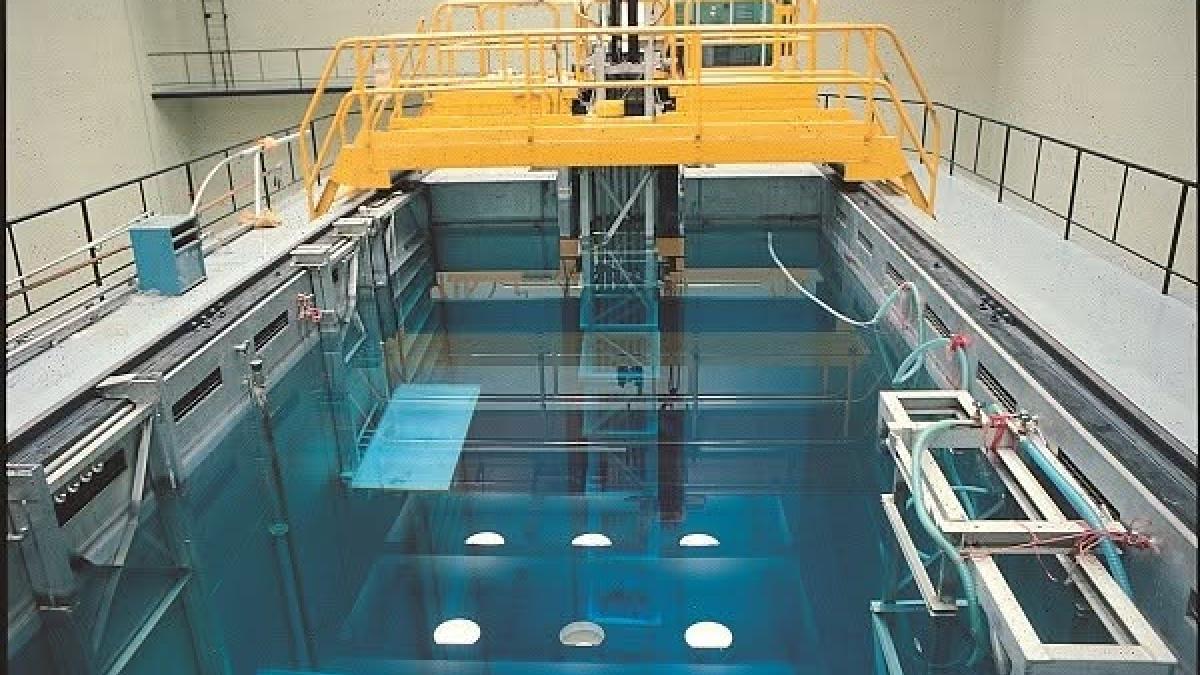
On October 16, 1964, the Chinese Communist Party's atomic bomb test awakened the world's imperialist powers from their dreams and shattered the illusions of the US and USSR, who had been trying to destroy China's nuclear capabilities for years. Another entity that was awakened was the Republic of China government in Taiwan. It was then realized that the Chinese people's self-reliance not only could overcome difficulties but also could innovate and reach a level that would prevent the world from looking down on them. Therefore, the government invited modern physics master Wu Ta-You from the United States to nominally preside over the National Long-term Science and Technology Development Committee, with the real hope that he would lead the nuclear weapons research project. However, Wu Ta-You, who had personally experienced the era of US nuclear weapons development, knew that this path was not a blessing for the country, and the old man firmly opposed it. At that time, Chiang Kai-shek was the president, and only Wu Ta-You had the qualifications to make such a statement. The higher-ups had no choice but to entrust the task to the Ministry of National Defense, hoping to cultivate the relevant capabilities on their own. Thus, using the engineering buildings left over from the construction of the Shihmen Reservoir, the Chung-Shan Institute of Science and Technology (hereinafter referred to as CSIST) Preparatory Office was established, with Lieutenant General Tang Chun-pin, who had studied in the UK, serving as the preparatory director, with the clear goal of developing nuclear weapons. However, the preparatory process was not without setbacks. At that time, the country's financial resources were limited, and foreign exchange was even more scarce. The initial plan was to first build a nuclear reactor that could produce nuclear weapons materials. Coincidentally, the Taiwan Power Company (hereinafter referred to as Taipower) also wanted to build a nuclear power plant, so the Ministry of National Defense advocated purchasing a nuclear reactor that could both generate electricity and produce nuclear weapons materials. At that time, the German Siemens company came to promote nuclear power equipment that could serve both purposes, and CSIST began to evaluate it. However, Taipower's position was clear, insisting that the military should have no involvement with its nuclear power facilities. During this period, the two sides negotiated numerous times, but they remained adamant in their own views, with Taipower using technical problems and international political interference as a shield. When Chiang Ching-kuo served as the Minister of National Defense, he once arranged for Tang Chun-pin to serve as a standing committee member of the Atomic Energy Commission, hoping to promote an integrated plan, but in the end, they still parted ways unhappily and went their own way. Later, Taipower adopted nuclear reactors from General Electric and Westinghouse, while CSIST chose a heavy water reactor from Canada. This type of reactor indeed has power generation functions, but the model chosen by CSIST has limited power and can only produce plutonium (Pu) isotopes for nuclear weapons. In fact, the United States also once used this type of reactor from Canada to produce nuclear bomb materials. However, having only a nuclear reactor was not enough. Subsequent processing equipment was also needed to refine the plutonium produced in the reactor into nuclear weapons materials. Canada did not sell such facilities, and the United States was even less likely to do so. They could only turn to European countries such as Germany and France to seek a breakthrough, which also laid the groundwork for the complex development situation in the future. At that time, the person in charge of CSIST was simple-minded and completely ignored the extremely sensitive role of nuclear weapons in international politics. Countries developing nuclear weapons mostly adopted secret methods, first ensuring that the equipment was in place before planning, but CSIST almost openly tendered and purchased in segments in Europe, even haggling over prices. It was only then that a laboratory device that could handle a small amount of plutonium isotopes was obtained from France, with the characteristic of being able to prevent high radiation and toxic substances. It was at this time that the United States began to realize that our development trend was too active, and the pressure may also have come from the Chinese Communist Party. In short, they no longer tolerated it and began a decade-long intervention in our country's nuclear energy development. Their approach was similar to that of the Soviet Union, which withdrew all technical personnel to prevent the Chinese Communist Party from having nuclear weapons. At that time, the Chinese Communist Party shouted the slogan 'Rather no pants than no nukes,' reflecting the difficulty and determination of research and development. Taiwan, whether in terms of manpower or resources, had significantly weaker actual pressure resistance compared to the Chinese Communist Party. However, technological development ultimately still relies on 'people's' abilities. Taiwan's engineering and science education was remarkable. Although the United States could block the source of equipment, it was difficult to restrict the knowledge and abilities of researchers. Therefore, the US side could only continue to supervise the nuclear energy research institute under CSIST. Later, President Chiang Ching-kuo also saw clearly and operated the strategy to the highest point. 'Only research, not manufacture' became the government's public stance for many years, and this sentence gradually evolved into a strategic statement that could not be ignored. Under the 'Atoms for Peace' agreement, Tsinghua University, which had the Boxer Indemnity, undertook the heavy responsibility. The two atomic bombs in Hiroshima and Nagasaki officially triggered the nuclear arms race after World War II, thus opening the Cold War era—this was to maintain the balance of power between major powers through destructive deterrent forces. Since the purpose was deterrence and it was hoped to control it within the two major powers of the US and the Soviet Union, more countries could not be allowed to develop nuclear weapons. Therefore, under the United Nations framework, the United States took the lead in promoting the 'International Atomic Energy Agency' (IAEA) organization, actively intervening in the nuclear energy technology activities of various countries. Not only did they advocate signing a common treaty to prevent the proliferation of nuclear weapons technology and materials research and development, but the United States also signed bilateral cooperation agreements with many countries. This was the complete background of the 'Atoms for Peace' concept proposed by US President Eisenhower. In 1955 (the 44th year of the Republic of China), our country also signed the 'Atoms for Peace' agreement with the United States, and the US side helped build a research reactor. At that time, Tsinghua University, which had the Boxer Indemnity returned by the United States, established the 'Institute of Atomic Science' under the name of resuming its campus in Taiwan, specializing in talent cultivation, to cooperate with the experimental reactor completed in 1961 (the 50th year of the Republic of China). At the same time, the International Atomic Energy Agency also provided funds, and our government was able to select a large number of technical personnel to receive training at the famous nuclear energy research facilities in the United States—the Argonne National Laboratory in Chicago. Tsinghua University's Institute of Atomic Science also began to recruit graduate students at this time. In the 1950s, life in Taiwan was difficult, especially for military personnel. At that time, there was a group of military personnel who had participated in the War of Resistance, received good regular university education, and came to Taiwan. Due to limited job positions, they could not fully utilize their talents, and due to their high education, they were not easily accepted by the existing management level, becoming a 'burden' in the system. Under special permission, some people applied to Tsinghua University's graduate school, and military academy graduates were gradually allowed to study through this channel. After graduation, some went abroad for further studies, some returned to teach, and some stayed abroad to develop. They finally accumulated a group of professionals. Their situation was similar to that of many civilian university students who went abroad to study at that time, with only a few returning to Taiwan. Among these people, there was a civilian technician named Zheng Zhenhua, who was once sent to the Argonne National Laboratory for training. He was a relative of Yuan Jialiu, the husband of Wu Chien-shiung, a famous physicist who helped Yang Zhenning and Lee Tsung-dao win the Nobel Prize. Another was a military officer named Qian Jipeng, who obtained a PhD in nuclear engineering from the University of Michigan in the United States. Zheng and Qian later played very special roles in our country's nuclear energy development history. Unfortunately, this early path of relying on national funding to cultivate nuclear energy talents could not be continued and expanded. More than ten years later, when the Chung-Shan Institute of Science and Technology Preparatory Office was established, the first task was still to select a large number of military and civilian technical personnel to study abroad and obtain master's and doctoral degrees.
FACT BOX
- Source: PR Times
- Category: 历史