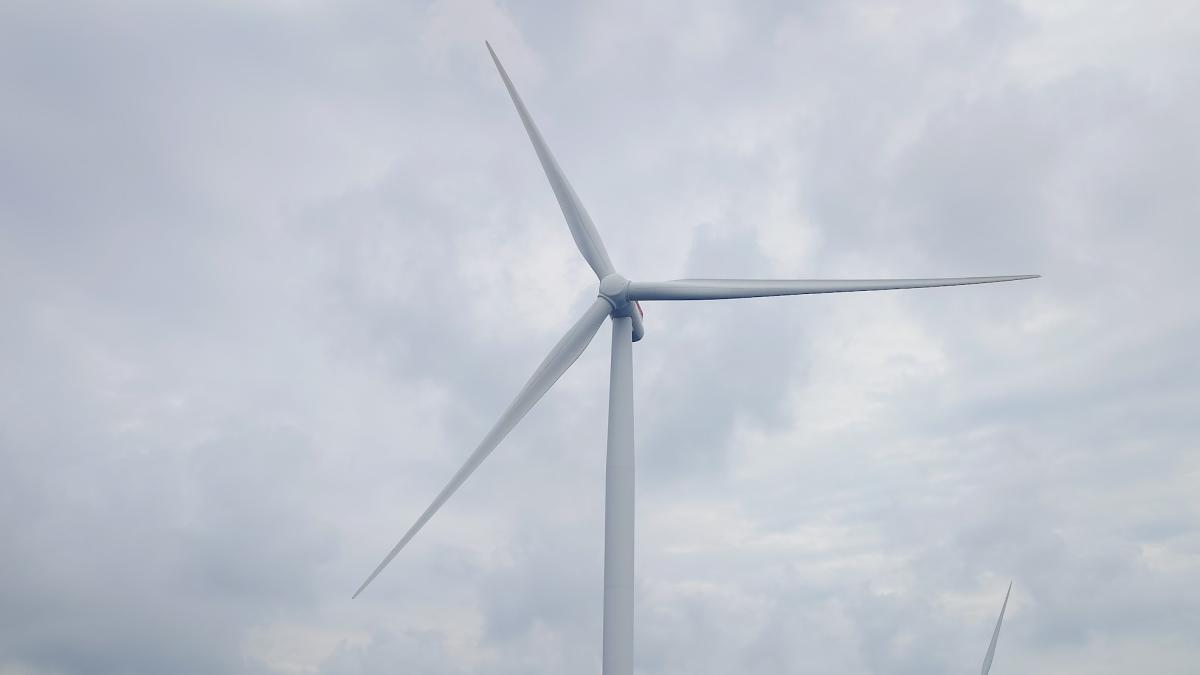
A new target for offshore wind power development has been announced. On the 23rd, the Ministry of Economic Affairs (MOEA) revealed its latest plan, aiming to increase cumulative installed capacity to 18.3–19.9GW by 2035 and further raise it to 24.7–27.9GW by 2039. This expansion will strengthen green power supply and steadily advance Taiwan toward its 2050 net-zero emissions goal.
As of July this year, eight offshore wind farms in Taiwan have already been completed. In 2022, Taiwan ranked third globally in annual newly installed offshore wind capacity and fifth in cumulative capacity. Annual power generation has exceeded 10 billion kWh. Operational wind farms have withstood multiple strong typhoons and earthquakes, demonstrating the high engineering quality and environmental resilience of Taiwan's offshore wind projects.
The MOEA noted that with the continued growth of semiconductor, AI, and high-tech industries, electricity demand is projected to grow at an average annual rate of 2.5% between 2026 and 2035. Offshore wind power will be a crucial source of stable green electricity. Through its three-phase strategy—demonstration, potential, and block-based development—the MOEA has already facilitated the installation of over 500 offshore wind turbines, achieving a cumulative capacity of approximately 4.9GW.
To sustain previous achievements and meet future green energy demands and industrial development, the MOEA has proposed the 'Mid-to-Long-Term Offshore Wind Power Development Plan for 2026–2039.' Through inter-ministerial collaboration, the government has systematically assessed available sea areas for development, identifying an additional 15–18GW of potential capacity. The plan will operate in four-year phases, with 8GW of capacity tendered per phase, aiming to complete developer selection by 2030 to establish a long-term, stable, and predictable development framework.
The MOEA announced the addition of a floor price mechanism to the contract template. In collaboration with the Ministry of National Defense, Ministry of Transportation and Communications, and Ministry of Agriculture, the MOEA has systematically evaluated offshore wind development zones, identifying approximately 15–18GW of additional capacity. Floating offshore wind projects are scheduled to begin in 2026, and the government will continue to promote offshore wind development through four key pillars.
On the 23rd, the MOEA released the administrative contract template for the third phase of block-based development. In addition to defining developers' core obligations and penalties for non-compliance, this phase's contract includes new provisions such as a floor price for electricity and incentive mechanisms for extending power purchase durations.
To expand development capacity, developers allocated initial sites may sequentially receive expansion zones. Each wind farm—original and expansion—will sign separate administrative contracts, with rights and obligations governed by their respective agreements. This ensures clarity in responsibilities and financing needs. Both sites qualify for the extended power purchase period incentive. However, since expansion capacity is allocated based on the original site's performance, the original site’s performance bond remains liable for the expansion site’s obligations, capped at the amount of the expansion site’s required bond.
Additionally, drawing from experience with potential sites and block development, a one-year flexible grid connection mechanism has been introduced. Developers may apply to the MOEA for a one-year delay in project completion and grid connection upon achieving either 'installation of underwater foundations for all turbines' or '50% of total capacity completed and connected to the grid.' The administrative contract also sets a floor price of NT$2.29 per kWh to help developers assess development risks.
FACT BOX
- Source: PR Times
- Category: News