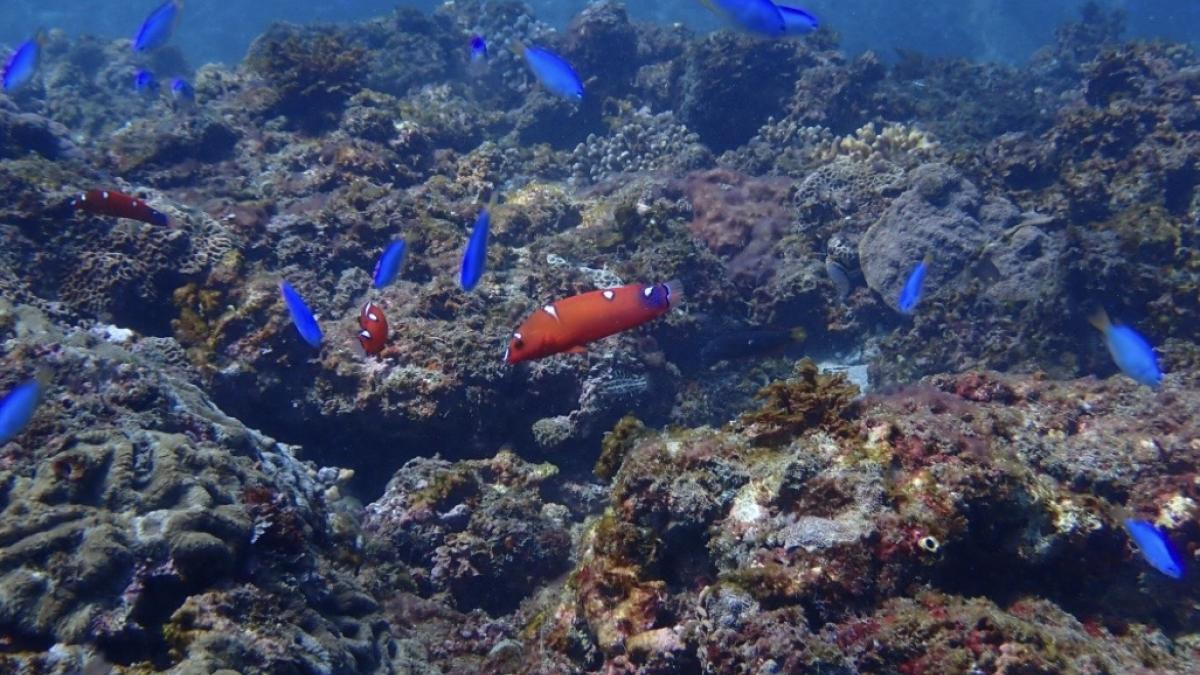
In recent years, New Taipei City's coastal and nearshore waters have faced challenges such as marine environmental changes and declining fishery resources. To protect marine ecosystems and promote the sustainable use of fishery resources, the New Taipei City Government is responding to the international 'Kunming-Montreal Global Biodiversity Framework' 30×30 goal (protecting 30% of marine and terrestrial areas by 2030). On June 17, 115 (2026), it issued Announcement No. 1152538607, preliminarily announcing a draft conservation zone plan. This proposal revises and expands the existing aquatic plant and animal breeding conservation zones, extending protection from isolated point areas to a continuous 3-nautical-mile zonal area seaward from the high-tide line. It also prohibits the use of underwater scooters and spearfishing, aiming to establish a complete and interconnected coral and rocky reef ecological network. Relevant agencies, organizations, and the public are encouraged to submit feedback by August 17 to jointly build a sustainable marine environment that balances conservation and utilization.
A Warning Sign of Declining Fishery Resources: New Taipei City Actively Implements Conservation Measures
The New Taipei City Fisheries Division stated that in recent years, the crisis of declining coastal resources has become increasingly evident. According to fishery statistics, the city's coastal catch has dropped from 5,919 metric tons in 101 (2012) to 3,516 metric tons in 113 (2024), a decline of as high as 40%. In recent years, fish species such as black seabream (Hei Hou), three-lined rockfish (Huang Ji Yu), scalyfin croaker (Chun Zi), golden trevally (Hong Shan), hawksbill grouper (Hua Ge), Indian scad (Bai Mao), white horsehead fish, and crimson snapper (Hong Sao) have shown alarming signs of size miniaturization, making marine conservation actions urgent.
To promote marine resource conservation, New Taipei City is committed to habitat preservation and has continuously implemented a ghost net removal program. Since 101 (2012), a total of 36,816 kilograms of abandoned fishing nets have been removed. In collaboration with the National Taiwan Ocean University and the Taiwan Mountain-Sea Angel Environmental Conservation Association, coral reef restoration has been carried out in the Maoao海域, successfully restoring over 3,500 coral colonies to create a more complete marine habitat. In terms of biological restoration, the city government continues to cooperate with the Ocean University and the Fisheries Research Institute to release abalone, hard clams, squid, sea urchins, and various marine fish fry, totaling over 9.09 million individuals (or units). This year (115/2026), a sea urchin industry development support program has been launched, promoting aquaculture to replace wild harvesting, thus balancing marine conservation with fishermen's livelihoods.
Additionally, since 106 (2017), New Taipei City has partnered with the Fisheries Agency to promote the transformation of gillnet fishing. To date, nearly 70%—a total of 592 gillnet fishing vessels—have transitioned to more environmentally friendly fishing methods. On January 1, 2026, gillnet gear was completely phased out within the 3-nautical-mile zone off the Northeast Coast, eliminating net-related damage to coral and marine life in the rocky coastal areas of Jinshan, Wanli, Ruifang, and Gongliao. Beyond conservation and restoration efforts, the city continues regular maritime patrols to ensure fishermen's safety, maintain fishing ground order, and crack down on illegal harvesting. From 108 (2019) to 114 (2025), a total of 532 patrol missions have been completed. Since 114 (2025), the city has supported the Wanli and Gongliao District Fisheries Associations in establishing conservation zone patrol teams to conduct coastal monitoring and immediately report violations, strengthening public-private collaboration in protecting marine resources.
Establishing Zonal Conservation Areas and Enhancing Conservation Measures to Implement Precautionary Protection
International research and marine conservation experience indicate that past point-based conservation zones, due to their small size, have struggled to deliver substantial conservation effects. The coastal areas from Wanli through Ruifang to Gongliao boast rich coral ecosystems. This expansion of conservation zones aims to connect isolated point areas into a continuous zonal conservation belt along the Northeast Coast, enabling ecological corridor functions and implementing the precautionary conservation principle.
Moreover, spearfishing and harpooning are highly selective, often targeting fish at higher trophic levels in the marine food web. Such high-precision harvesting has already placed significant pressure on specific coastal fish species. Without proper regulation, this could lead to marine ecological imbalance. Based on expert recommendations and marine resource management needs, the revised draft expands the original Wanli, Ruifang, and Gongliao conservation zones from point areas to a 3-nautical-mile zonal area extending seaward from the high-tide line. It also restricts the use of underwater scooters, spearguns, and harpoons for harvesting, implementing tiered regulations to balance marine resource conservation with reasonable utilization.
Professor Chen Yi-Xiong from the Institute of Marine Biology at National Taiwan Ocean University stated that the university has long been commissioned by the New Taipei City Government to conduct marine fish ecological research in the New Taipei waters. Ecological surveys and monitoring show that diverse fish communities still exist during summer and autumn. However, medium-to-large economically important fish such as groupers, parrotfish, snappers, emperors, and porgies are gradually becoming scarce, and the number of mature breeding individuals is also decreasing. This is particularly evident in non-conservation coastal areas, indicating high fishing pressure. It is now urgent to implement conservation measures for fish and crustacean resources in New Taipei's rocky reefs and coral communities. This year's survey results also found that marine biodiversity within conservation zones is superior to that outside. To sustainably maintain fishery resources in northern waters, in addition to the existing ban on gillnet fishing within the 3-nautical-mile zone off the Northeast Coast, spearfishing via diving within the 3-nautical-mile coastal zone should also be regulated. The public is encouraged to 'leave only photos, take only memories,' replacing harvesting with observation and photography to effectively prevent the collapse or disappearance of reef fish populations.
The Fisheries Division emphasized that protecting marine resources and achieving sustainable development requires no single solution but rather joint participation from the government, fishermen, academia, and the public. The city understands the concerns and appeals of spearfishing groups and free diving enthusiasts. However, as stewards of marine resources, facing ecological warnings and crises along the coast, establishing zonal conservation areas and strengthening regulations are necessary and urgent. The city has already implemented the complete withdrawal of gillnet fishing within the 3-nautical-mile zone off the Northeast Coast. Only by maintaining the health of this precious rocky reef and coral ecosystem can the area continue to provide high-quality recreational and eco-tourism environments for the public.
The revised draft is currently in the public announcement period. Relevant agencies, organizations, and the public are welcome to submit opinions by August 17. The city government will uphold the principles of transparency and openness, widely incorporate suggestions from all sectors, and work together to build a sustainable marine environment that balances conservation and utilization.
Link to the draft announcement: https://web.law.ntpc.gov.tw/news.aspx?msgid=7407
FACT BOX
- Source: PR Times
- Category: News