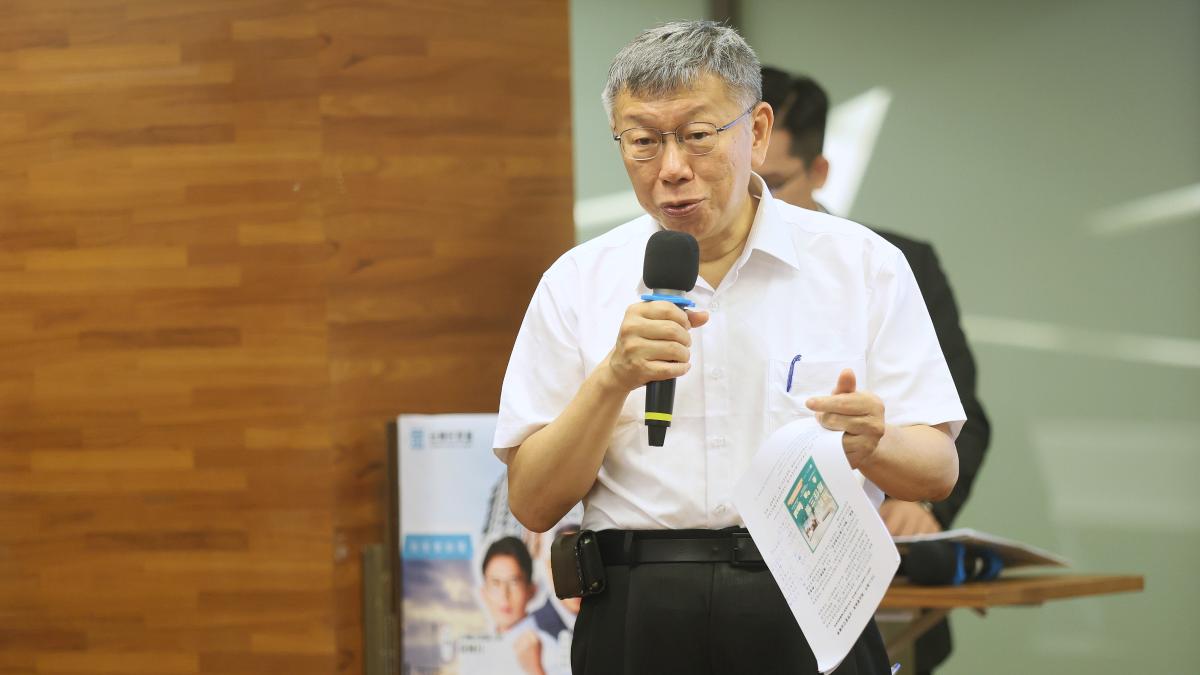
Ko Wen-je, former chair of the Taiwan People's Party, was sentenced to 17 years in prison in the first instance over the Jinghua City case, though the verdict is not yet final as appeals are pending. Separately, the Control Yuan fined him NT$25.4 million and confiscated NT$557.9 million for violations of the Political Donations Act, totaling NT$583.3 million. As Ko failed to pay within the legal deadline, the case was referred to the Administrative Enforcement Agency in Taipei for compulsory execution. Consequently, his bank deposits and pension income have been seized. His wife, Chen Pei-chi, revealed that only NT$6,000 remains in his account as legally mandated living expenses.
This enforcement action stems not from the criminal Jinghua City case, but from administrative penalties over political donations. Under the Administrative Enforcement Act, authorities may seize debtors’ deposits, salaries, pensions, and other assets, while preserving a minimum living allowance. The remaining NT$6,000 reflects this legal safeguard. The impact on Ko’s future livelihood and political activities is now under close scrutiny.
Meanwhile, the Democratic Progressive Party (DPP) has completed its 22nd Central Standing Committee election. The newly elected committee will play a pivotal role in shaping the 2026 local elections and nominations for the 2028 presidential and legislative elections. However, Wang Ting-yu, a legislator from the Yongyan faction seeking re-election, unexpectedly withdrew just before voting, becoming the biggest surprise of the election. This outcome caused the Yongyan faction to lose its Central Committee seat, indicating significant shifts in the DPP’s internal factional landscape.
Wang, of second-generation Mainlander descent, participated in the Wild Lily student movement during his studies at National Cheng Kung University. He later entered grassroots DPP politics, serving as Tainan City Party Director and multiple terms as a city councilor before being elected to the legislature in 2016. Known for his aggressive questioning on national defense, foreign affairs, and cross-strait issues, he is regarded as a 'cannon-type legislator.' His withdrawal is widely interpreted as reflecting internal party power struggles and tensions with President Lai Ching-te’s camp.
Additionally, the Sichuan Airport Group announced that starting July 30, EVA Air and China Airlines flights from Taiwan to Chengdu will shift from Chengdu Tianfu International Airport to Chengdu Shuangliu International Airport. While Tianfu Airport is positioned as Chengdu’s primary international hub, Shuangliu primarily handles domestic routes. This move has sparked concerns that Taiwan’s flights are being downgraded. Only China Eastern Airlines’ Taichung–Chengdu route, launched in July, will continue operating from Tianfu.
Former President Tsai Ing-wen, after stepping down in May 2024, resumed international engagements in June by attending the Global Women Leaders Summit in Bellagio, Italy, hosted by former U.S. Secretary of State Hillary Clinton. Photos of Tsai standing next to Clinton drew significant attention. She later visited the Italian Senate in Rome, meeting with bipartisan lawmakers to discuss Taiwan-Italy relations and democratic cooperation. Despite multiple European trips, Tsai has consistently avoided visiting one major country in Europe, reflecting geopolitical sensitivities.
FACT BOX
- Source: PR Times
- Category: News