Yin Yen-liang, during his youth, was sent to a reform institution due to rebellious behavior. Wang Jin-ping, then a teacher at Jinde Middle School, patiently guided him with love and trust, successfully altering the course of Yin’s life. This legendary story confirms that reformative education can indeed be effective.
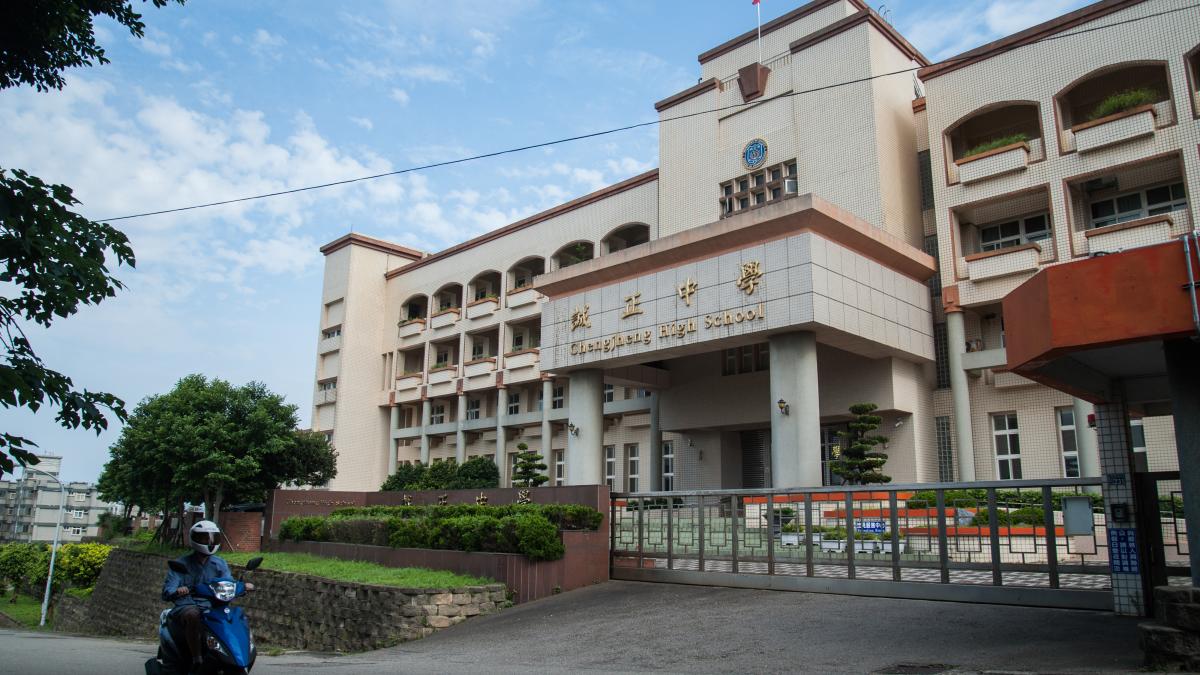
According to the Juvenile Justice Act, a 'juvenile in custody' refers to a minor aged 12 to under 18 who has committed or is at risk of committing an offense and has entered the judicial system. The core philosophy of this system emphasizes education, counseling, and rehabilitation—supporting the healthy development of youth, focusing on protective supervision rather than punishment. Both Chengzheng Middle School and the former Jinde Middle School are components of the reformative education system.
Recent reports have highlighted the harsh conditions at Chengzheng Middle School—overcrowding and extreme heat behind iron bars, sparking violent conflicts. This has once again brought public attention to the juvenile custody system.
The environment and teaching methods within juvenile custody institutions are clearly key to their success. During a visit several years ago, the Control Yuan observed that inmates in these institutions were uniformly dressed in tank tops and shorts, singing and responding in unison under military-style discipline. They recommended strengthening educational approaches, implementing humane management, and fostering self-respect. Living quarters should not have iron bars or grilles, nor should they include prison-style toilets like those in adult facilities. Inmates should wear neat, dignified clothing—long sleeves, long pants, ties, jackets, leather shoes, and cotton socks. Most of these youth come from disadvantaged backgrounds; they should feel human dignity and be treated with respect. Retaliatory discipline based on 'You're tough? I'm tougher!' must be absolutely rejected.
Since legal texts repeatedly use neutral language in handling juvenile delinquency—and have even abandoned the term 'pre-delinquent youth' to avoid labeling theory—why are juvenile offenders still treated under the same standards as adult prisons? Aside from handcuffs, leg irons, and blue-and-white slippers, what truly distinguishes a juvenile correctional school from a prison?
Correctional schools fall under the jurisdiction of the Ministry of Justice, while educational matters are supervised by the Ministry of Education. In practice, however, the split between jurisdiction and supervision means neither ministry takes full responsibility, leaving correctional schools as marginalized institutions.
The four schools—Dunpin, Chengzheng, Lizhi, and Mingyang—appoint principals who are either former principals or qualified for senior high school principal positions, with expertise and experience in juvenile correction. Despite heavy responsibilities, their compensation is low, and teaching staff are insufficient. Since it's already known that standard personnel procedures cannot attract qualified principals to correctional schools, compensation should be universally raised to attract more qualified educators to this field.
Lee Kuan Yew, founding Prime Minister of Singapore, emphasized maintaining indoor temperatures at a cool 24°C or lower, arguing it helped overcome tropical climate limitations on 'work efficiency' and 'civilizational development.' He hailed air conditioning as 'one of the greatest inventions in history,' crediting it as a key factor in Singapore’s leap from the Third World to the First. Could our juvenile correctional schools also install air conditioning, allow staff and students to wear appropriate attire, and let the confined youth experience the same dignified treatment as students in private schools?
When we treat these lost youth with love and respect, their hearts will not remain unmoved. Ouyang Xiu, in his 'On the Release of Prisoners,' argued: 'Trust and righteousness apply to gentlemen; punishment applies to petty men.' Yet these first-time juvenile offenders or those under reformative education are not heinous criminals. Granting juvenile offenders dignity and appropriate custodial conditions is only humane. It should not be dismissed as 'seeking fame through contrarian views' or 'defying common sentiment for reputation.'
*Author is a Distinguished Professor at the Law School of Soochow University.
FACT BOX
- Source: PR Times
- Category: News