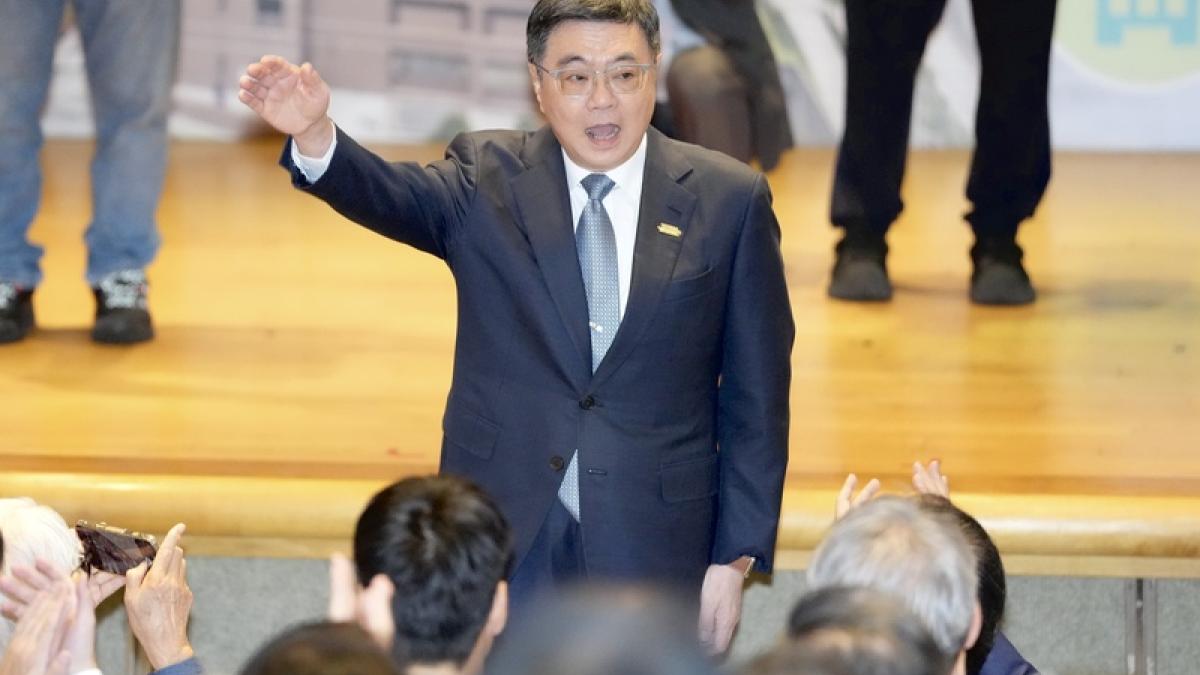
On July 23, 2026, the Executive Yuan's cabinet meeting passed the 'Taiwan High Speed Rail Extension to Yilan Project' (hereinafter referred to as the 'Yilan Case'). Premier Cho! As chair of the cabinet meeting, you are wrong! You should not have approved the Yilan HSR project!
Premier Cho, your first mistake lies in approving a major infrastructure project without following proper procedures. The HSR extension to Yilan originated from a directive by then-Minister of Transportation Lin Chia-lung in September 2019, who bypassed a feasibility study and proceeded directly to an environmental impact assessment (EIA). Subsequently, Policy Adviser Chen Jin-de, acting beyond his authority, supervised five progress meetings from June to September 2022, pushing for the rushed preparation of the EIA report. Furthermore, the EIA plenary session fragmented the assessment scope, evaluating only the track construction while excluding discussions on stations and transfer facilities.
This EIA report, hastily compiled under such favorable conditions, inevitably contained significant omissions. During two rounds of panel and plenary reviews in 2025, inconsistencies in content were repeatedly revised, yet committee members' feedback was consistently ignored—leading to your second mistake: making a unilateral decision before responding to civic appeals.
This is because, on February 6, civic groups formally submitted an appeal to the Executive Yuan, pointing out flaws in the Environmental Protection Administration’s EIA process—including the improper segmentation of assessment scope and the developer’s failure to follow review recommendations (which the chairperson failed to enforce). The Executive Yuan should not make decisions based on a contested process. How can the Premier ignore public grievances and disrespect democratic procedures? Premier Cho, you have made two serious mistakes!
Your third mistake, Premier Cho, is ignoring inconvenient truths and unresolved concerns. Since the Yilan Case was controversially approved by the EIA plenary on August 20 of the previous year—now 11 months ago—new criticisms have emerged.
The most critical and unavoidable is the Control Yuan’s investigation report, released on May 7, which clearly states that the project failed to conduct a required feasibility assessment, that the commissioned planning violated procurement regulations, and that repeated avoidance of public communication misled decision-making. The report explicitly urges the Executive Yuan to instruct the Ministry of Transportation to correct these issues.
Second, on May 19, civic groups released a public opinion survey on Yilan residents’ transportation behavior. Unlike the Rail Bureau’s emotionally charged, oversimplified question—'Do you want the HSR?'—this new survey used professionally designed questions and a representative sample. The results show that 70% of Yilan residents prioritize convenient access with multiple stops, not a single, politically symbolic station.
(Civic groups submitted both the Control Yuan report and survey results to relevant agencies on June 24. The National Development Council then requested a response from the Ministry of Transportation on July 1, effectively acknowledging these new concerns.)
Third, former Policy Adviser and Public Construction Commission Chair Wu Tse-cheng pointed out on June 30 that there are engineering integration issues between the HSR Yilan project and the newly approved TRA elevated rail plan.
Compared to rumors of land speculation, these uncomfortable truths are exactly the kind of responsible, thoughtful considerations that should guide policy decisions! Premier Cho, have you reflected on them? Have you responded? To make a major decision while ignoring such criticisms is your third mistake!
Democracy requires thorough discussion. When decision-makers ignore formal public appeals and fail to address new concerns, their so-called 'decisiveness' reveals only political maneuvering and a disregard for democratic norms. Premier Cho, will your 'three nos'—no co-signing, no disclosure, no implementation—now be joined by a 'fourth no': no response?
Premier Cho! Civic groups will continue pursuing justice through legal channels. We urge you to reflect deeply on your three mistakes and avoid making authoritarian 'no response' a habitual fourth failure!
*Author is former Minister of Transportation.
FACT BOX
- Source: PR Times
- Category: News