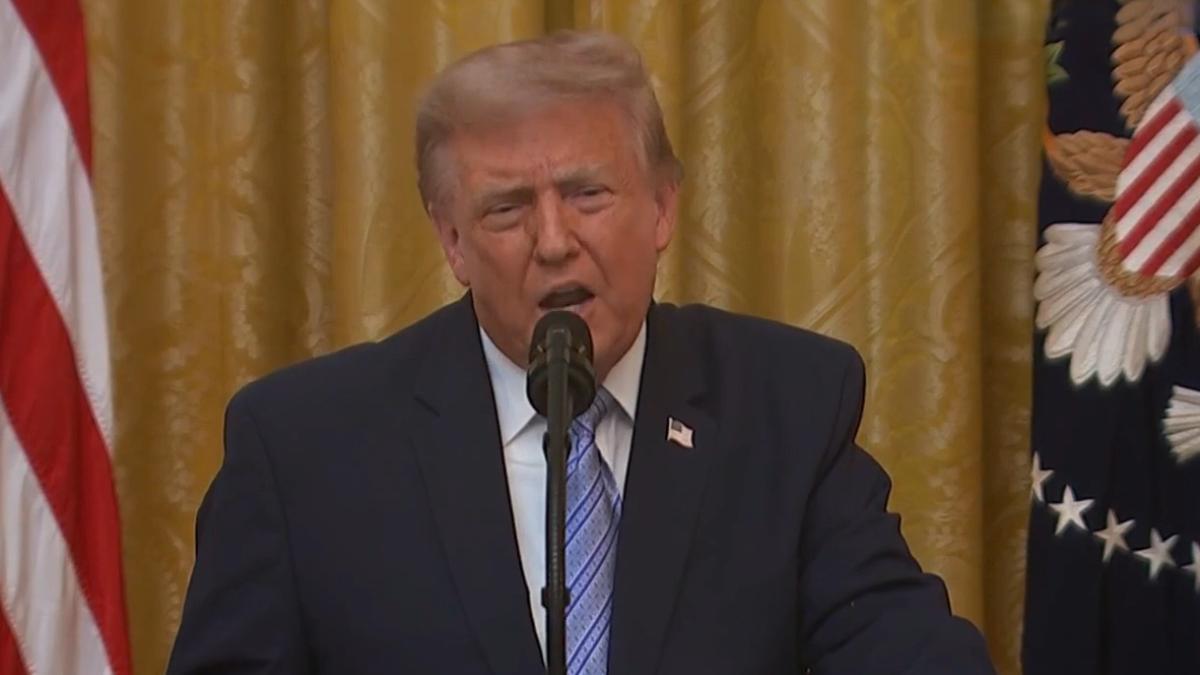
U.S. President Donald Trump, in an interview with The Wall Street Journal on July 26, directly rejected media reports suggesting that American military ammunition supplies were running low amid escalating tensions with Iran. He stated that the U.S. military has 'far more ammunition than anyone else in the world, and far beyond what we need,' and emphasized that the administration is simultaneously evaluating diplomatic avenues and potential military escalation. This statement serves as a rebuttal to earlier reports by outlets such as The New York Times, which highlighted concerns over declining inventories of Patriot missiles and other air defense interceptors as a key factor in internal deliberations about expanding military action against Iran.
At the same time, the Trump administration continues to stress that diplomatic efforts to reopen the Strait of Hormuz are ongoing. U.S. Ambassador to the United Nations Mike Waltz appeared on NBC’s Meet the Press and Fox News Sunday on July 26 to reinforce Trump’s message. He stated, 'The U.S. military has all the resources necessary to carry out this operation—I’ve confirmed this in multiple ways,' and emphasized that Trump is 'leaving all options on the table' while 'preserving some space for negotiations.'
On Meet the Press, Waltz bluntly declared, 'I have to tell you, those spreading these baseless claims should be thrown in prison.' He acknowledged that prior to Trump’s return to office, prolonged U.S. support for Ukraine and operations against Houthi militants had indeed strained certain ammunition stockpiles. However, he stressed that the current administration is actively rebuilding inventories and transitioning toward newer, lower-cost munitions and emerging technologies.
On Fox News, Waltz clarified that the current military focus is on degrading Iran’s ability to threaten commercial shipping and regional stability. He described the Iranian regime as 'increasingly isolated, economically collapsing, and militarily damaged,' and noted that Tehran is beginning to face financial difficulties, including challenges in paying government employees and military personnel.
The Trump administration’s public defense of its military readiness comes amid reports that Trump decided to pause a previously planned expansion of aerial operations after a meeting with senior advisors on July 24. According to The Wall Street Journal’s July 26 report, military planners had prepared for a potential two-week escalation campaign, but Trump ultimately chose to give diplomacy more time. The report further indicated that Chairman of the Joint Chiefs of Staff Dan Caine had briefed senior officials on the declining stockpiles of Patriot missiles and other interceptors, assessing that while lower inventories increase operational risk, they would not prevent Trump from ordering a resumption of military action.
Additionally, Axios reported on July 26 that General Brad Cooper, head of U.S. Central Command, recommended ending current bombing operations around the Strait of Hormuz unless the U.S. intends to escalate into a broader military campaign. He argued that existing operations have largely achieved their objectives and that most designated targets linked to these attacks have already been exhausted. Meanwhile, Cooper suggested that if large-scale operations resume, they could focus on remaining military targets not yet struck in U.S.-Israel joint operations.
At the same time, Trump’s Middle East envoys, Steve Witkoff and Jared Kushner, are conducting direct and indirect negotiations with Iranian officials through regional intermediaries. Axios reported that both sides have informally reached a 'quiet-for-quiet' understanding: as long as the current calm persists, neither side will launch new attacks. Oman continues to mediate talks regarding the Strait of Hormuz, though it remains uncertain whether Trump will ultimately accept any agreement.
Trump continues to signal a preference for diplomacy while not ruling out a return to military action. Ahead of the July 24 White House meeting, he told reporters, 'We’re ready, we’re loaded, but we’re talking to them, so there may be a turning point, or there may not be.'
In a recent interview with Axios, Trump stated he is considering launching a 'much larger' attack on Iran than previously seen, while emphasizing that the military is prepared if diplomacy fails. On July 25, in a phone interview with France’s LCI television, he said he would 'absolutely' resume full-scale military operations if he does not get '100 percent' of what he wants.
On July 26, Trump further escalated pressure on Tehran by sharing a series of AI-generated images on Truth Social depicting strikes on Iranian energy and maritime targets. One image was labeled 'Strike Kharg,' clearly referencing Kharg Island, Iran’s primary oil export terminal. He continued to apply pressure through social media posts, even as negotiations remain ongoing.
FACT BOX
- Source: PR Times
- Category: News