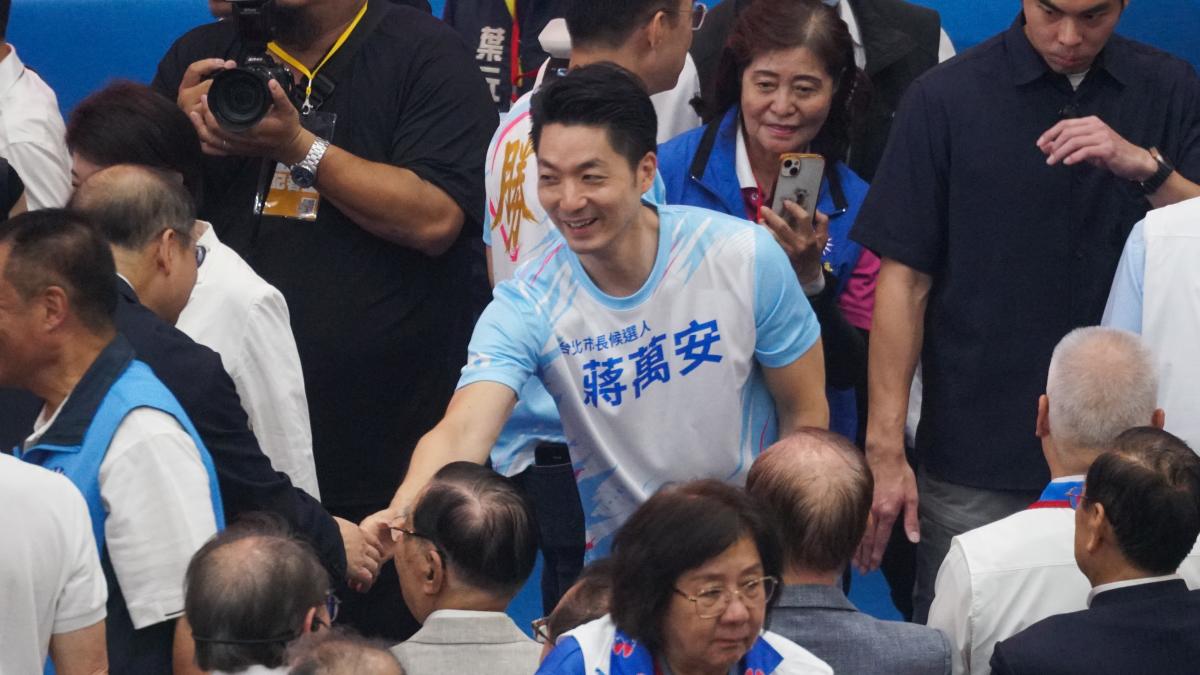
The Zhonglian carcinogenic oil scandal, which erupted in late June, has persisted for nearly a month without a clear cause. Seizing on rising public discontent, the Kuomintang (KMT), led by Taipei Mayor Chiang Wan-an, rallied KMT-governed counties, municipalities, and the Taiwan People's Party to stage a mass protest on Ketagalan Boulevard on July 25 under the slogan 'I Am Human, I Oppose Poisoned Taiwan,' targeting the Lai Qing-te administration.
Although the protest was hastily organized, the KMT demonstrated unprecedented unity—from the central party leadership and Legislative Yuan caucus to local leaders and grassroots legislators—marking a rare moment of cohesion since Chairperson Cheng Li-chun assumed office. Yet beneath this facade of unity, the oil scandal has subtly reshaped the KMT's internal power structure.
Prior to the scandal, the KMT lacked a dominant leader, with four key figures—Cheng Li-chun, Taipei Mayor Chiang Wan-an, Taichung Mayor Lu Hsiu-yen, and Legislative Speaker Han Kuo-yu—often described as 'four suns.' Each wielded influence based on their respective positions, political stature, and popularity, preventing any single figure from asserting authority on major issues. Internal factional struggles between pro-U.S. and pro-China camps further contributed to the party's instability over the past six months.
However, the anti-toxic oil protest unexpectedly disrupted this balance of power. Excluding Han Kuo-yu, who maintains a more neutral stance as Speaker, the internal standings of Chiang Wan-an, Lu Hsiu-yen, and Cheng Li-chun have shifted significantly.
Chiang Wan-an emerged as the most decisive leader, taking swift and forceful action that elevated his national profile and solidified his role as a central figure within the party. In contrast, Lu Hsiu-yen adopted a more reserved approach, leading to speculation about her declining influence. Meanwhile, Chairperson Cheng Li-chun, despite her formal authority, appeared less effective in mobilization compared to local executives, exposing potential limitations in her leadership.
This shift suggests a move away from the KMT's previous 'multi-sun' equilibrium toward a more centralized power structure anchored in Taipei. Chiang Wan-an's rising prominence may signal the emergence of a potential successor for party leadership beyond 2024.
FACT BOX
- Source: PR Times
- Category: News