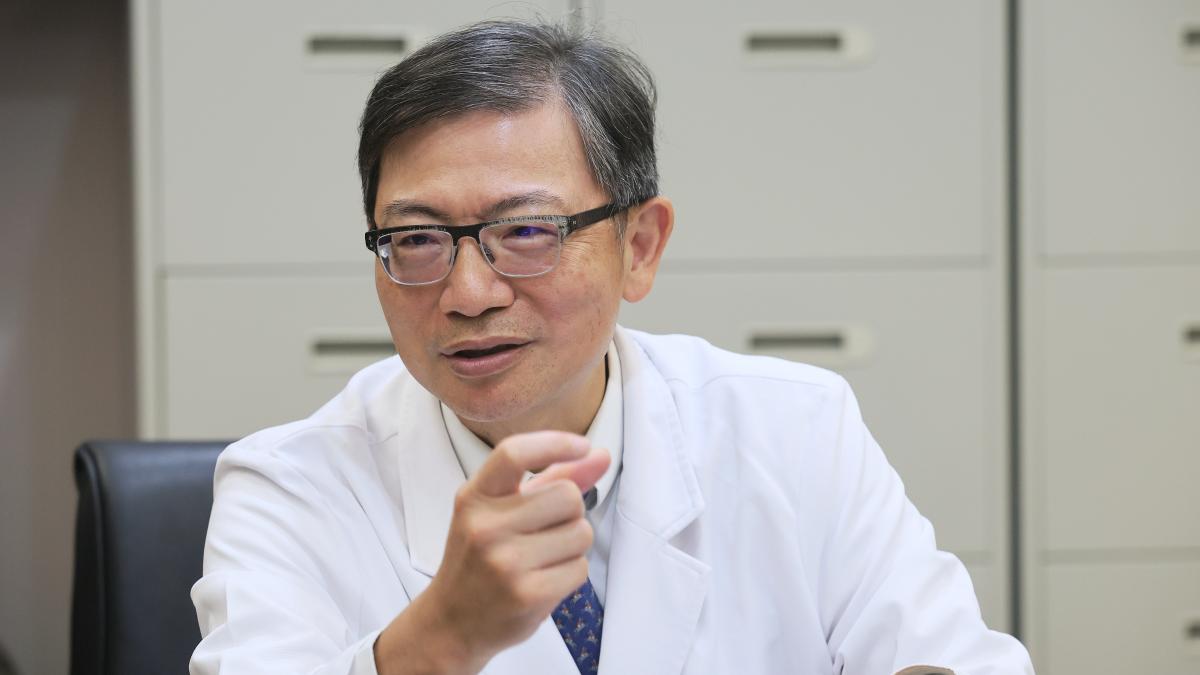
Lung cancer, dubbed the 'triple crown cancer king,' has become Taiwan's 'new national disease'—topping cancer deaths for 22 consecutive years, leading in cancer incidence for three straight years, and incurring the highest medical costs. To reverse this trend, the government offers free 'low-dose computed tomography (LDCT)' screening for those with family history or heavy smoking. Dr. Chen Jin-Xing, Deputy Director of NTU Cancer Center and Head of Surgery at NTU Hospital, stated: 'This public policy is good, but not good enough! Accessibility is too low, limiting the number of people who benefit.'
Policy Blind Spot: Mobile CT Screening Units to Break the 'One-Year Wait at Major Hospitals' Dilemma
Many mistakenly believe routine 'chest X-rays' can detect lung cancer, but only LDCT can effectively screen. Currently, government-funded screening is offered every two years to high-risk groups. However, after three years of implementation, only 250,000 screenings were conducted—far below the 800,000 to 1 million target—identifying about 3,000 patients.
Dr. Chen analyzed that the key reason for underperformance is 'insufficient equipment distribution and low accessibility.' Current regulations restrict LDCT installation to hospitals with over 20 beds, making screening highly inconvenient. At NTU Hospital, for example, waiting times for appointments can stretch from six months to a year.
Dr. Chen strongly advocates:
1. Relaxing installation restrictions: Allow rural clinics and primary care facilities to install LDCT. 2. Promoting 'CT screening vehicles': Encourage county and city governments to purchase mobile units that can tour community centers and shopping malls on weekends, bringing screening directly to the public.
This initiative has already gained positive responses: Taoyuan City has purchased a CT screening vehicle costing about NT$30 million, while Changhua County and Taipei City are in negotiation and evaluation stages.
Dispelling Cancer Myths: Why Should Everyone Over 40 Who Breathes Get Screened, Even Without Smoking or Family History?
'National Health Agency research shows that lung cancer patients with family history are twice as common as smokers!' Dr. Chen warns the public not to underestimate familial risk. But more alarming are those who neither smoke nor have family history yet still develop lung cancer. Dr. Chen himself, a non-smoker with no family history, was found to have three lung nodules requiring regular follow-up.
He explains that over 90% of lung nodules are benign—scars from past infections or inflammation—but require monitoring. 'Early-stage lung cancer is almost entirely asymptomatic. By the time symptoms like coughing up blood, hoarseness, shortness of breath, or bone pain appear, it's usually already advanced.'
Dr. Chen notes that unlike liver or cervical cancer with clear viral causes, lung cancer's etiology is extremely complex. A notable example is the shift from smoking-related small cell carcinoma in men to a surge in 'lung adenocarcinoma' among non-smoking women, now accounting for 70% of all lung cancers.
Additionally, pervasive environmental toxins pose risks. Beyond air pollution (PM2.5), asbestos in older building materials (banned only in 2018), potential asbestos in cheap cosmetics or baby products at markets, and even e-cigarettes and heated tobacco products are potential threats.
Dr. Chen emphasizes that cancer is essentially an 'age-accumulated genetic mutation and repair failure' process. 'Everyone over 40 who still breathes should consider self-funded LDCT screening (around NT$5,000–6,000) even without government subsidies.'
Insights from 20,000 Surgeries: Stage I vs. Stage IV—A World of Difference Between 'Rebirth' and 'Burning Money'
With over 20,000 surgeries performed, 70% of which were for lung cancer, Dr. Chen has witnessed the despair of late-stage patients.
The cost of late-stage lung cancer (Stage IV) is immense: even if surgery is possible, patients live in constant fear of recurrence and cannot work normally. Precision therapies that follow—especially targeted drugs—can cost NT$1–2 million annually. For non-insurance-covered new drugs, monthly costs exceed NT$200,000. 'This is literally 'burning money'! Those without financial means face tragic outcomes when diagnosed late.'
In contrast, early detection (Stage I) offers excellent prognosis. After tumor removal, Dr. Chen often tells patients: 'Congratulations! You're fine—come back next year for follow-up!'
He cites former Vice President Chen Chien-jen as an example: in 2015, while serving as Vice President of Academia Sinica, Chen was diagnosed with early-stage lung adenocarcinoma and successfully treated by Dr. Chen. Over the next decade, he served as Vice President, Premier, and President of Academia Sinica, making significant national contributions. 'Early detection and cure mean you can still live a meaningful life!'
Breaking Medical Limits: Asia's First 'Vessel-to-Trachea' Transplant Miracle
Beyond lung cancer screening and surgery, Dr. Chen is Asia's first surgeon to successfully perform 'tracheal transplantation.'
This innovative technique uses donated 'aortic vessels' transplanted onto the patient's trachea. Remarkably, the vessel develops cartilage over time, 'transforming into a trachea'—a miracle of life.
To gain approval from the Ministry of Health and Welfare's IRB for the first case, Dr. Chen faced immense pressure (the committee required the first patient to survive over three months before proceeding). With a 50% mortality rate, the night before surgery, he and his wife visited Dalongdong Baoan Temple to pray.
In 2015, Chen Chien-jen was diagnosed with early-stage lung adenocarcinoma during his tenure as Vice President of Academia Sinica and recovered after surgery. (Photo by Yen Lin-Yu)
The pivotal surgery succeeded, and the patient has survived over five years. To date, Dr. Chen's team has completed eight tracheal transplants, with six surviving—over a 70% success rate—offering hope to critically ill tracheal patients.
Flipping the 'Cancer Curve': Turning the Enemy into an Ally
Taiwan now diagnoses nearly 20,000 new lung cancer cases annually, the highest among all cancers. Dr. Chen joked, 'Taiwan's annual lung cancer cases are skyrocketing like TSMC stock!'
Yet he remains hopeful: rising numbers mean more 'early potential patients' are being caught in time. With widespread screening, early diagnosis, and resection, Taiwan can reverse the grim reality of over 10,000 annual lung cancer deaths and help more patients regain healthy breathing and lives.
FACT BOX
- Source: PR Times
- Category: News