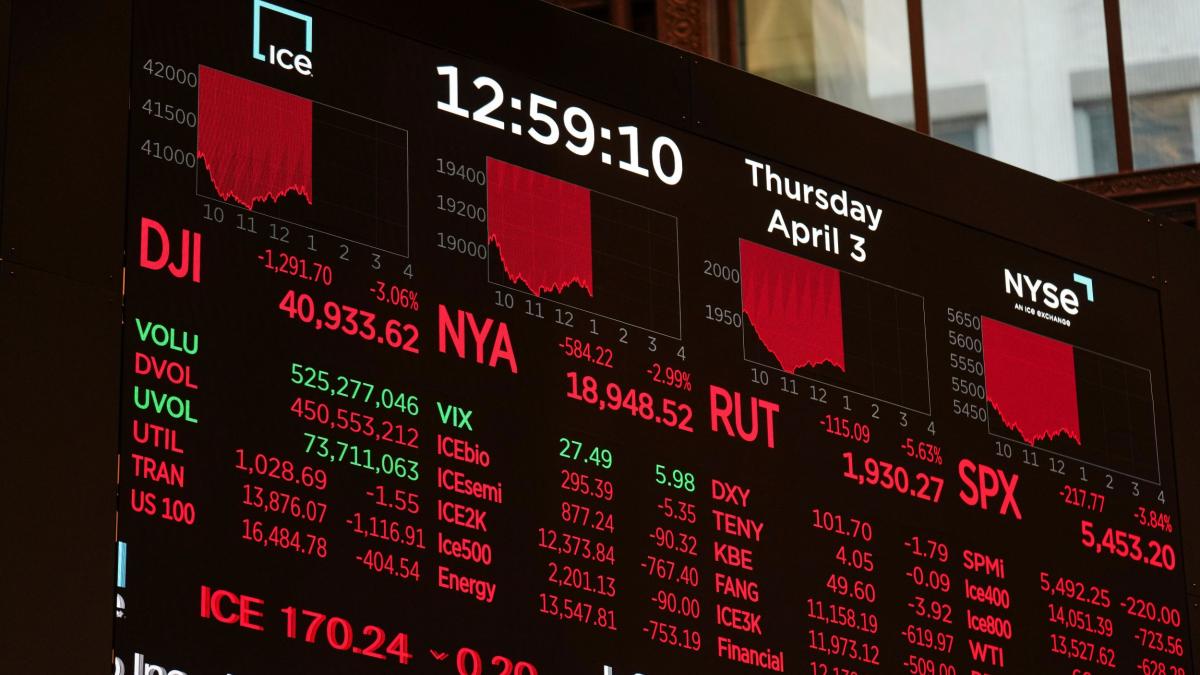
Recent U.S. economic data and hawkish statements from Federal Reserve (Fed) officials have led markets to widely anticipate at least one rate hike this year. Financial expert Ruan Mu-Hua pointed out that Google, Meta, and Microsoft are all raising funds, with financing costs starting at 7% interest rates. If even these tech giants must borrow at such high rates, how can AI finance withstand another rate hike?
Lee Kuei-Jung, adjunct associate professor in the Department of Finance at Tamkang University, stated on the financial program 'Wealth Path' that the current probability of a rate hike is around 37%, suggesting the Fed is likely to hold rates steady this time. The key indicators to watch are whether the 10-year Treasury yield exceeds 5%, or whether the real yield (inflation-adjusted) surpasses 2.7%.
Lee referenced a recent Goldman Sachs report, which highlighted that after deleveraging, the biggest challenges this year are adjustments in leverage and momentum factors, along with crowded trades. The semiconductor sector’s crowded trade became particularly evident between June 22 and mid-July. Goldman Sachs’ research suggests that once momentum factor adjustments conclude, there could be a rebound in the coming months—especially 2–3 months after hitting bottom.
Lee emphasized that the current rate hike probability stands at about 37%, indicating a neutral stance with no hike expected this time. However, markets are still closely watching developments, with a 25-basis-point hike already priced in for September. The Fed has provided little forward guidance, creating uncertainty and higher market volatility. Investors are currently at a loss on how to price Fed actions.
If a surprise rate hike occurs, Lee noted that Q2 corporate earnings for the S&P 500 are showing nearly 20% year-on-year growth, consistent with Q1’s momentum. However, after strong rallies in April, May, and June, investors may pause to observe. Higher volatility is expected in August and September, after earnings season and the U.S. elections conclude.
Previously, tech giants used share buybacks to recycle capital into the market. Now, they are increasingly borrowing from investors. The 'Magnificent Seven' once relied on buybacks, but now they must continuously raise external capital. This shift reflects their bet on future AI growth. Only NVIDIA currently has the capacity to conduct buybacks. Capital is now flowing heavily into NVIDIA.
NVIDIA CEO Jensen Huang recently stated in an interview that AI will absolutely not collapse within the next five years and could grow 5 to 10 times in scale over the next 5 to 10 years.
Host Ruan Mu-Hua noted Huang’s use of 'at least five years' instead of his previous blanket statement that AI has no risk of collapse. As a journalist, Ruan sensed a more cautious tone, suggesting Huang may be responding to current capital expenditure and financial conditions. Given Huang’s deep understanding of AI’s technological and financial landscape, this subtle shift signals caution.
Ruan questioned whether a rate hike would be announced early Thursday morning. AI financing is already under severe strain, with companies needing to borrow rather than burn internal cash. Google is planning to raise capital, and Meta and Microsoft have already done so—each at 7% interest or higher. If rates rise further, can AI finance survive?
Lee reiterated that while a rate hike this time seems unlikely, the critical thresholds remain: the 10-year yield must not breach 5%, and the real yield must stay below 2.7% after inflation adjustment. As long as these levels hold, a rate hike is unlikely.
FACT BOX
- Source: PR Times
- Category: News
- Organizations: Google / Meta / Microsoft