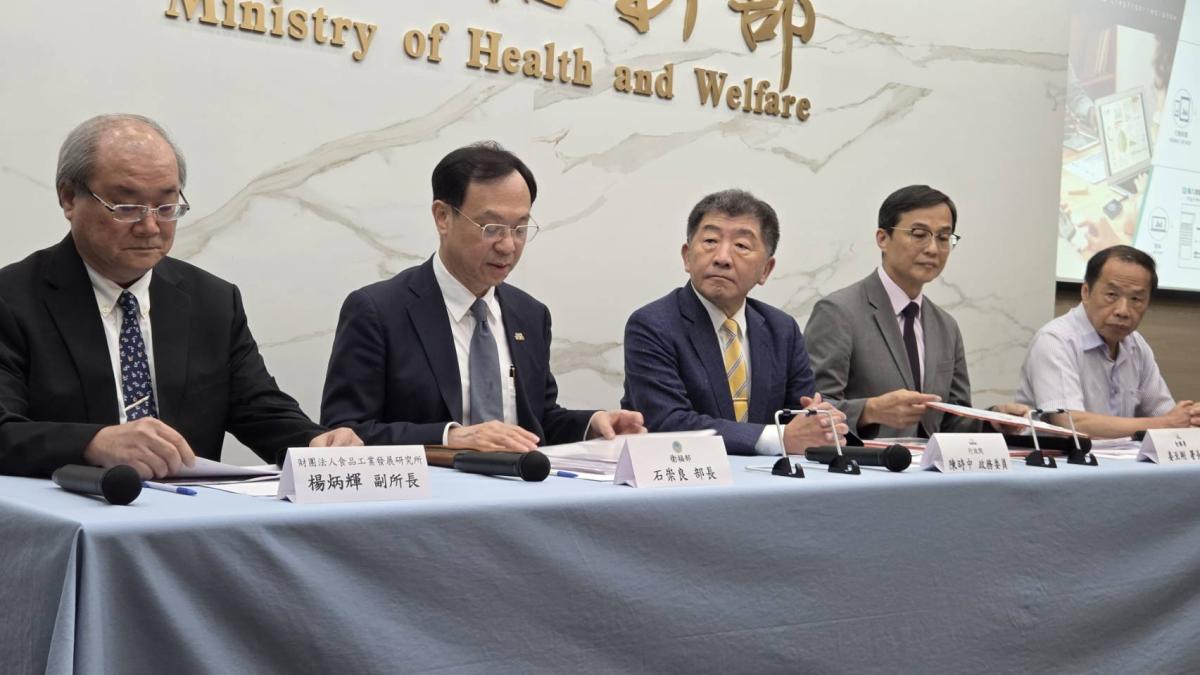
Carcinogenic benzopyrene was detected in Chungliang Oil's products, and after a month-long investigation, including on-site inspections by experts and scholars, it was found that high temperatures are a necessary condition for the formation of benzopyrene. Chungliang Oil relaxed the heat loss rate from 0.5% to 5% to match the roasting temperature for Brazilian soybean supply, and did not properly utilize the decolorization step. In addition to adding white clay (decolorizing agent), adding a small amount of activated carbon can reduce benzopyrene by 90%, but Chungliang Oil did not take this measure, which is the key cause of the issue. To thoroughly understand the cause of benzopyrene in 7 batches of oil products from Chungliang Oil between April and June 30, the Food and Drug Administration invited Yang Binghui, Deputy Director of the Food Industry Development Research Institute, along with 6 food scientists (processing, oils), food technicians, and legal experts, to directly enter Chungliang Oil's factory in Taichung City's Qingshui District for factory and process inspections, document reviews, and investigations. It is understood that the soybean raw materials for Chungliang Oil's oil production this time were purchased from Brazil. Before Brazilian soybeans are shipped, they must be pre-dried and roasted to prevent spoilage due to excessive moisture. However, if the temperature is not controlled properly, once it reaches 300 to 350 degrees, the beans will turn black due to overheating, releasing benzopyrene, a Group 1 carcinogen recognized by the International Agency for Research on Cancer (IARC) of the World Health Organization. Yang Binghui stated that Chungliang Oil's acceptable heat loss rate (the rate at which beans turn black) for soybeans was relaxed from 0.5% to 5% starting June 4, 2025, because a batch of imported soybeans from Brazil exceeded the 0.5% standard at that time, and to pass this batch of soybeans, Chungliang Oil relaxed the heat loss rate. Minister of Health and Welfare Shih Chung-liang stated that in the future, if businesses want to change the heat loss rate or process of soybeans, they must comply with Article 7, Paragraph 1 of the Food Safety and Sanitation Management Act: 'Food businesses shall implement self-management and develop food safety monitoring plans to ensure food hygiene and safety.' They should draft a food safety monitoring plan and report it to the department for approval before making any changes. Professor Chen Binghui of the Department of Food Science, Fu Jen Catholic University said that even if the soybean raw materials contain more than 2 ppb of the allowed amount of benzopyrene, during the degumming, deacidification, decolorization, and deodorization processes, businesses can remove most of the benzopyrene in soybeans if they use the right methods; especially during the decolorization process, businesses only add 'white clay' (a decolorizing agent) but do not add a small amount of activated carbon. According to experiments, if activated carbon and white clay are added simultaneously during the deodorization process, the benzopyrene in the raw materials can be reduced by 90%, but it was found that Chungliang Oil, whether due to negligence or ignorance, did not do this. Chen Binghui said that in the degumming process, soybeans originally contain a lot of phospholipids (commonly known as lecithin), and the first step of 'hydration degumming' must reduce the phospholipids to below 5000 ppm, which can also remove a small amount of benzopyrene. The investigation found that in the degumming step, the phospholipids of Chungliang Oil were repeatedly higher than the regulated standard of 5000 ppm, leading to incomplete oil degumming. Premier Chen Shih-chung stated that Chungliang Oil was heavily fined 170 million yuan for seriously violating the Food Safety and Sanitation Management Act, and together with Taishan, Fushou, and Fuma, the four companies must also bear the responsibility for the losses suffered by downstream businesses. Some people are concerned that the impact of the Chungliang Oil incident is so great that officials should come out and take responsibility, but Chen Shih-chung said that since June 30 when the case was known, the Ministry of Health and Welfare and the Food and Drug Administration have been working tirelessly with local authorities to investigate, including arranging experts and scholars to personally inspect the factory, 'Is there anyone who has been negligent in administration in this process? I don't think so.' Chen Shih-chung emphasized that due to the Chungliang Oil incident, the Ministry of Health and Welfare is also pushing for the amendment of the Food Safety and Sanitation Management Act with great effort. According to his exchange of opinions with various county and city mayors, including Taichung Mayor Lu Xuanyan and Kaohsiung Mayor Chen Qimai, the greatest consensus is that 'we should quickly amend the law and immediately correct the unreasonable system and system.'
FACT BOX
- Source: PR Times
- Category: Survey