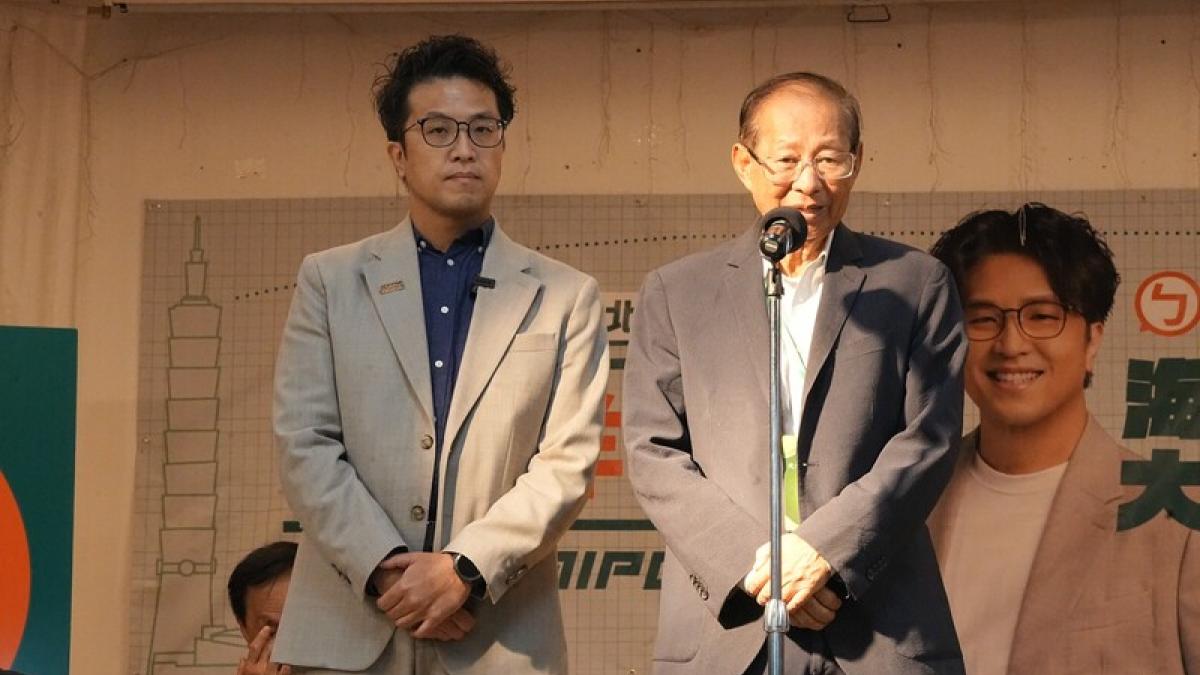
With only about four and a half months remaining until the year-end nine-in-one elections, candidates from all parties are in the thick of a fierce campaign. Shen Po-yang’s sudden week-long trip to the United States, ostensibly for diplomatic engagement, has instead been seen as abandoning the Taipei mayoral race and public interests, casting serious doubt on his electoral prospects. Is this not a form of 'self-surrender'?
Shen and his supporters will no doubt offer a hundred justifications, emphasizing that as a legislator on the Foreign Affairs and National Defense Committee, advancing Taiwan’s diplomacy and national security is his duty. But then why, when Cao Hsing-cheng recently exposed that the DPP asked him not to mention 'resisting China, protecting Taiwan' at Shen’s rally, did Shen remain silent?
Over recent months, Shen, running for Taipei mayor, has deliberately reshaped his public image—shifting from a hardline national security figure to a 'municipal policy expert' and even a 'handsome candidate,' distancing himself from intense geopolitical rhetoric. This transformation is evident to any clear-sighted intellectual in Taiwan. Yet now, just as he’s established this new identity, he abruptly departs for the U.S., abandoning his supposed new focus. Doesn’t this undo all his rebranding efforts? What is the real motive?
Don’t forget: Wu Szu-yao, a key strategist in Shen’s campaign and Taipei city councilor, recently claimed Shen’s low poll numbers compared to Chiang Wan-an stem from 'insufficient name recognition.' But clearly, the solution to low visibility isn’t a U.S. trip—it’s visiting temples and local markets. While foreign affairs may be Shen’s comfort zone, it does little to resolve his electoral困境.
The truth is, Shen’s sudden U.S. visit most likely aims to evade the toxic oil scandal. His core supporters, the 'Blue Birds,' are now shifting blame to Taichung Mayor Lu Hsiu-yen. But if Shen himself adopts this stance, it would be political suicide. The mainstream DPP wing dares not make such a controversial claim—especially one that deeply offends middle-class and moderate voters—their core campaign message. If blaming Lu were viable, Presidential Office Secretary-General Pan Men-an wouldn’t have angrily rebuked a TVBS reporter. The fact that he had to walk away proves they can’t push the blame—it’s why they’re avoiding the press.
Thus, Shen’s U.S. trip allows him to perfectly dodge the toxic oil issue, freeing him from having to repeat hollow slogans like 'central and local governments must cooperate'—a line no one believes. Since the DPP launched its mass recall campaign, how many in Taiwan still believe the party has any genuine intent to cooperate? Not even the Blue Birds believe it. Their rhetoric is entirely about 'eliminating the blue and white.'
Yet Shen can only hide for so long. Upon returning to Taiwan, he’ll have to pretend to care about municipal affairs for a while. But public demand for food safety and accountability won’t cease. If he keeps running, his image will only spiral further into irredeemability, and voters will increasingly see through his tactics.
*Author is a small and medium enterprise employee
FACT BOX
- Source: PR Times
- Category: News