The 2026 Kaohsiung mayoral election has been recognized by both the Kuomintang (KMT) and Democratic Progressive Party (DPP) as Taiwan’s most critical battleground, with the KMT explicitly declaring a 'Decisive Battle for Kaohsiung.' The strategic importance of this port city appears to have created a rare consensus between the two major parties. However, even before the campaign heats up, a labor support rally hosted by DPP candidate Lai Jui-long has signaled a clear political divide.
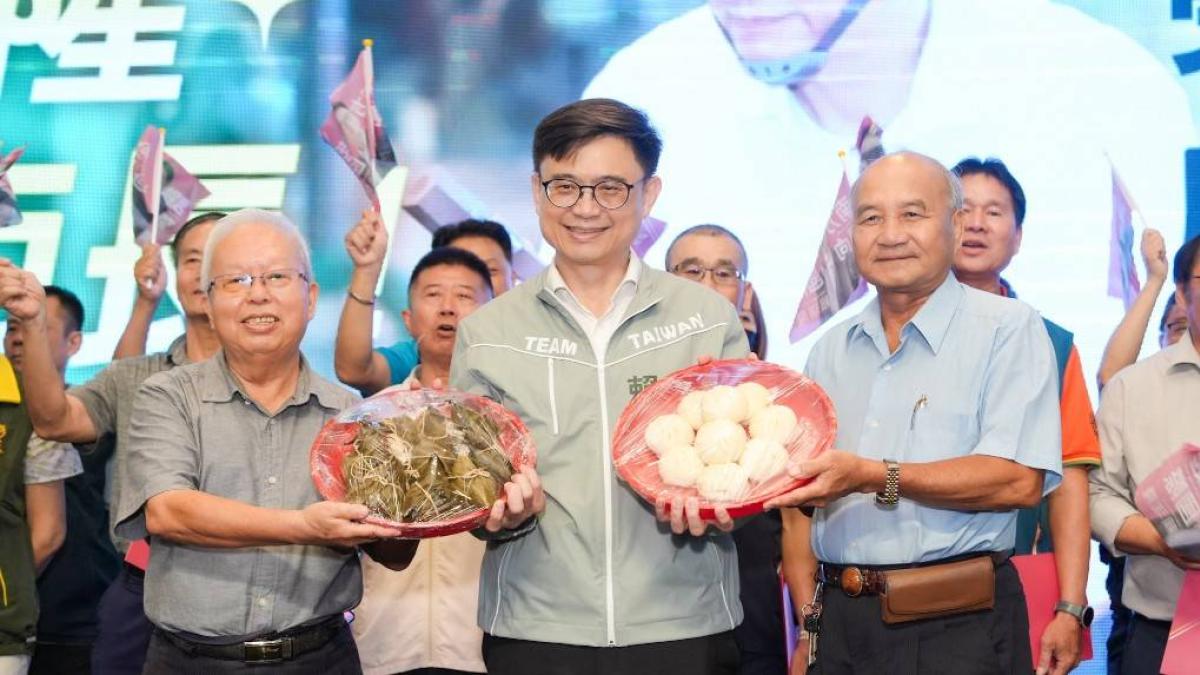
Lai Jui-long, a DPP legislator running for Kaohsiung mayor, officially launched the Labor Support Headquarters alongside Lin Ming-chang, chairman of the Kaohsiung City Federation of Labor and head of the support group. (Photo: Lai Jui-long Campaign)
What truly shook the local political landscape was not just the number of attendees, but the significance behind the lineup. The event brought together 15 major labor federations and 205 grassroots unions. Originally planned for 600 people, the venue had to add 150 extra chairs due to overwhelming turnout—yet it remained completely full.
Notably, the guest list spanned central and local labor authorities, labor rights groups, and union networks. Attendees included former Minister of Labor Hsu Ming-chun, former Kaohsiung Labor Bureau chiefs Li Huan-hsun, Chou Teng-chun, Chung Kung-chao, and Cheng Su-ling—figures widely respected as fair mediators and authoritative voices in labor policy. Also present were leaders from citywide federations, industrial unions, and sector-specific unions in steel, petrochemicals, port operations, transportation, vocational fields, and public enterprises, nearly all of whom attended in person and took on official campaign roles.
A local observer familiar with Kaohsiung’s union ecosystem stated bluntly: 'In recent mayoral elections, no candidate has managed to unite such a large and high-level coalition of unions this early in the race.'
The observer analyzed that while Kaohsiung hosts the highest number of unions in Taiwan—due not only to its large labor population but also its industrial diversity and strong union autonomy—integrating these independent groups with distinct histories, networks, and political leanings has always been difficult. This unprecedented gathering, they argue, indicates that Lai Jui-long has become the common denominator for the labor community.
Labor Support Headquarters unites 15 local federations, over 205 grassroots unions, and nearly 700 labor leaders. (Photo: Lai Jui-long Campaign)
Kaohsiung people value 'personal connections and local roots,' especially laborers who emphasize 'qi kou' (presence and accessibility).
The local observer pointed out that this reflects Kaohsiung’s unique organizational culture. The city’s residents are known for valuing personal ties and local familiarity. For laborers, 'qi kou' goes beyond understanding local culture—it means having a long-standing presence in the community and being reachable when needed. Compared to Ko Chih-en’s strength in slogans and national-level political rhetoric, Kaohsiung voters place greater trust in Lai Jui-long’s long-term credibility built through consistent engagement.
This trust wasn’t built overnight during the campaign. Over 30 years ago, Lai began his career as a legislative assistant and served at the Council of Labor Affairs, coordinating with unions nationwide. As a legislator, he has consistently advocated for labor retirement benefits, occupational safety, and union rights. This year, he successfully pushed for increased administrative funding for vocational unions, enabled pure old-system workers to voluntarily contribute and withdraw retirement funds earlier, and proposed legislation to raise the labor pension contribution rate under the new system to 9%.
A senior union official privately remarked: 'Union members are highly sensitive to politicians and don’t believe in slogans. What we look for is whether someone has always been there when we need them.'
Lai Jui-long’s legislative record consistently focuses on Kaohsiung’s infrastructure, industries, and labor issues.
Notably, a recent analysis by an independent online media outlet based on Legislative Yuan records has sparked local discussion. Lai’s legislative work centers on Kaohsiung-specific development, industry, and labor affairs, whereas Ko Chih-en excels in nationwide political debates. Local observers note that while both legislative styles have merits, as mayoral candidates, labor voters prioritize who understands the local context and industries. Lai’s long-term, place-based legislative performance is gradually translating into a trust advantage in the election.
The KMT has designated Kaohsiung as a key battleground for 2026. Among Kaohsiung’s 2.3 million voters, 1.4 million are laborers—over 60%. For any candidate, laborers are not just a single demographic but the foundational voting bloc that will shape the city’s electoral outcome. As the entire nation focuses on Kaohsiung, the city’s labor force is already setting the campaign’s rhythm in their own way.
Labor Support Headquarters unites 15 local federations, over 205 grassroots unions, and nearly 700 labor leaders. (Photo: Lai Jui-long Campaign)
FACT BOX
- Source: PR Times
- Category: News
- Dates in source: 2026