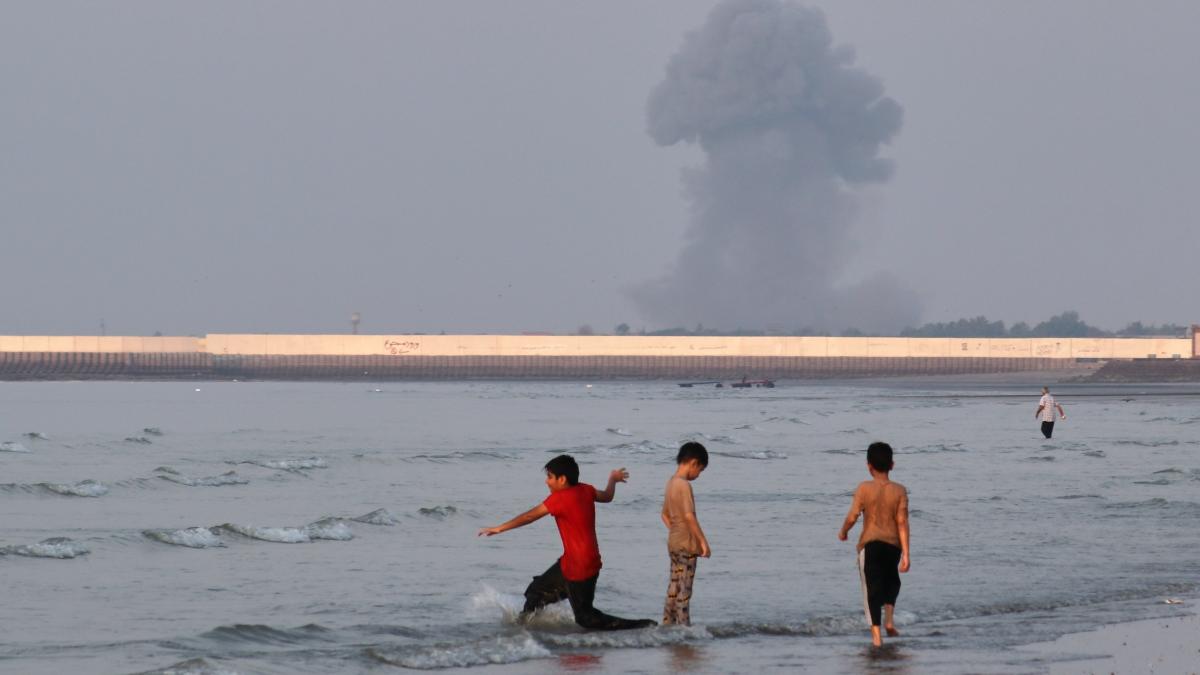
After Iran blocked the Strait of Hormuz in March, Yemen's Houthi rebels (also known as the 'Houthi Movement') recently attacked Saudi Arabian oil tankers at the Bab el-Mandeb Strait entrance to the Red Sea, nearly paralyzing maritime transport of oil and liquefied natural gas (LNG) from the Persian Gulf. Only the Suez Canal remains fully operational, plunging Asian nations into their second major energy crisis within six months.
The UK's Guardian reports that major Asian energy importers—Japan, South Korea, the Philippines, and Thailand—are highly dependent on Middle Eastern energy. With global strategic reserves and spot production capacity nearing exhaustion, countries face inflation and fiscal imbalance. The Washington-based think tank Center for Strategic and International Studies (CSIS) states this energy shock is forcing Taiwan, Japan, and South Korea to fundamentally shift their long-term energy policies, with nuclear power emerging as a pragmatic option for ensuring energy security.
Saudi Arabia has lost another maritime export route. After Iran blocked the Strait of Hormuz in March, Saudi Arabia rerouted its Persian Gulf crude exports via a domestic pipeline to the Red Sea port of Yanbu. Yanbu subsequently handled over 70% of Saudi crude exports, becoming a vital lifeline for Asian buyers including China, India, Japan, and South Korea. However, Houthi missile and drone attacks on Saudi tankers transiting the Bab el-Mandeb Strait have drastically reduced the capacity of this alternative route to its lowest level in months.
Matt Smith, Director of Commodities Research at international tracking firm Kpler, stated: 'Changes in tanker routing behavior reflect the shipping industry taking this threat seriously.' With insurers doubling war risk premiums, single voyage costs have surged by hundreds of thousands of dollars, pushing international crude oil prices back above $100 per barrel.
To bypass Houthi maritime threats, Asian nations must reroute oil north through the Suez Canal to the Mediterranean, then around Africa's Cape of Good Hope back to Asia. But this is not just a matter of cost and time—ultra-large crude carriers (VLCCs) cannot transit the Suez Canal fully loaded. They must offload half their cargo in the Red Sea, transport it via Egypt's Sumed pipeline to the Mediterranean for reloading, significantly increasing logistical complexity and doubling voyage duration.
Ahmed Helal, an expert at the Asia Group think tank, warned: 'Given global spare capacity, Asian countries are scraping the bottom of the barrel—strategic inventories are nearly depleted.' 'Some companies will be forced to shut down, governments may impose off-peak power rationing, and in extreme cases, debt default risks will rise significantly.'
Faced with Middle Eastern supply disruptions, Asian nations are taking emergency measures. Sri Lanka has shifted to a four-day workweek, Vietnam urges remote work, and many countries are restarting coal-fired power plants. As short-term flexibility runs out, Asian buyers are turning to distant energy sources. Japan and South Korea resumed purchasing Russian oil earlier this year; Chinese refineries have increased purchases of sanctioned Russian crude, showing how Middle Eastern turmoil benefits Russia. Meanwhile, the Philippines, India, and South Korea are strengthening oil and gas strategic reserves.
Beyond crude imbalances, liquefied natural gas (LNG) prices have surged 50–100% since February. Regarding the long-term impact of the Strait of Hormuz crisis on Northeast Asian energy policy, CSIS Senior Fellow Jane Nakano of the Energy Security and Climate Change Program noted that the crisis has reshaped nuclear power's role in Japan, South Korea, and Taiwan, revealing critical implications for long-term energy security and transition.
Japan: Prime Minister Yoshimasa Hayashi directed the Minister of Economy, Trade and Industry on June 29 to submit a policy package by August to strengthen national energy system resilience, with new nuclear reactor construction expected as a central recommendation. Japan's Seventh Strategic Energy Plan, approved in February 2025, reversed the post-Fukushima 2011 policy of minimizing nuclear reliance, setting a 2040 target for nuclear power to supply 20% of total electricity. Of Japan's 33 operable reactors, only 15 are currently operational. Nakano emphasized that to meet the 2040 target, Japan must build at least five new reactor units (about 5.5 GW) to offset retirements of reactors reaching their 60-year operational limits.
South Korea: President Lee Jae-myung continues nuclear expansion. In mid-March, the South Korean government announced plans to increase nuclear plant utilization from 60% to 80% and accelerate routine inspections to restart six reactors earlier. In January, President Lee stated that despite the 11th Basic Electricity Supply and Demand Plan being formulated by the previous administration, the current government will proceed with constructing two large nuclear reactors as planned. Nakano noted South Korea aims to raise nuclear's share from the current ~30% to 32% by 2030 and 35% by 2038. A January 2024 poll showed 70% of South Koreans support building new nuclear plants. Korea Hydro & Nuclear Power (KHNP) selected Yeongdeok County in North Gyeongsang Province in late June as the site for a new large-scale nuclear reactor.
Taiwan: Facing AI computing demands, the Lai administration adopts a pragmatic approach. Taiwan's last nuclear reactor ceased operation in May last year after its 40-year operating license expired, achieving the 'nuclear-free homeland' goal. However, explosive demand from high-tech industries and AI computing is expected to double electricity demand over the next five years—twice the growth rate of the past decade. A March 2024 poll showed over 60% of Taiwanese support nuclear power; among self-identified DPP supporters, over 47% believed nuclear plant operation 'does more good than harm,' a 14-point increase from March 2021. Following the legislature's May 2023 passage of the revised Nuclear Reactor Facilities Control Act, the Maanshan Nuclear Power Plant (Nuclear Plant No. 3), which had been gradually shut down, entered safety review for restart in March 2024.
Nakano emphasized that while President Lai Qingde views 'energy resilience' as the core rationale for adjusting nuclear policy, even if the government declares a 'nuclear restart,' immediate resolution of the energy crisis remains unlikely due to nuclear fuel, staffing, and regulatory approval timelines. She also stressed that 'extending reactor licenses' and 'supporting new reactor construction' should not be conflated in Taiwan. The Middle East energy crisis triggered by U.S.-Iran tensions has clearly strengthened nuclear power's role in Taiwan, Japan, and South Korea's energy policies, transforming it from a 'politically contentious power source' to a 'pragmatic policy choice.'
FACT BOX
- Source: PR Times
- Category: Survey
- Organizations: Kpler / CSIS / KHNP