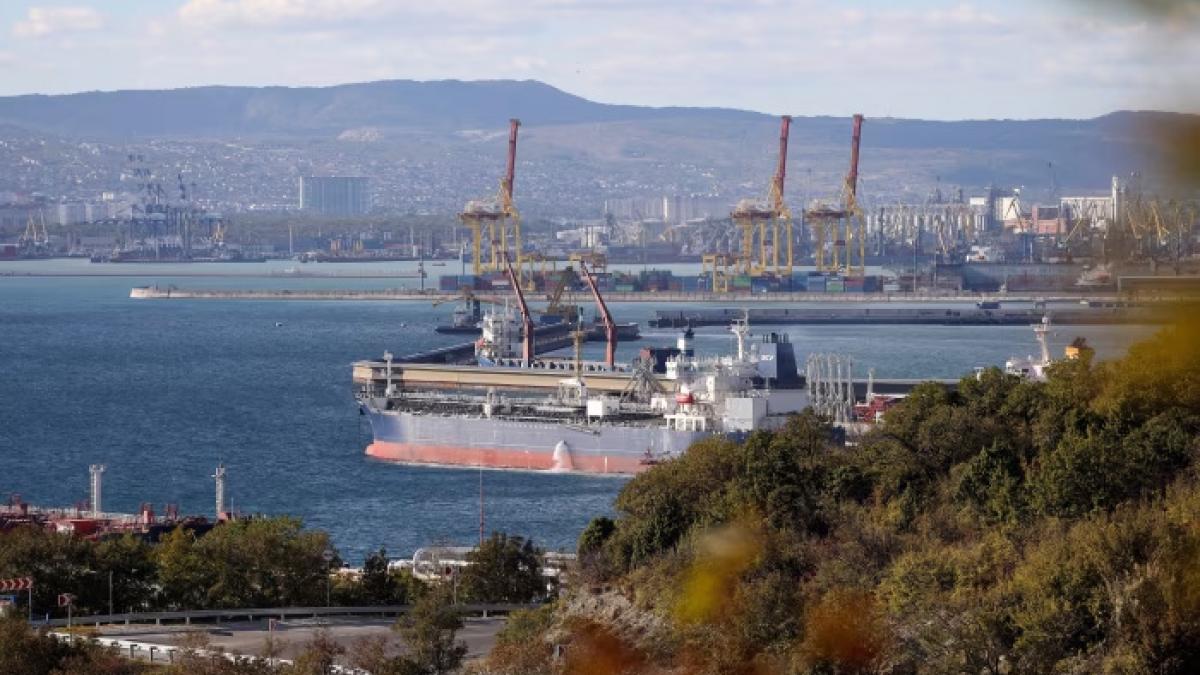
Ukraine has recently intensified drone and missile attacks on Russia’s Novorossiysk port, one of its most critical oil export hubs located on the Black Sea. These repeated strikes have damaged port infrastructure and disrupted oil shipments, leading to tangible supply constraints. The port serves as a primary gateway for Russian crude exports to global markets, particularly to non-G7 nations seeking discounted barrels.
At the same time, geopolitical tensions in the Middle East are threatening two other vital energy corridors: the Strait of Hormuz and the Bab el-Mandeb Strait. The Strait of Hormuz, through which about 20% of the world’s oil passes, remains vulnerable to potential closure amid rising tensions between Iran and Gulf states. Meanwhile, the Bab el-Mandeb Strait, a chokepoint connecting the Red Sea to the Arabian Sea, faces ongoing threats from Houthi attacks on commercial vessels off Yemen’s coast, undermining maritime security and increasing insurance and transit costs.
The simultaneous vulnerability of these three major energy routes — the Black Sea, the Strait of Hormuz, and the Bab el-Mandeb — is unprecedented. A full disruption across all three could cut off approximately 25% of global oil supply, potentially triggering a supply shock comparable to the 1970s oil crises.
Compounding the risk, the United States’ strategic petroleum reserves (SPR) have declined to their lowest level since the Reagan administration. According to the U.S. Energy Information Administration (EIA), in the week ending July 17, commercial crude inventories rose by about 2 million barrels, but strategic reserves fell by approximately 5.1 million barrels, resulting in a net drawdown of 3 million barrels. Total U.S. crude stocks are now at their lowest point since 1984.
The SPR was designed as an emergency buffer during supply shocks, but repeated drawdowns — especially the large-scale release under the Biden administration in 2022 to combat high prices — have depleted reserves, and refilling efforts have been slow due to budget constraints and low oil prices discouraging purchases.
Despite these mounting supply risks, oil prices have not reached new all-time highs. This is largely due to weakening demand signals: tight monetary policy in the U.S. is slowing economic growth, while China’s property crisis and sluggish consumption are dampening oil demand growth. Markets are pricing in a delicate balance — significant supply risks exist, but insufficient demand strength to push prices to record levels.
However, this equilibrium is fragile. Any escalation — such as a closure of Hormuz or a major Black Sea disruption — could trigger a sharp price spike, especially given the U.S.’s minimal strategic buffer. Analysts warn that the window for rebuilding reserves and strengthening energy security is narrowing.
Experts emphasize the need for diversified energy infrastructure, alternative shipping routes, and accelerated replenishment of strategic stocks. Some also argue that accelerating the transition to renewable energy is key to reducing long-term geopolitical exposure.
For investors and corporations, the key takeaway is not just price volatility, but the growing fragility of global energy supply chains. Geopolitical risk in energy will remain a dominant theme in the coming months.
In-depth analysis, comparative studies of national energy strategies, and scenario planning for investment portfolios are available to VVIP members. Join the 'Hot Talk! Wall Street' LINE community to engage with industry experts. Registration code: WSJWSJ.
FACT BOX
- Source: PR Times
- Category: News