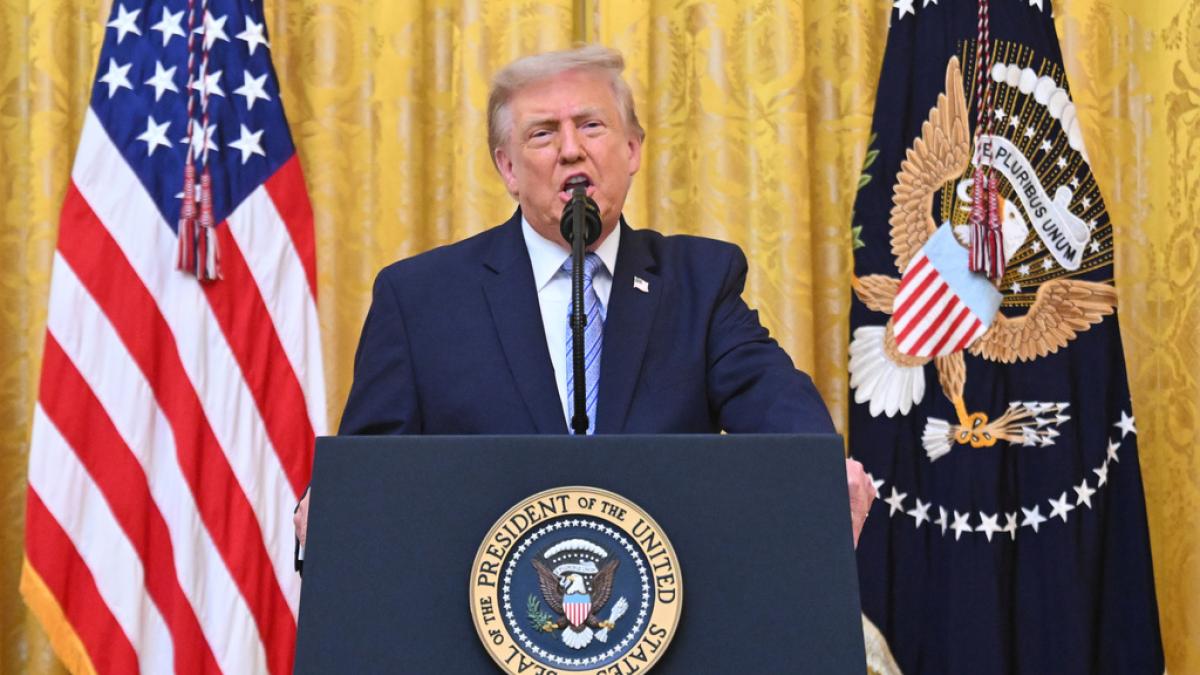
U.S. President Trump confirmed on July 27, local time, that the United States is currently engaged in 'very deep talks' (very deep talks) with Iran. However, he also issued a stern warning to Tehran, stating that if diplomatic efforts fail, the U.S. military is fully prepared to immediately resume 'very strong military action.' Trump revealed that he agreed to temporarily halt the expansion of military strikes against Iran due to active mediation by intermediaries coordinating the Middle East situation, giving diplomacy one final chance.
Earlier on July 27, during an exclusive interview with news outlet Axios, Trump disclosed that regional peace facilitators urged him to allow diplomacy one last opportunity before the situation spirals out of control. 'Everyone dealing with Iran advised me: "Please don't fire yet,"' Trump said, adding that he believes Tehran is now finally showing genuine willingness to reach an agreement, and granting a brief diplomatic window carries no significant downside. 'There is no loss, and no additional cost,' he stated.
Trump emphasized he has little patience for prolonged negotiations, insisting any diplomatic breakthrough must happen swiftly. When asked by the media how much time he would allow for talks, Trump bluntly replied: 'Not much time. This either moves quickly, or it doesn't happen at all.'
Later, aboard the presidential aircraft 'Air Force One' en route to Michigan, Trump further elaborated on his stance. He noted that Iran's willingness to return to the negotiating table stems entirely from the severe impact of recent U.S. military strikes. 'Without our prior actions, they wouldn't even want to talk to us,' Trump emphasized. 'Whether through proxies or direct contact, Iranian officials have proactively requested meetings. Since they want to talk, we are now holding talks to see what happens next. We genuinely have a chance to reach an agreement.'
Trump detailed the shift in Iran's attitude, revealing that Iranian officials have publicly and privately requested the U.S. to halt further airstrikes—a clear sign of the effectiveness of U.S. military pressure. 'Their people said: "Please stop dropping bombs, stop firing,"' Trump added. 'We are having good conversations. I think there's a good chance of achieving some tangible results; but if not, we will immediately return to the action mode of two days ago.'
During the interview, the media raised recent reports suggesting that prolonged U.S. military aid to Ukraine has put American weapons and ammunition stocks at risk of depletion. Trump immediately dismissed these claims, stressing that his administration is rapidly replenishing military supplies. 'Our ammunition is very abundant,' Trump said. 'When I left office last time, the arsenal was full. Now we are rapidly expanding production lines, especially for Patriot missile production facilities.'
Additionally, Trump proposed a controversial policy idea: using Iranian assets currently under U.S. control to compensate for damages caused by Tehran's previous attacks. 'We intend to use Iran's own funds to pay for the destruction they caused in the past,' Trump stated clearly.
Netanyahu: Iran Is Washington's Top Priority
This major diplomatic shift coincides with Trump's scheduled meeting with Israeli Prime Minister Benjamin Netanyahu at the White House the following day. It is widely expected that the Iran issue will be the central focus of the U.S.-Israel leaders' summit. Trump described Netanyahu as a 'wartime prime minister' and said that while the two leaders have minor differences on certain issues, their overall strategic goals are highly aligned.
Trump emphasized that previous U.S. military actions fundamentally prevented Iran from acquiring nuclear weapons, thereby solidifying Israel's security. 'I plan to have a good talk with Bibi [Netanyahu's nickname]. If I hadn't been president, Iran would already have nuclear weapons, and Israel might have been destroyed,' Trump said.
Before departing Israel for Washington, Netanyahu also confirmed to the media that the Iran situation will be the top agenda item at the White House meeting. In a statement, Netanyahu said: 'I will discuss all current core issues with President Trump, with Iran being the foremost. Our goal is to ensure national security and further expand the circle of regional peace around us.'
FACT BOX
- Source: PR Times
- Category: News