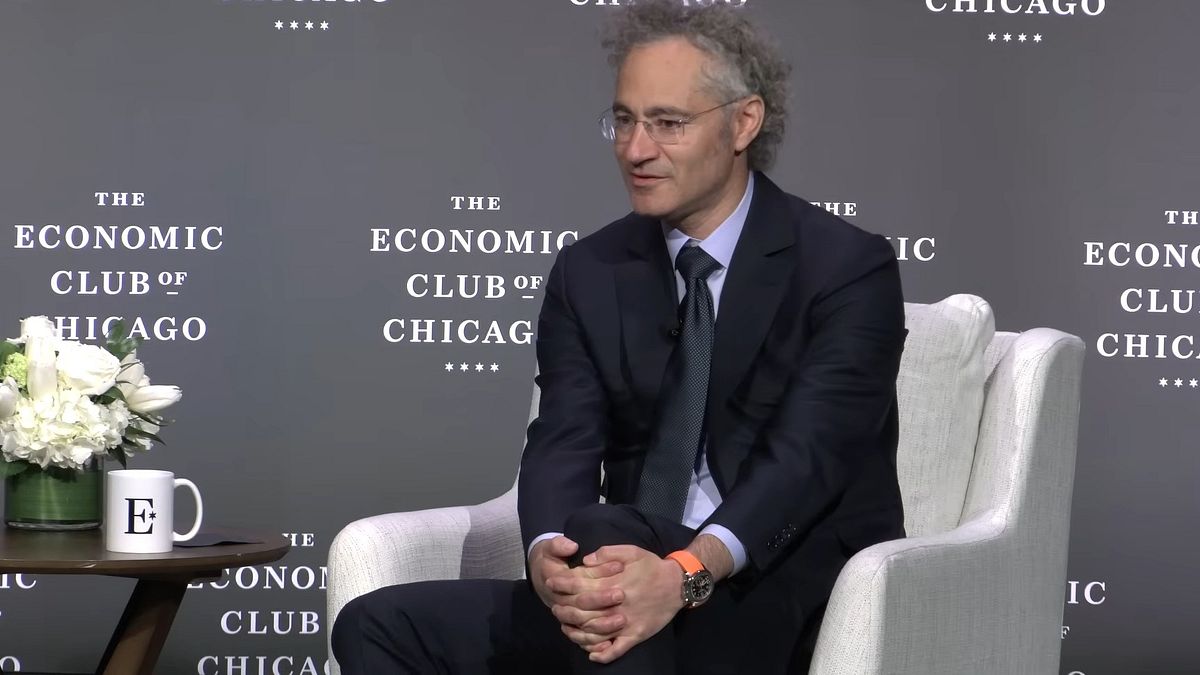
Palantir CEO Alex Karp recently stated on FOX Business that the United States should avoid adopting Europe’s highly restrictive regulatory framework when formulating artificial intelligence (AI) policies. On July 27, Karp emphasized, 'We have a failed template, and that’s Europe,' warning that European regulatory practices serve as a cautionary tale for U.S. policymakers, especially as the Trump administration carefully evaluates how to respond to rapidly evolving AI technologies.
Karp highlighted that while Palantir’s business is thriving in the U.S., the company faces ongoing exclusion from European markets. 'I’ve watched Europe regulate itself out of commercial competition,' he said. 'The companies that ultimately emerge often exist only behind regulatory firewalls, and outsiders don’t believe they are real commercial entities.'
Karp asserted that the AI revolution is already in full swing and cannot be reversed. 'This revolution has already taken off—you can’t put it back in the bottle,' he declared. This statement follows Palantir’s recent recommendation to the Trump administration against banning open-weight AI models. Meanwhile, U.S. Treasury Secretary Scott Bessent has expressed concern that open AI models developed in China may be leveraging technology originating from American labs.
Karp stressed that open-weight AI models are the optimal choice for Palantir’s clients and, in some cases, outperform frontier models. He clarified that he is not opposed to closed-source models but prioritizes meeting customer needs. Many Palantir clients, he noted, are currently 'angry' because they feel trapped in a 'token maxed' situation—paying high AI token fees without receiving sufficient business value in return.
According to Karp, the primary obstacle to AI adoption in the U.S. is not fear of foreign competition, but growing skepticism among businesses about whether AI investments are truly generating value. 'In this country, what’s really slowing AI adoption is people saying, “I can’t use these products because I’m not getting value… or I’m just transferring the value of my business to someone else,”' Karp said. 'They want to ensure they can use these models in genuinely valuable ways and that their business value isn’t being monetized by others.'
As Palantir, co-founded by Karp, relocated its headquarters from Denver to Miami in February—amid a broader trend of businesses and wealthy individuals moving to Florida for its favorable tax environment—Karp emphasized that the U.S. must prioritize 'winning this race' in the intensifying global AI arms race, with China emerging as a major competitor.
'We will eventually regulate AI—there’s no doubt about that—but the question is: Who will regulate it? Do they truly understand what they’re doing? And will the regulation allow us to ultimately win?' Karp told FOX Business. He rejected both extreme overregulation and complete deregulation, advocating instead for a balanced U.S. approach that encourages innovation while managing risks.
'There’s hard regulation—the European model—which clearly isn’t working, and then there’s no regulation at all, which I obviously don’t support,' Karp said. 'These are extremely complex issues. There’s only one country in the world that might get this right—or completely mess it up—and that’s us. But just because the outcome could swing in either direction doesn’t mean we shouldn’t keep pushing forward and striving to get it right.'
FACT BOX
- Source: PR Times
- Category: News
- Organizations: Google