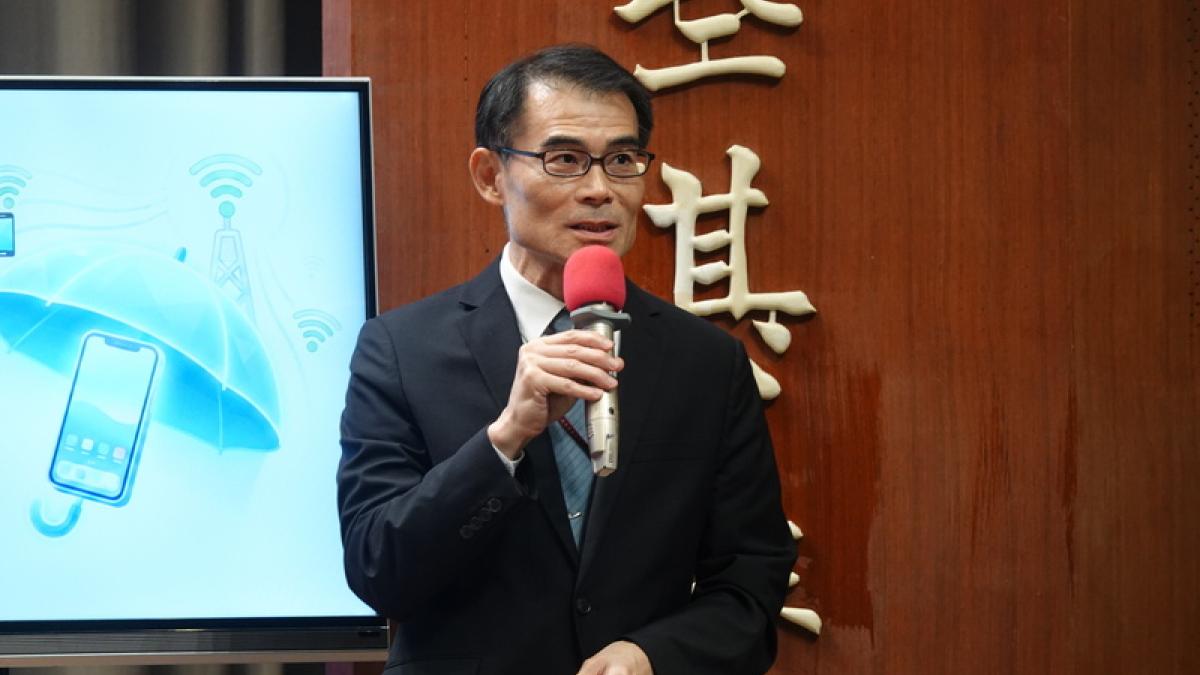
Since taking office, President Lai Ching-te has vigorously promoted a whole-of-society defense resilience policy. On August 10 and 13 this year, this policy will turn the public into test subjects—by throttling mobile network speeds in counties and cities in northern and central Taiwan, while fixed-line internet remains unaffected. Affected users will only be able to use voice calls and SMS. After the announcement, legislators from different parties expressed mixed opinions. Some questioned whether the 2:30 PM to 3:00 PM throttling window was timed to coincide with stock trading hours, while opposition lawmakers criticized the exclusion of southern regions—strongholds of the ruling DPP—as discriminatory.
Yet in this digital age, telecom disruptions and external cyberattacks occur daily in Taiwan. In the past, submarine cables in Matsu were severed, government and corporate websites were hacked to steal official data, and the stolen information was later auctioned on the dark web—frequent headlines in the media.
When it comes to mobile network throttling, the real issue isn’t which administrative region is in power, nor whether users can no longer watch TikTok, YouTube, or stream dramas, or who will compensate for consumer rights violations. The fundamental problem is that President Lai, the Ministry of National Defense, and the NCC are placing the entire burden of resilience testing on end users—an imbalance of priorities. If we compare the network to the human body, ordinary users are merely peripheral nerves, while the government is the brain. In wartime, uninterrupted leadership and command capabilities, along with emergency response plans from Taiwan’s three major telecom operators, are where true resilience lies.
In other words, the core of network resilience testing should be on the government and telecom providers, not end users. Yet President Lai repeats the word 'resilience' incessantly, to the point of sounding like a broken record. Is he and the government truly prepared? The failure during the Matsu submarine cable outage—where restoration time and crisis response were severely lacking—already reveals systemic shortcomings. If a power outage or physical destruction disables a network data center, causing mass disconnection (including fixed lines) and panic, does the government have the crisis management capability to respond? Targeting the public with mobile throttling is clearly putting the cart before the horse.
Another reality that citizens and legislators must understand: Taiwan currently has only one low-orbit satellite, the Chiping (Zeping), which has a limited lifespan. Even Starlink loses an average of one to two satellites per day from orbit.
Some may argue that Chunghwa Telecom has partnered with European firm OneWeb, using their low-orbit satellites as backup for government departments and a few companies when fixed or mobile networks fail. However, there is no publicly verifiable evidence of successful real-world testing—whether in military drills, wartime command between central and local governments, or emergency medical and fire rescue operations. Let alone extending this capability to the general public. As an island nation, Taiwan would instantly become fragmented and its people directionless if cut off from the internet.
When President Lai pushes for mobile throttling tests, lawmakers—across party lines—should instead be asking about the stock exchange’s network resilience. Can trading systems remain stable during unannounced tests? Are data centers established overseas to prevent financial panic? Throttling that affects stock traders could trigger market chaos.
This mobile throttling exercise reveals that the government has failed to grasp the core issues of a networked society. Political discourse remains superficial. If such a crisis were to occur, not only would national security be compromised, but the entire population could become disconnected and helpless.
*Author is a writer.
FACT BOX
- Source: PR Times
- Category: News
- Organizations: OneWeb / Starlink