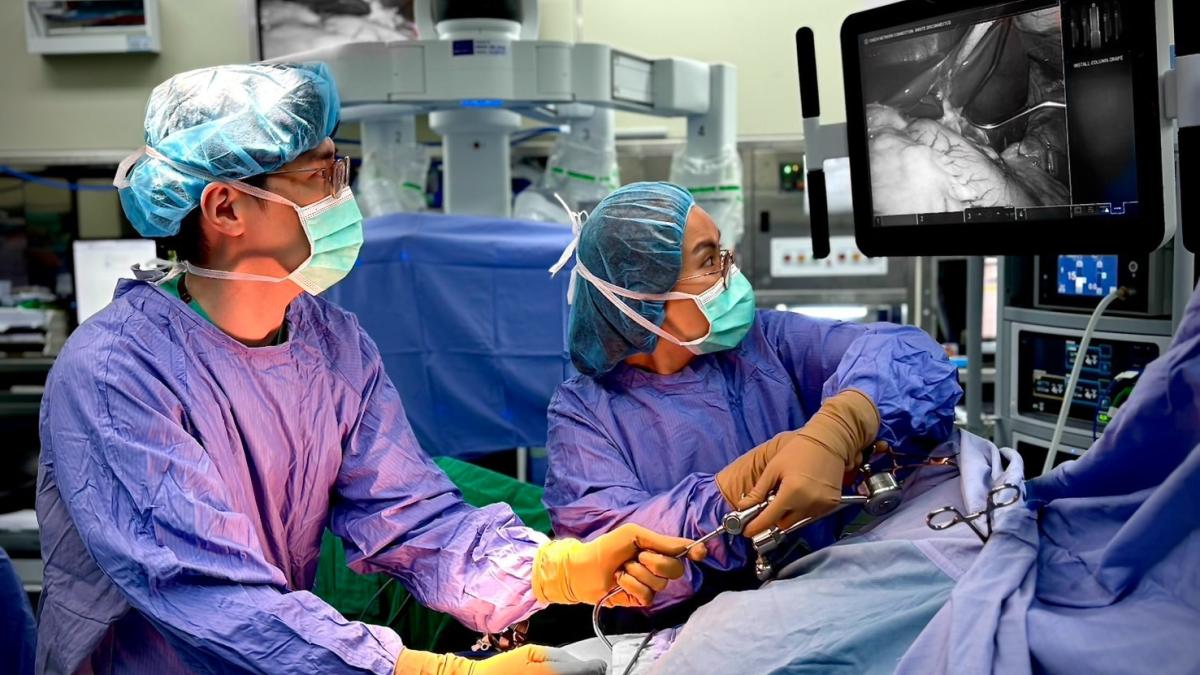
Ms. Zhang, a 36-year-old middle school teacher, maintains a regular lifestyle but has long suffered from gastroesophageal reflux disease (GERD), often waking up in the middle of the night due to acid regurgitation. This severely disrupted her sleep quality, affecting her work performance and daily life. After seeking treatment at Shuang Ho Hospital, comprehensive examinations revealed she not only had refractory GERD but also a hiatal hernia, which compromised the anti-reflux mechanism at the gastroesophageal junction. Following joint evaluation by gastroenterologists and general surgeons, she underwent hiatal hernia repair combined with transoral incisionless fundoplication (cTIF), a minimally invasive procedure that precisely treated the affected area. Post-surgery, her recovery was smooth.
Dr. Li Tsung-Ying, Director of the Division of Gastroenterology at Shuang Ho Hospital, stated that GERD is a common chronic digestive disorder in Taiwan, with a prevalence rate of 25%. Proton pump inhibitors (PPIs) are typically the first-line medication, effectively suppressing gastric acid. However, about 40% of patients are classified as having "refractory GERD" due to inadequate drug response or concerns over long-term side effects. These patients often wake up at night from acid reflux despite medication, significantly impairing their quality of life.
Dr. Chiu Yun-Ning, a general surgeon at Shuang Ho Hospital, explained that the causes of GERD are complex, involving not only lifestyle habits but also lower esophageal sphincter dysfunction, hiatal hernia, delayed gastric emptying, and changes in intra-abdominal pressure. Even individuals with regular routines may develop refractory GERD. If left untreated, recurrent episodes can lead to esophagitis, ulcers, and increase the risk of precancerous conditions such as Barrett’s esophagus.
Dr. Sung Jui-Hsiang, Director of the Department of Surgery, noted that many patients with stubborn GERD also have a hiatal hernia. Without repairing the hernia, drug therapy alone cannot correct the structural abnormality at the gastroesophageal junction, leading to frequent symptom recurrence. Shuang Ho Hospital has recently introduced the da Vinci robotic surgical system for hiatal hernia repair. Compared to traditional laparoscopic surgery, the robotic system offers high-definition 3D visualization and flexible multi-jointed instruments, enabling more precise deep suturing and reconstruction. This reduces tissue traction and postoperative pain, results in smaller incisions, faster recovery, and improves the quality of hernia repair—ultimately enhancing GERD treatment outcomes.
FACT BOX
- Source: PR Times
- Category: News