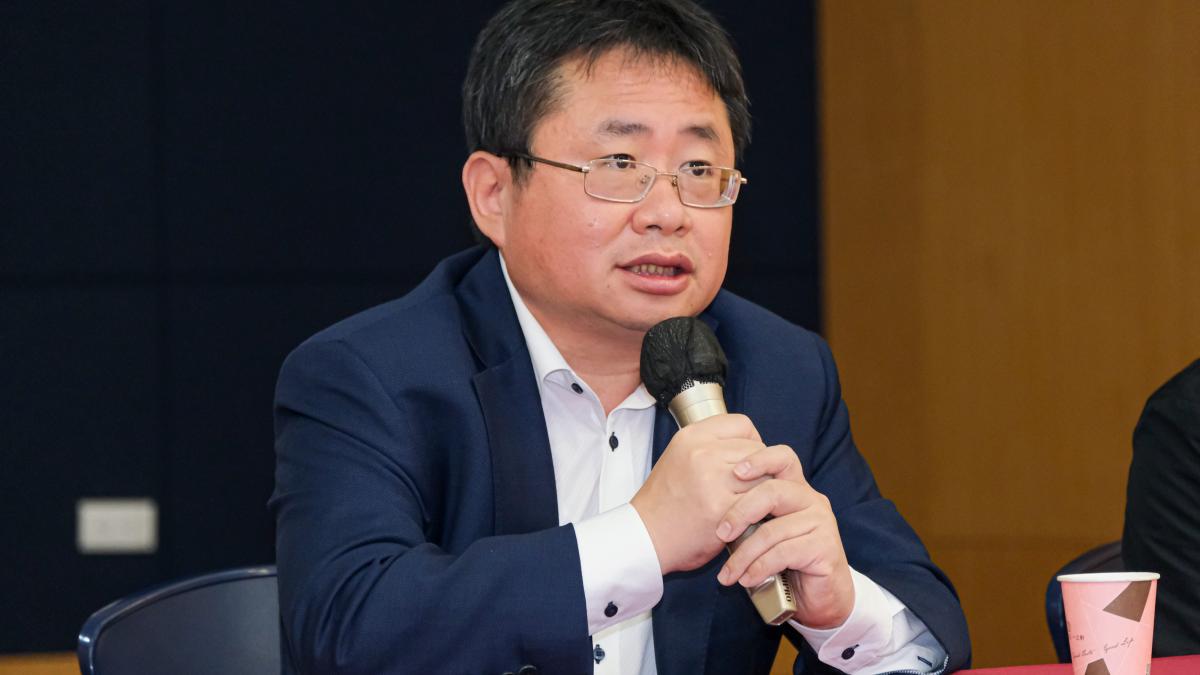
The Chung Lien Oils scandal over contaminated cooking oil has sparked widespread food safety concerns, prompting the Blue-White coalition to hold a 'I Am Human, I Oppose Toxic Oil' rally on Ketagawa Boulevard on the 25th. Akio Yatabe, CEO of the Indo-Pacific Strategy Institute, stated on the program 'After Work, Let's Talk' that while no one opposes the public's demand for food safety, the primary responsibility lies with the manufacturer that produced the tainted oil. He emphasized that both the central government, responsible for policy and oversight, and local governments, responsible for frontline inspections, share accountability, and the issue cannot be solely blamed on one level of government.
Yatabe noted that Japan has faced similar food safety crises, such as the Snow Brand milk scandal and the Kobayashi Pharmaceutical red yeast rice incident, where the companies ultimately bore the greatest responsibility and market consequences. 'The most important and primary responsible party is the manufacturer,' he said. 'But the central and local governments also have their respective duties.'
On whether it is appropriate for local leaders to join street protests, Yatabe pointed out that while central authorities set national policies, local governments are the first line of enforcement—overseeing production processes, supply chains, and food inspections. While public protests over food safety are understandable, he criticized local leaders who possess administrative power for solely blaming the central government, calling this logic incomplete.
Regarding a local official at the rally who held up an apple and said they were afraid to buy it due to pesticide residues, Yatabe responded sharply: 'If you're afraid to buy it, then investigate. You have executive authority.' He argued that local governments, entrusted with inspection duties, should release test results and trace the source of problems instead of merely expressing dissatisfaction on the streets.
Yatabe criticized the Kuomintang (KMT) for expanding 'anti-toxic oil' into 'anti-toxic Taiwan,' thereby linking a livelihood issue with ideology and turning a food safety crisis into a political mobilization tool. He warned that if the focus remains only on demanding officials' resignations or partisan attacks, the underlying systemic issues may remain unresolved once the media spotlight fades.
At the same time, he criticized the DPP for weak crisis management and poor communication, failing to clearly explain the distribution of the tainted oil or offer a concise, compelling narrative—allowing the opposition to dominate the discourse. 'Since the food safety controversy has already been politicized,' Yatabe said, 'the ruling party must respond with more complete evidence and reasoning, rather than continue being led by the nose by its opponents.'
Additional exclusive reports from Feng Media: · Chung Lien's carcinogenic oil storm: Who is responsible—central or local government? A writer highlights a Health Ministry statement that 'self-incriminates': Lucy Lu smiles · Is Chiang Wan-an laying groundwork for the 2028 presidency? After warning that the Ketagawa rally could hurt Lucy Lu, someone cites the KMT's tragic past: 'It's not too late to turn back' · Who is the 'big name' appearing with Chiang Wan-an and Lucy Lu? She claims the July 25 Ketagawa rally will be a turning point for 2026: Shen Po-yang marginalized
FACT BOX
- Source: PR Times
- Category: News