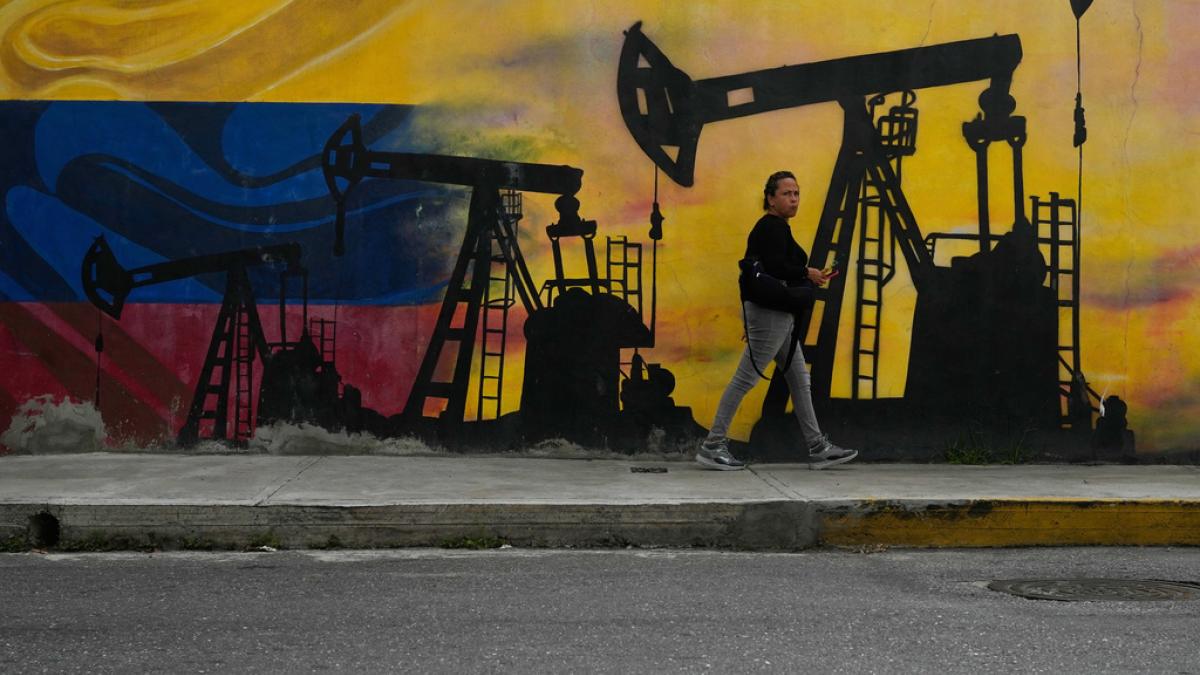
Due to escalating tensions in Iran and disruptions in Middle Eastern shipping lanes, U.S. Gulf Coast refineries are drastically shifting their import sources, purchasing large quantities of heavy crude oil from Venezuela. According to the latest data from the U.S. Federal Energy Information Administration (EIA), total U.S. crude oil imports from Venezuela this year have risen to their highest level in eight years, becoming a crucial pillar for U.S. refiners to fill the gap left by Middle Eastern oil supply.
Federal data shows that in January, the U.S. imported an average of approximately 110,000 barrels per day from Venezuela. By June, this figure had surged to about 575,000 barrels per day. This daily average not only marks a new high since 2018 but also symbolizes a rapid recovery in energy trade between the two nations. In 2018, Venezuelan President Nicolás Maduro’s controversial re-election triggered strict U.S. sanctions, leading to a complete halt of Venezuelan crude imports by the U.S. in 2019.
Texas and Louisiana refineries have become the primary recipients. The lifting of this trade blockade stems from U.S. military actions against Maduro in January, followed by the Trump administration gradually easing sanctions on Venezuela’s state-owned oil company PDVSA, allowing U.S. and international oil companies to re-enter the market.
According to The Texas Tribune, among U.S. states receiving Venezuelan crude this year, Texas leads with a 43% share, where over a dozen refineries designed to process high-sulfur heavy crude are operating at full capacity. Louisiana receives 39% of the imports, with the remainder distributed to Mississippi and Delaware.
This surge in imports directly compensates for the sharp decline in crude imports from Saudi Arabia and Iraq. In 2025, these two Middle Eastern nations accounted for over 12% of total crude imports to the Gulf Coast. However, the Strait of Hormuz—the strategic chokepoint connecting the Persian Gulf and the Arabian Sea—has recently faced blockades and ongoing shipping disruptions, causing Middle Eastern oil supply to the U.S. to nearly vanish.
Debnil Chowdhury, a refining analyst at S&P Global Energy, stated: 'It’s not surprising that the U.S. is importing large volumes of Venezuelan crude—there’s a real market need, especially with the Strait of Hormuz closed. Refineries must secure every available barrel of heavy crude on the market.'
Production bottlenecks and deteriorating infrastructure are limiting short-term growth. Since the Strait of Hormuz was first closed in late February, U.S. crude imports from Venezuela have nearly quadrupled. However, industry analysts warn that as Venezuela approaches its current production capacity limits, this explosive growth is expected to gradually slow.
Venezuela currently produces about 1 million barrels of crude per day. With Chevron and other international oil companies expanding operations after reaching agreements with the Venezuelan government, the country’s daily output is projected to reach a bottleneck of around 1.15 million barrels by 2027.
Kyle Bertamini, chief analyst at energy consultancy Enverus, analyzed: 'To achieve the next wave of significant production growth, massive capital investment is required. We believe such investments are unlikely to deliver substantial capacity increases before the early 2030s.'
Venezuela was once a global energy powerhouse, producing over 3 million barrels per day. However, years of underinvestment, economic turmoil, international sanctions, and severe aging of oilfield infrastructure have led to a devastating collapse in production capacity in recent years.
Beyond long-term issues, recent natural disasters have cast a shadow over production recovery. While initial industry assessments indicate that the strong earthquake on June 24 did not cause major direct damage to key oil-producing regions, refineries, or export port terminals, the quake resulted in over 5,000 deaths and an estimated $19.6 billion in economic losses.
Analysts worry that massive post-disaster reconstruction needs could divert the country’s already limited financial resources. S&P Global Energy analyst Chowdhury added: 'If the Venezuelan government has to redirect funds toward earthquake relief, it could indeed have knock-on effects on some oil production.'
Lorena Moscardelli, director of the Bureau of Economic Geology at the University of Texas, stated: 'Now more than ever, it’s critical that everyone recognizes Venezuela’s recovery depends on its ability to wisely utilize its abundant natural resources—and most importantly, the resilience, talent, and determination of its people.'
FACT BOX
- Source: PR Times
- Category: News
- Organizations: Enverus