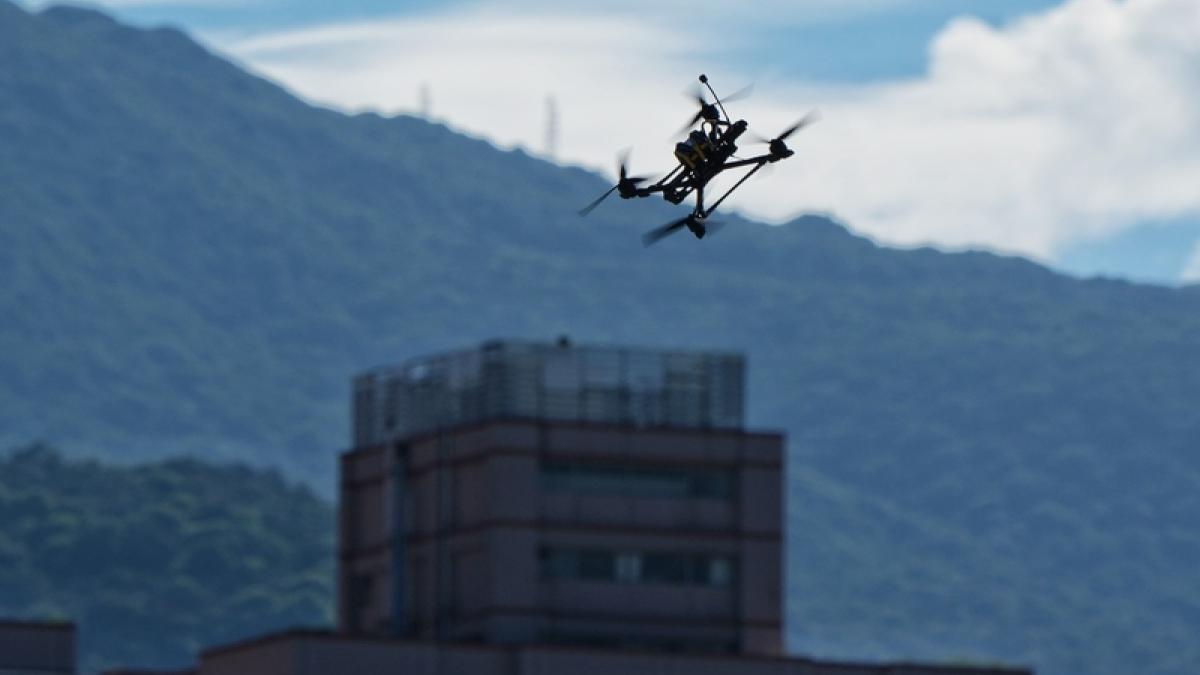
Defense spending has broken records annually, yet recent defense procurement projects have repeatedly ended in failure. From the nearly NT$1 billion Future Creation anti-drone system, the NT$570 million RDX explosive procurement won by an interior design firm, the 105mm artillery shell key material procurement, to the Coast Guard's NT$170 million rotary-wing drone project—all were terminated due to failed inspections or contract performance issues. Despite Taiwan’s massive defense investments, it has failed to develop a qualified industrial supply chain, exposing the limitations of the current defense procurement system.
Thus, the Lai Qingde administration’s proposed NT$210 billion special act for unmanned vehicle procurement in 2026—planning to acquire over 210,000 drones and unmanned vessels—has immediately drawn public skepticism. Ironically, Taiwan’s drone unit prices are exorbitantly high. The Legislative Yuan Budget Center reports that commercially adapted 'micro-drones' cost an average of NT$900,000 per unit, while 'tactical short-range UAVs' reach up to NT$3 million. The over 200,000 'coastal attack drones' under the NT$210 billion special budget are estimated to cost around NT$700,000 each.
In contrast, the U.S. launched its USD 1 billion (approximately NT$31.5 billion) 'Drone Dominance Program' in 2025, aiming to procure 340,000 small one-way attack UAVs by the end of 2027, with a strict cost cap of USD 5,000 (about NT$157,000) per unit. In terms of efficiency, timeline, and cost control, the U.S. far surpasses Taiwan. Its mechanisms for cost control and transparent vendor competition are worthy models for Taiwan to learn from.
'Validate Before Procure'—Ensuring Vendors Can Deliver Immediately
Under the 'Drone Dominance Program,' the U.S. Department of War established a public website disclosing all vendor lists and competition results. Each company’s scores and awarded procurement quantities are fully transparent, allowing public scrutiny. In a briefing at the March 2024 Industry Day, the Department of War clearly stated its 'fight tonight' procurement philosophy: drone vendors must first prove real-world operational readiness through live demonstrations before receiving orders. Procurement volumes are allocated based on evaluation scores, with higher-scoring vendors receiving more contracts. According to the first-phase ranking, Skycutter Inc. achieved the highest score and secured 2,560 drones, while Farage Precision—partnered with Taiwan’s Leihoo—ranked 11th with 1,520 units.
The 'Drone Dominance Program' will ultimately select 3–5 'champion-tier' companies by 2027 through a four-stage competitive process. Winning vendors will mass-produce low-cost drones.
Eliminate Underperformers: Cost Capped at USD 2,300–5,000 per Unit
U.S. Secretary of War Hegseth explicitly stated: 'We must invest in proven, cost-effective unmanned platforms.' The program requires initial production units to cost no more than USD 5,000, with later stages targeting USD 2,300. Rather than awarding all 340,000 units upfront, the U.S. conducts phased live competitions under different mission scenarios, evaluating flight performance, operator feedback, and cost control. Vendors unable to continuously reduce costs face elimination. From an initial 49 companies, only 3–5 will remain as 'champion-tier' firms meeting all standards, including cost. Thus, cost is not self-declared—it is competitively determined.
The key to lowering drone costs isn’t just reducing airframe prices. The U.S. military encourages cross-vendor modular designs for warheads, safety systems, and integration interfaces. Lethal, anti-armor, and armor-piercing warheads can be rapidly swapped on the same platform. The clear requirement of 'a few payloads for many drones' prevents the need to redesign dedicated equipment for each model, minimizing manufacturing costs.
Prioritize Transparent Competition—Don’t Bet Another NT$210 Billion!
Since forming the 'Drone National Team' in 2022, Taiwan has invested nearly NT$100 billion over five years but still lacks a 'champion-tier' company capable of mass-producing low-cost drones. Now, with no tangible results, the government is rushing to propose another NT$210 billion special budget—as if bigger budgets alone could solve the problems. Defense Minister Ku Li-hsiung even claimed, 'Don’t mix the money for rice and soy sauce,' suggesting defense procurement and industrial development should be separate.
Yet, the U.S. 'Drone Dominance Program' takes the opposite approach: using open competition, phased validation, and performance-based order allocation to turn defense procurement into a tool for building industrial competitiveness—ultimately selecting mass-production-capable 'champion-tier' companies. In short, the U.S. doesn’t separate defense procurement from industrial policy but effectively integrates them through procurement reform.
The strongest opposition to the Executive Yuan’s drone special budget should be against demanding public 'trust' again—without reforming procurement systems, establishing transparent competition, or proving vendors’ mass-production capabilities. If the government truly wants social support and legislative approval for this massive NT$210 billion budget, it must first publicly disclose requirements, specifications, competitions, and evaluations. Vendor performance must be validated through competition, and production costs reduced through competition—not replaced by massive propaganda campaigns that gamble taxpayers’ money once more.
*The author is a researcher at the Taiwan People’s Party Policy Committee.
FACT BOX
- Source: PR Times
- Category: News
- Organizations: Skycutter / Farage Precision