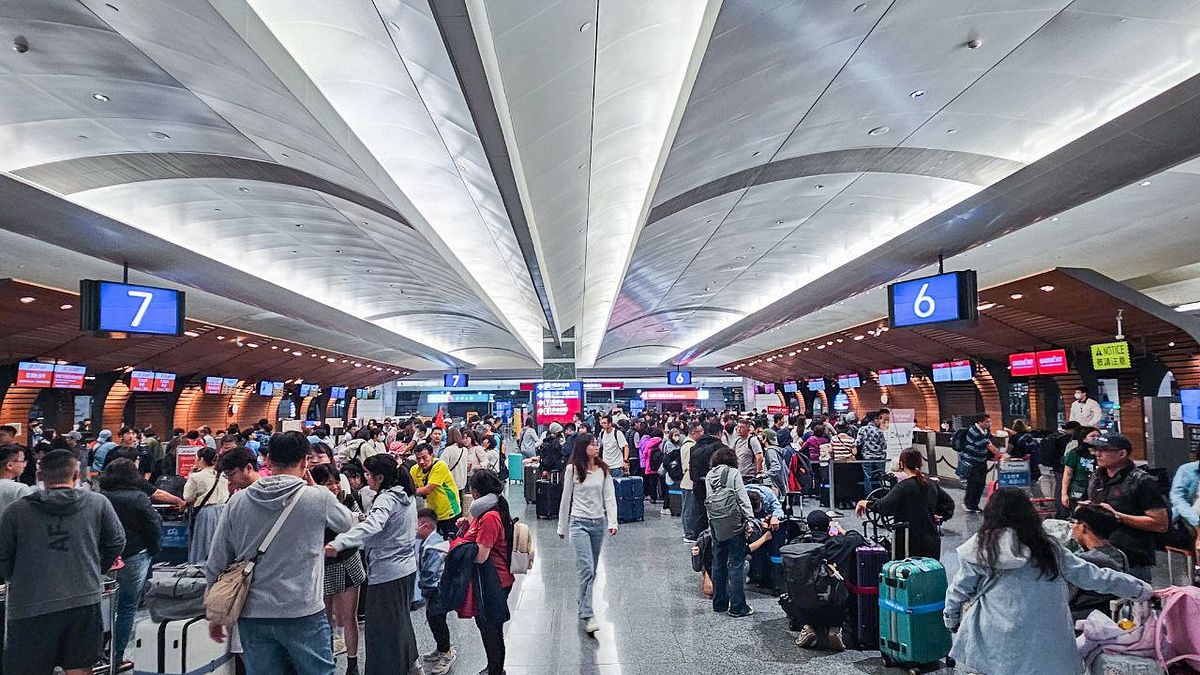
According to the latest statistics from Taiwan's Tourism Administration, Ministry of Transportation and Communications, the inbound tourism market continued to grow in 2026. From January to June, a total of 4,294,589 visitors arrived in Taiwan, an increase of 2.3% compared to the same period last year. By July 15, approximately 4.552 million people had visited Taiwan, up about 1.6% year-on-year.
Markets such as the Philippines, Indonesia, Vietnam, the United States, and India performed exceptionally well, with double-digit growth in visitor numbers, becoming key drivers for overall tourism growth. The Philippines has become Taiwan’s largest source of Southeast Asian tourists, with over 210,000 Filipino visitors in the first quarter of 2026 — a 43% increase from the same period last year.
In the first half of 2026, inbound visitors to Taiwan surpassed 4.29 million — the Philippines led Southeast Asian markets with a 43% surge. Search volumes for Kaohsiung and Kinmen skyrocketed by over 200%.
The Tourism Administration noted that Japan, Hong Kong, and South Korea remained the top three source markets in the first half of 2026. In June alone, 611,148 visitors entered Taiwan, a slight 0.79% increase from the previous year, indicating a stable and resilient tourism market overall.
However, performance varied across markets. While emerging markets like the Philippines, Indonesia, and Vietnam continued to grow, markets such as Hong Kong, Macau, Japan, Malaysia, the UK, and China saw declines compared to the previous year. The Tourism Administration analyzed that the global tourism market in 2026 faced challenges, including rising fuel costs and increased uncertainty due to conflicts in the Middle East. According to data from the United Nations World Tourism Organization (UN Tourism), global tourism grew by about 2.5% in January and February 2026, but the growth rate dropped sharply to 0.4% in March, indicating that geopolitical tensions have begun to impact cross-border travel demand.
Despite these challenges, Taiwan achieved strong results in certain markets. As of the end of June, visitor numbers from the Philippines, Indonesia, Vietnam, France, and Italy all maintained double-digit growth. The Philippines has become one of Taiwan’s most dynamic overseas markets. According to Tourism Administration statistics, Filipino visitor numbers exceeded 210,000 in the first quarter of 2026, a 43% year-on-year increase.
Digital travel platform Agoda’s analysis of 2026’s first-half accommodation search data revealed that the Philippines has become Taiwan’s largest Southeast Asian source market. Accommodation search volume surged 46% year-on-year, the highest growth rate among all markets.
Beyond increasing visitor numbers, Filipino travelers are also expanding their travel itineraries. While Taipei remains the most searched city among Southeast Asian travelers, Kaohsiung emerged as the fastest-growing destination, with search volume increasing 65% year-on-year.
Further analysis of Filipino travelers’ search trends shows that, in addition to Kaohsiung, search volumes for Kinmen and Pingtung increased by over 200% compared to the previous year, while Tainan rose by 135%. Travel interests are shifting from urban tourism to outlying islands, historic cities, and natural attractions, indicating that Filipino travelers are no longer confined to traditional hotspots but are increasingly seeking culturally rich, slow-paced, and immersive travel experiences.
Overall, amid global tourism disruptions caused by geopolitical factors, Taiwan’s inbound visitor numbers continue to grow positively, with the expanding Southeast Asian market serving as a key pillar of tourism performance. As air capacity gradually recovers and international travel demand rebounds, the future outlook for Taiwan’s tourism market remains promising.
It’s not just tourism! Filipino consumer power is growing, with increasing numbers coming to Taiwan to work and study.
According to statistics from Taiwan’s Ministry of Labor, the Philippines has become Taiwan’s third-largest source of migrant workers. As of January 2025, there were approximately 160,000 Filipino workers in Taiwan, accounting for nearly 20% of the total foreign workforce, with over 80% employed in the technology manufacturing sector. 2024 statistics on international students in Taiwan’s higher education institutions show around 4,500 Filipino students, ranking seventh overall with a year-on-year growth rate of 10.2%.
FACT BOX
- Source: PR Times
- Category: Survey
- Organizations: Agoda