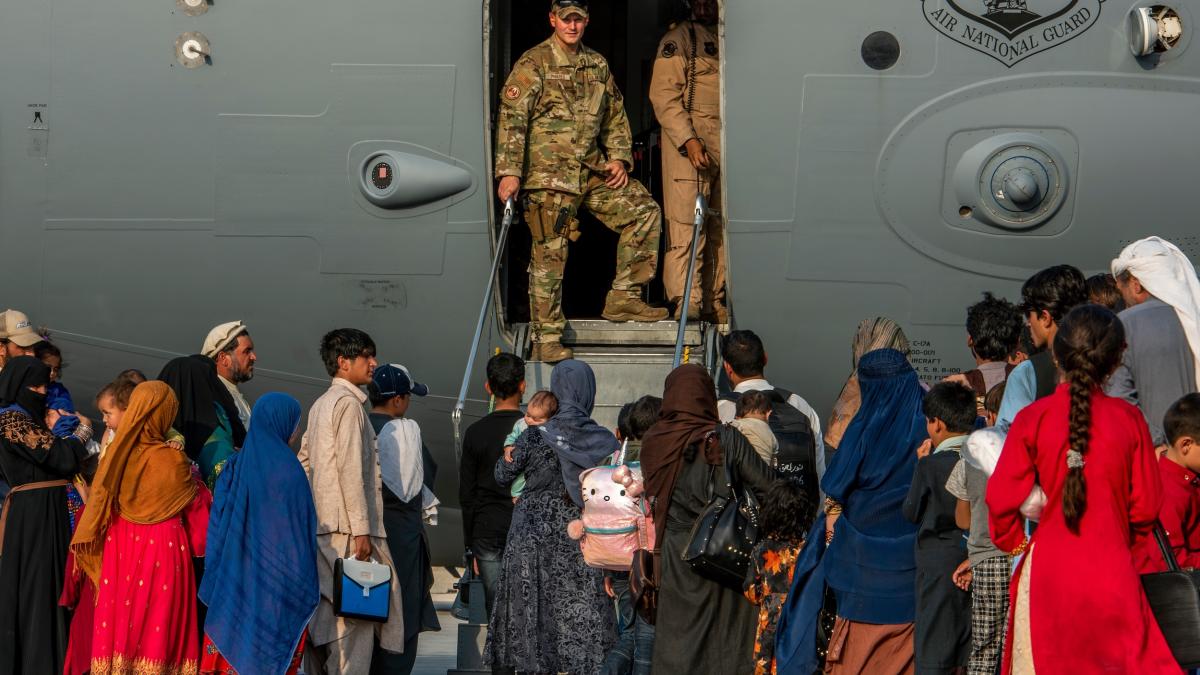
Following the withdrawal of U.S. forces, in mid-July 2021—five years ago—the Taliban seized Afghanistan’s capital, Kabul, reestablishing control after a 20-year absence, leaving Afghanistan in a worse state than before: isolated, extremely impoverished, and with women and girls suffering particularly severe oppression. A senior official from an international organization has called for greater international support and attention to Afghanistan.
The Taliban has now ruled for five years. The International Crisis Group, headquartered in Brussels, Belgium, issued a press release on the 29th stating that approximately five years ago, the Taliban’s rapid 'reconquest' of Afghanistan shocked the world. As U.S. forces withdrew, the Taliban swiftly ousted the U.S.-backed Afghan government from Kabul. 'Their victory ended a 20-year war, but in every other respect, it has worsened Afghanistan’s plight.'
The statement notes that after regaining power, the Taliban quickly reinstated a rigid interpretation of Islamic law, which has stifled nearly every aspect of social life, particularly imposing harsher restrictions on women and girls. Among a series of measures, the Taliban banned girls from higher education, prohibited women from most employment, and enforced strict rules governing women’s movement and dress. 'The Taliban has now become an outcast of the international community—entirely self-inflicted.'
However, as the Taliban government tightens restrictions, international discussions on easing sanctions or unfreezing Afghan assets have stalled. 'Due to unwillingness to bear reputational and legal risks of operating in such an environment, international companies and financial institutions continue to avoid Afghanistan, effectively isolating the country from the global economy. Millions of Afghan families have consequently fallen into poverty.'
In response, the International Crisis Group points out that while the United Nations has designed a workaround mechanism to bypass sanctions and deliver aid and essential services to the Afghan people, this mechanism is increasingly strained due to declining donor funding and rising needs amid repeated economic and geopolitical shocks in Afghanistan.
On May 23, 2023, in Kabul, Afghanistan, a Taliban fighter stands guard as local women wait to receive food rations distributed by a humanitarian organization. (AP)
Does Afghanistan Need More Aid?
The press release states that although the Taliban government faces challenges, it remains firmly in control of the country and is likely to remain the dominant political force in Afghanistan for the foreseeable future. 'External powers cannot realistically expect positive change simply by pressuring Afghanistan. Five years of isolation have worsened the suffering of ordinary Afghans without altering the Taliban’s behavior.'
Therefore, the analysis urges a reflection on the previous period of Taliban rule—from 1996 to 2001—when much of the world had essentially forgotten Afghanistan. The International Crisis Group warns that this must not happen again. 'Foreign capital must remember that its actions affect ordinary Afghans far more than the Taliban, and Taliban rule is beyond the control of most Afghan people. While cooperating with the perpetrators of widespread repression is deeply objectionable, the humanitarian needs of ordinary Afghans must take precedence above all else.'
The International Crisis Group argues this means external actors should strengthen and alleviate the economic hardships faced by the most vulnerable groups in Afghanistan, including women and girls. Stakeholders should continue providing humanitarian aid and basic livelihood support, especially to women in education and those working in women-led enterprises, and support UN-led efforts to revive the private sector.
On February 27, 2026, in Torkham, Afghanistan, Taliban soldiers at the Torkham border crossing on the Afghan side look toward the Pakistani side. (AP)
Are There Any Good Signs in Afghanistan?
Comfort Ero, CEO of the International Crisis Group, notes that most external powers refuse to recognize the Taliban regime, hoping to force policy moderation through diplomatic isolation, sanctions, and other pressures. As another punitive measure, the Pakistani government is repatriating millions of Afghan refugees. Refugee influxes, combined with Middle Eastern conflicts, are placing additional strain on Afghanistan’s already struggling economy.
The good news, however, is that domestic pressure is also rising. An increasing number of Afghans are expressing dissatisfaction with Taliban policies, with some even taking to the streets in protest. In mid-July, a little-known Afghan armed group briefly seized control of an area in northeastern Badakhshan Province—marking the first time the Taliban has lost territory since 2021.
FACT BOX
- Source: PR Times
- Category: News