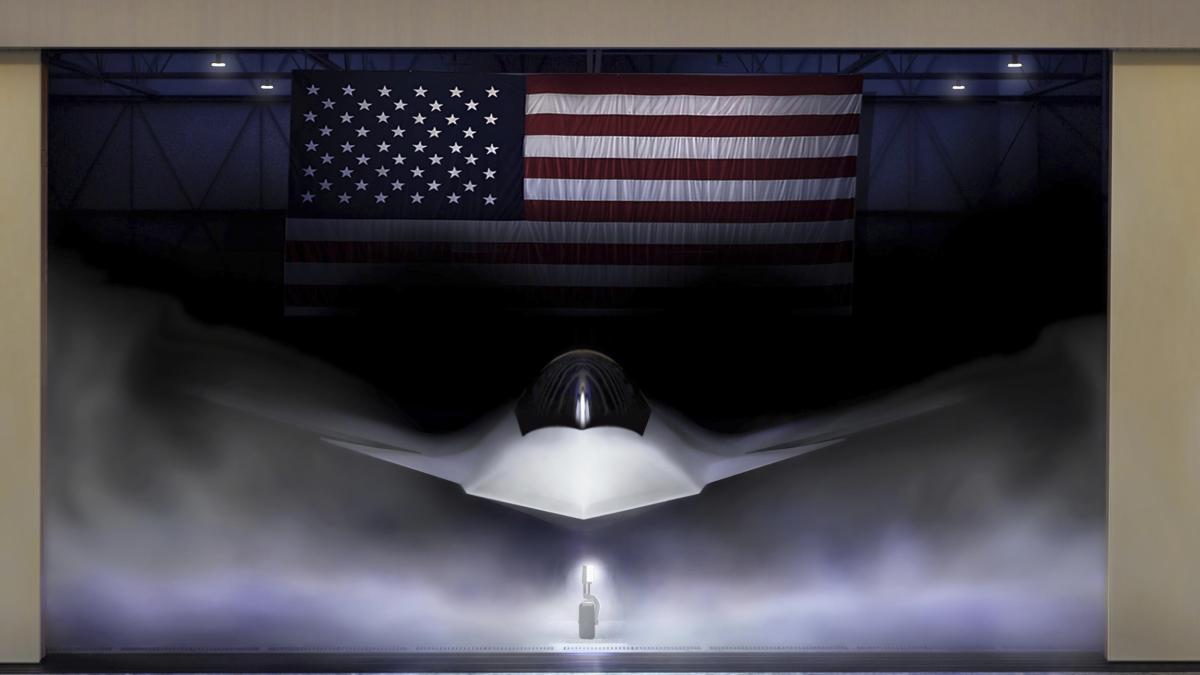
To reduce its long-term dependence on U.S. military aid and weapons, the Israeli government has secretly launched a national defense autonomy strategy. A senior official, speaking privately during an interview in Washington, D.C., revealed that Israel is planning to independently research, develop, and produce its own stealth fighter (Stealth Fighter) and unmanned combat aircraft (UCAV) equipped with advanced artificial intelligence (AI) within the next 10 years (by 2035).
The Jerusalem Post cited the official, stating, "I can foresee a future where Israel produces its own stealth fighter. After evaluation, the government believes that one day, foreign countries may stop supplying us with advanced weapons, systems, and equipment. Therefore, we must begin manufacturing them ourselves, and our target is set for 10 years from now."
Israeli Prime Minister Benjamin Netanyahu previously disclosed a long-term plan aimed at gradually reducing reliance on U.S. military aid while significantly expanding the domestic defense industrial base. Although the original plan focused on artillery, missiles, electronic warfare, and cyber warfare, the focus has now extended to advanced fighter aircraft. Colonel Yishai Cohen, head of the Integration Division at the Defense Research and Development Directorate (MAFAT), emphasized that establishing independent production capabilities immune to external political influence is the agency's most critical mission going forward.
In addition to stealth fighters, Israel also views unmanned combat aircraft (UCAV) and collaborative combat aircraft (CCA) as key projects for future air warfare. CCA emphasizes "manned-unmanned teaming," using highly autonomous AI systems to enable pilots to command multiple drones simultaneously. This allows for frontline reconnaissance, electronic jamming, decoying enemy fire, or precision strikes, significantly expanding the operational range of traditional fighter aircraft and improving pilot survivability.
The U.S. Air Force (USAF) has also designated unmanned wingmen as a key modernization initiative, planning to procure over 150 units by the 2031 fiscal year. Israel is also considering investing resources into such cost-effective, mass-producible strategic weapons.
In fact, Israel already possessed the capability to domestically produce fighter jets in the 1980s. At that time, the "Lavi" fighter, developed by Israel Aerospace Industries (IAI), successfully completed test flights and even achieved overseas sales. However, in 1987, due to massive budgetary burdens and political pressure from the United States—urging Israel to purchase American-made weapons—the project was ultimately forced to terminate.
Since then, the Israeli Air Force has become heavily reliant on U.S.-made fighter jets, maintaining its regional air superiority in the Middle East through commitments from Washington. Meanwhile, the focus of domestic military R&D gradually shifted toward military drones. Today, only two air forces worldwide continue to operate the Lavi fighter: Colombia in South America and the Sri Lankan Air Force in South Asia.
After nearly three years of regional war exhaustion and diplomatic pressure, Israel now understands that possessing critical technologies that are "not dependent on others" is fundamental to national security. Even though, by referencing other countries' precedents, independently developing a new generation of stealth fighters requires burning vast national financial resources and may impose a heavy burden on the economy, Israel appears to prioritize defense autonomy over immediate economic losses.
FACT BOX
- Source: PR Times
- Category: News
- Organizations: Israel Aerospace Industries (IAI) / Anduril Industries / USAF