The Zhonglian toxic oil scandal has been burning for nearly a month, and the public's true anger extends beyond just the satirical video 'You But De Ni'—it stems from the government's continued failure to disclose the full truth. When did the contamination begin? How much tainted oil entered the market? Which processed foods were made from it? Were previous batches safe? These details have only been revealed gradually, like squeezing toothpaste, under persistent questioning by the media, local governments, and legislative members.
The public waited in vain for the president to address the nation, for a sincere apology, or for senior officials to take political responsibility for administrative failures. Instead, what they received was police officers knocking on the door of the creator of a political satire video.
Toxic oil remains uninvestigated—yet police act swiftly
Less than 24 hours after 'You But De Ni' was uploaded, police visited Wei Chun-yu, the creator of 'Lair Principal,' to inquire whether he produced the video and whether he would consider editing or taking it down. Authorities claim this was merely a legal verification, but the public questions why, after a month of inconclusive investigations into the toxic oil, the administrative branch could mobilize so quickly over a single satirical video.
Police belong to the administrative system, not the judicial branch. Even if the government believes the video may involve legal issues, it should follow criminal procedures through prosecutors and police investigations, with courts ultimately making judgments based on evidence—not have administrative police swiftly visit creators and exert pressure. What the public sees is not judicial judgment, but the shadow of administrative power looming at the door. It’s not a court verdict, but a message: criticizing the government might bring someone knocking.
Even more absurdly, the DPP first had spokesperson Wu Cheng accuse the video of 'deepfake' and 'forgery of private documents,' followed by high-ranking party members and legislators endorsing police intervention. A spokesperson’s role is to communicate the party’s stance to the public, not to act as a prosecutor. A legislator’s duty is to oversee the executive branch, not to defend police actions. When the ruling party collectively responds to criticism with criminal charges, it’s no longer just an individual misstatement—it reflects a mindset of power.
When did political satire become a crime?
Which democratic leader hasn’t been satirized? The UK’s 'Spitting Image' long mocked Thatcher, Reagan, and Gorbachev with exaggerated puppets. Australia’s 'The Chaser’s War on Everything' used pranks and sharp parodies to challenge politicians. These works may be harsh, impolite, or even unfair, but leaders typically respond with rebuttals, debates, or public discourse—not by sending police.
Taiwan has its own tradition of political satire. From '100% Entertainment' to '100% Taiwan,' over the past decade, figures like Chen Shui-bian, Annette Lu, Frank Hsieh, Ma Ying-jeou, Lien Chan, and James Soong have been impersonated, drawing massive ratings and winning three Golden Bell Awards. Later, memes, cartoons, and parodies targeting Ko Wen-je and Han Kuo-yu were far sharper than 'You But De Ni.' No politician ever demanded legal action simply for being mocked.
If a satirical video mimicking the president’s voice can trigger such swift administrative action, the one needing reflection isn’t the creator—but the ruling party’s tolerance for criticism.
From Cheng Nan-jung to today
Voltaire’s spirit of free speech is: 'I disapprove of what you say, but I will defend to the death your right to say it.' The true value of democracy lies not in protecting only agreeable speech, but in tolerating voices that are harsh, offensive, and uncomfortable.
Cheng Nan-jung gave his life for '100% freedom of speech,' self-immolating to draw a red line: no ruling power should use state machinery to suppress free expression. This isn’t a ritual for parties to lay flowers and give speeches—it’s a boundary etched in blood.
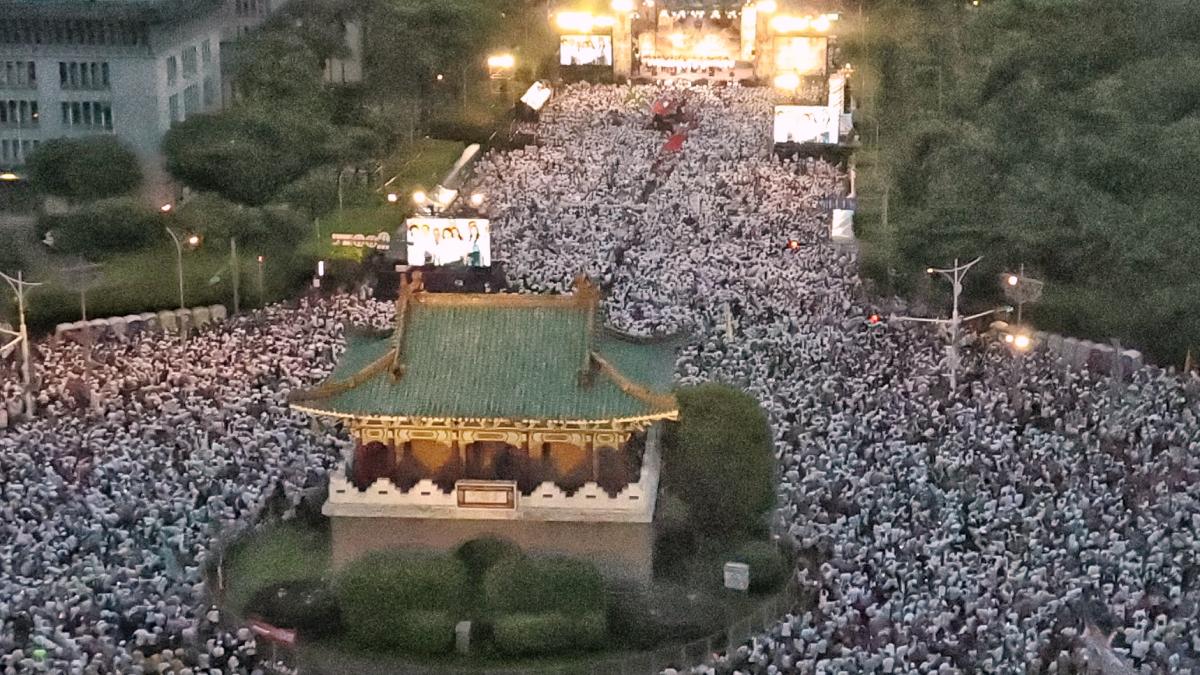
The DPP once championed Cheng’s legacy, fiercely demanding apologies and accountability from the KMT during the Ting Hsin scandal. Lai Ching-te once shouted, 'Food safety is national security.' Now, with the Zhonglian scandal burning for nearly a month, the government only released findings after public outrage erupted on Ketagalan Boulevard—via Executive Yuan official Chen Shih-chung, Health Minister Shih Chou-yang, and the FDA.
What the public truly wants to know isn’t just which batch the tainted oil came from, but why information was disclosed piecemeal, why no one has taken political responsibility, and why Lai has yet to fully explain to the nation. When officials tell people to 'drink more water and get more sun' instead of answering how long contamination lasted, how many products entered the market, or whether past batches were safe, it’s hard not to feel the government doesn’t truly understand public anxiety.
Power will eventually backfire
'You But De Ni' has surpassed 220,000 views. Police knocked once—but the internet opened 220,000 windows for the video. The public hasn’t settled the toxic oil account with the government, yet the DPP is using criminal law to settle scores with the people.
Twelve years ago, during the Ting Hsin scandal, the DPP demanded the ruling KMT immediately apologize and take responsibility. Twelve years later, now in power, the DPP applies a different standard to the Zhonglian scandal. This stark contrast raises doubts: has the DPP’s once-proud democratic spirit faded?
Silence doesn’t mean consent. Temporary quiet doesn’t mean forgetting. The government can knock on one door, but it can’t shut the millions of questions in people’s hearts. It can use criminal charges to scare one video, but it can’t hide the truth of toxic oil or administrative failure. In a democracy, when power forgets humility, the people will eventually remind it at the ballot box: state machinery isn’t for targeting citizens, and government power isn’t for suppressing free speech.
*The author is a Ph.D. in Philosophy from the University of British Columbia, Canada, an associate professor appointed by the Ministry of Education, and a psychiatrist.
FACT BOX
- Source: PR Times
- Category: News