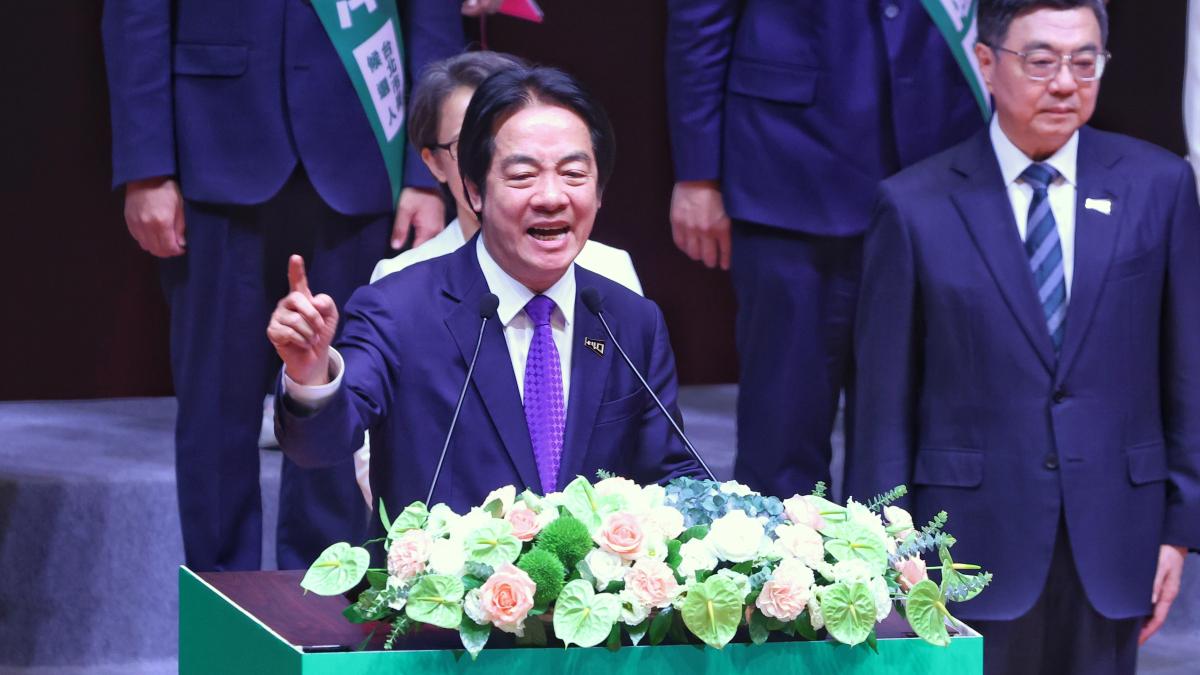
If we were to vote for the most successful 'amateur character' in recent Taiwanese politics, I believe 'Principal Lai-er' would undoubtedly rank high. He never ran for office, holds no official position, and has never held a press conference. Yet, through a single joking nickname, he sparked a nationwide wave of online creativity. People turned him into memes, edited short videos, and commented 'achievement unlocked,' as if politics had suddenly become a massive multiplayer online game. Some laughed; others got angry.
In truth, the real issue worth discussing has never been the nickname itself, but rather how a democratic society responds to humor. Humor is democracy’s cheapest form of oversight. People don’t need to apply for rallies, rent stages, or print banners—just one phrase, one meme, or one short video can express public opinion about political figures. Throughout history,相声 (crosstalk), cartoons, satirical literature, and political cartoons have played the same role: bringing power back down to earth, reminding those in authority that no one is too high to be criticized, and no one too important to be joked about.
A truly mature democracy isn’t one where leaders aren’t laughed at, but one where leaders understand they can be part of the joke. However, the arrival of the AI era has made things more complex. In the past, a photoshopped image was usually recognized as a joke at first glance. Today, AI-generated voices and hyper-realistic videos can blur the line between truth and fiction. When technology allows anyone to make someone 'say' something they never did, society begins to worry not about humor, but about deception.
So the question arises: What should we really guard against—political satire, or maliciously fabricated content that misleads the public? These two may seem similar, but they are fundamentally different. If a piece clearly contains parody, exaggeration, or satire, and viewers recognize it as creative expression, it falls within the realm of free speech. But if someone deliberately uses AI to fabricate content, making people believe it’s real—using it for fraud, defamation, market manipulation, or influencing public policy—that’s a different matter, requiring legal intervention.
The real challenge isn’t whether to regulate, but how. If we regulate nothing, AI could become a tool for deception. If we try to regulate everything, even humor could become suspect. The greatest test of democracy is often not facing enemies, but confronting its own power. Power has a natural impulse to want a quieter world—fewer criticisms, fewer memes, softer laughter. But the very reason democracy exists is to restrain that impulse.
Therefore, for any case that may involve illegality, the most important thing is not for the public to preempt judicial conclusions, nor for the internet to pass judgment before the courts. Instead, we must follow legal procedures, let evidence speak, and allow the judiciary to rule. Procedures are not just legal formalities—they are the foundation of public trust in institutions. Because if today we can use vague standards to punish political memes, tomorrow we might punish political cartoons; the day after, parody videos; and eventually, even a sarcastic remark or a simple joke could lead creators to self-censor. The chilling effect is never formed overnight—it accumulates gradually.
Of course, creators cannot ignore the impact of their work just because they claim 'humor.' As AI tools grow more powerful, creative freedom and creative responsibility are two sides of the same coin. Creativity should be encouraged, but if someone intentionally disguises fiction as fact and causes serious misinformation, they should face legal scrutiny. Democracy has never been just about freedom—it also includes responsibility.
A truly mature society doesn’t hand every issue over to emotion, nor every controversy to ideology, but to institutions. Looking back at the 'Principal Lai-er' phenomenon, its resonance comes not just from a nickname, but from reflecting a new political language of the internet generation. Today’s people may not take to the streets, but they create memes; they may not write manifestos, but they make 15-second videos; they may not shout slogans, but they use humor to express expectations and frustrations toward power. Sometimes, laughter is more powerful than shouting—because laughter doesn’t always mean disrespect. Often, it’s the gentlest, most civilized reminder: the people are still watching, and still thinking.
AI has changed the tools of creation, but it hasn’t changed the core values of democracy. What democracy should truly protect isn’t the dignity of any political figure, but the people’s legal right to criticize power. What it should guard against isn’t all humor, but the malicious use of technology to deceive society. People should be allowed to laugh, creators must follow the law, and governments must govern by law. Only then can democracy in the AI era avoid losing true freedom out of fear of misinformation, and avoid abandoning the defense of truth in the pursuit of freedom. A truly confident democracy isn’t afraid of people laughing at itself. What it should truly fear is the day when people are too afraid to laugh at all.
*The author works at Hanxiang Company.
FACT BOX
- Source: PR Times
- Category: News