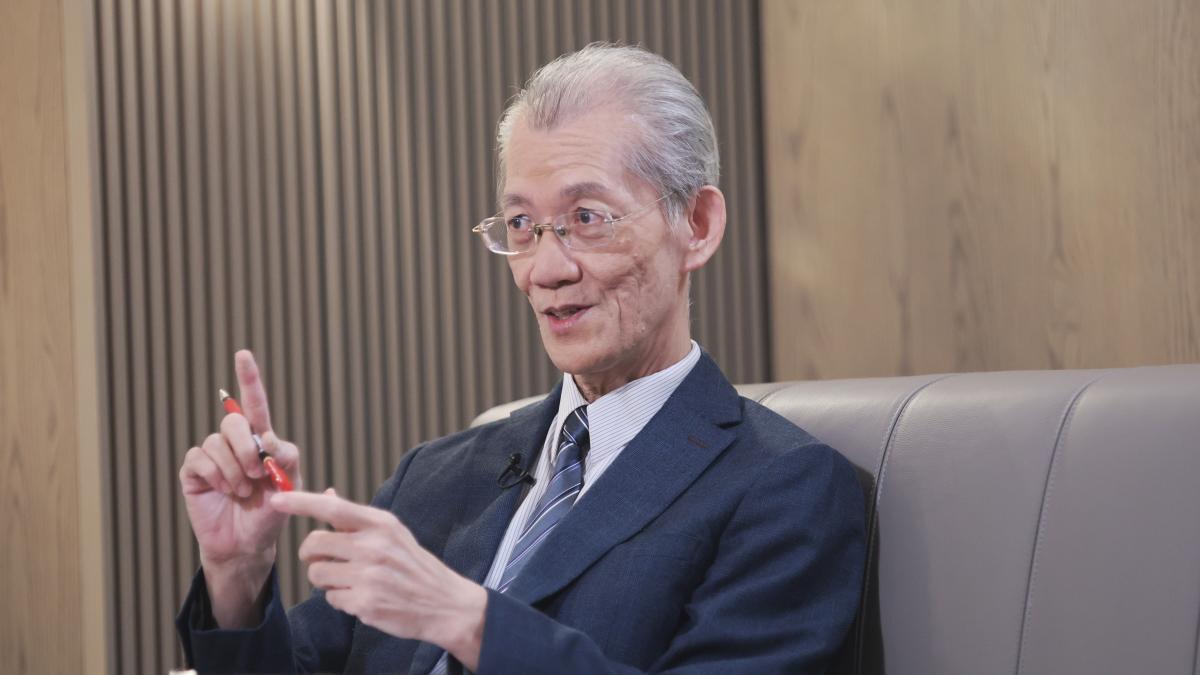
According to Reuters, Iran is expected to receive up to 400 units of Chinese-made man-portable air-defense systems (MANPADS), including the QW-12 and FN-16 missile systems, within weeks. Former U.S. President Donald Trump responded, stating that Chinese President Xi Jinping had assured him China would not sell weapons to Iran, and that he would be 'very disappointed' if such sales occurred. Ming Ju-cheng, honorary professor at National Taiwan University's Department of Political Science, analyzed the situation on the program 'Xia Ban Han Ni Liao,' explaining that China is employing a 'weaker versus stronger' strategy—using proxy conflicts to exhaust U.S. military and economic strength.
Ming noted that after Xi Jinping concluded his visit to Russia in 2023, he told Russian President Vladimir Putin, 'The current global situation is part of a once-in-a-century transformation, and we should jointly advance it.' This statement was not officially released but was accidentally recorded by foreign journalists. Ming believes this reveals Xi's true intentions: the 'century of change' refers to dismantling the current Western-dominated international order and establishing a new China-led system.
Ming stated that 'China is the least interested in ending the Russia-Ukraine war.' He argues that China benefits by simultaneously constraining Russia, the United States, and the European Union while profiting economically. From China's perspective, the longer the war continues, the better—and an escalation in the Middle East would be even more favorable. As long as U.S.-Iran military conflict does not disrupt China's oil and gas supply routes, China has an interest in prolonging and expanding the conflict, thus it will inevitably support Iran.
Moreover, Iran maintains at least five proxy forces in the Middle East capable of waging proxy wars. For example, the Iran-backed Houthi movement is attempting to control the Bab-el-Mandeb Strait. Ming emphasized that instability in the Middle East directly impacts global oil and gas prices, leading to inflation. Sustained inflation could negatively affect the Republican Party in the November midterm elections. If Republicans lose control of either or both chambers of Congress, it would severely hinder governance.
China and Iran are closely watching this electoral outcome, and 'if election-related unrest occurs, that would be even better,' Ming warned. Taiwan also holds elections in November, and from China's perspective, 'if unrest occurs in Taiwan, that would be even better.' China is not merely waiting for chaos—it is actively seeking to create it. When these factors converge, it creates what Ming calls China's 'window of opportunity.' The Chinese Communist Party desires global instability, as only through widespread chaos can the old order be overthrown and a communist-led new order established.
FACT BOX
- Source: PR Times
- Category: News
- Products / services: MANPADS