"I am a bookstore clerk"—this slogan, the DPP probably didn't expect, despite support from intellectual allies and full-party mobilization, would see its political marginal effect vanish so quickly, fading from public discourse in less than half a month. Even Hong Kong netizens have pushed back, ridiculing the DPP for once again insincerely exploiting Hong Kong. The green camp's attempt to replicate the 2019 'support Hong Kong' effect from the black-clad violence incident appears to have miscalculated.
Is this generalization driven by anti-communist ideology?
Recently, a friend who attended the Hong Kong Book Fair visited Taiwan. During our gathering, we discussed the arrest of a staff member from Hong Kong's independent bookstore 'Lau Tsun Shu She' by the National Security Department. He mentioned that the incident did affect the book fair to some extent—while attendance remained high, purchasing enthusiasm was clearly weaker than in previous years. However, compared to many long-established 'second-floor bookstores,' 'Lau Tsun Shu She' holds relatively low significance among Hong Kong citizens. It's an open secret that their focus isn't on 'selling books' but on 'organizing,' which is why they drew the attention of Hong Kong's National Security Department.
Many in Taiwan who voiced support for 'I am a bookstore clerk' reached the same conclusion: Hong Kong's 'reading freedom' is dead. Yet, in nearly 30 years since Hong Kong's return, how many people have truly valued 'reading freedom'? For years, street vendors have sold all kinds of hearsay 'gossip about top CCP officials,' and staff from Epoch Times have promoted anti-communist publications about 'organ harvesting' near ferry terminals. Yet, the city's reading culture has remained underdeveloped, and book prices remain exorbitantly high. Therefore, some argue that reading freedom never had much value to begin with—so how can it be said to have 'died'?
In fact, claiming that Hong Kong's reading freedom is dead may be an overgeneralization through Taiwan's anti-communist ideological lens. Just before the 'I am a bookstore clerk' incident, the author purchased numerous books in Hong Kong—all of them high-quality titles. For example, Chen Jian's monumental work 'Zhou Enlai' from Cornell University, a two-volume set exceeding 1,000 pages; 'Disease No. 2,' which examines major public health crises in mainland China against the backdrop of cholera outbreaks during Mao's era; Frederic Wakeman Jr.'s renowned 'History and Will: Philosophical Perspectives on Maoist Thought'; David Lane's 'The End of Neoliberal Capitalism and Its Alternatives,' a Cambridge sociologist's critique of the 'end of history' thesis and a socialist response to contemporary capitalism; and Sha Qingqing's 'The Impossible Allies,' which reveals secret Cold War-era communications between Taipei and Moscow—all recently published by the Chinese University of Hong Kong Press within the past two to three months.
Are the 'recommended by' lists on book covers all the same?
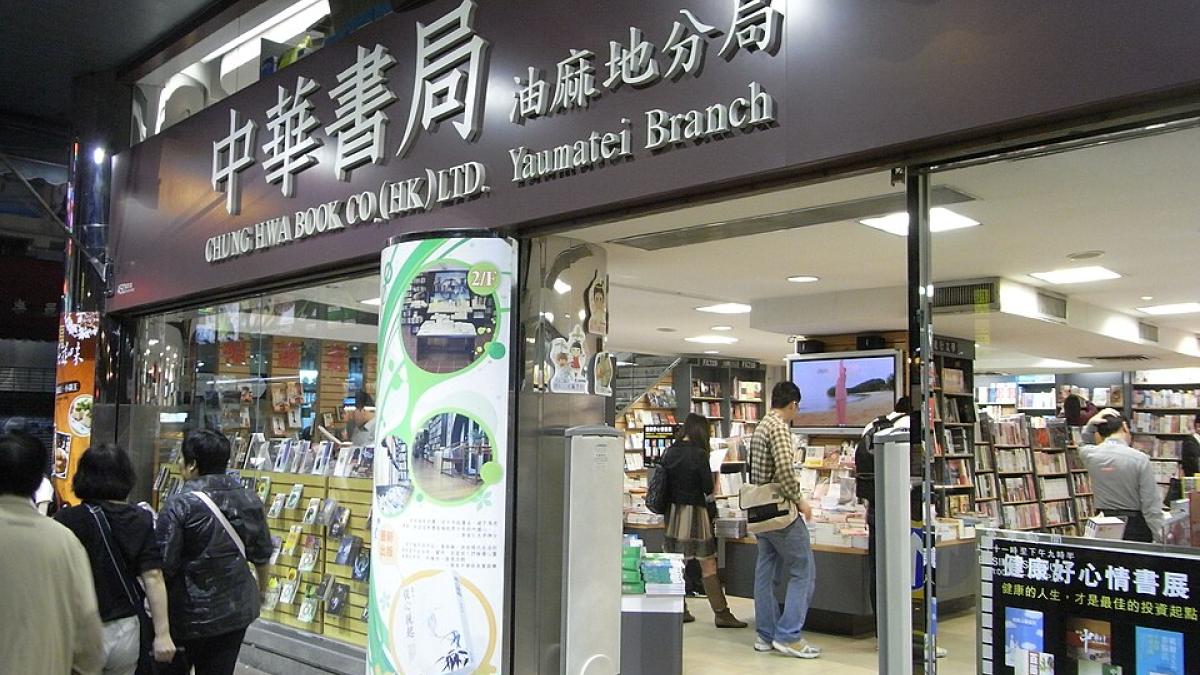
Additionally, 'What Is a Chinese Person?'—a volume edited by Daniel A. Bell, Canada-born scholar of Confucianism and political theory, currently Chair Professor of Political Theory at HKU's Faculty of Law, and featuring contributions from leading philosophers, historians, and legal theorists—published by Hong Kong Commercial Press. For the author, the most anticipated title was Shen Songqiao's 'Thinking of China with a Heavy Heart: National Imagination in Modern China,' a collection of the retired Institute of Modern History (Academia Sinica) researcher's life's work on Chinese nationalism and national imagination, including his famous essay 'Offering My Blood to Xuan Yuan: The Yellow Emperor Myth and National Imagination in Late Qing.' This book was published by Chung Hwa Book Company, Hong Kong.
Frankly, Hong Kong's publishing industry has become increasingly professionalized and refined, producing a flourishing diversity of works. Recall a pro-Taiwan independence book influencer who expressed surprise on their Facebook page that Shen Songqiao's 'Thinking of China with a Heavy Heart' was published in Hong Kong, not Taiwan. At least for the batch of new books the author collected, while none are officially 'banned' in Taiwan, due to political climate, market tastes, and editorial selection biases in a book market that prioritizes 'Taiwan values,' they are often overlooked—missing publication opportunities and becoming a kind of de facto 'banned book' under dual control of capital and politics.
Taiwan's publishing market appears developed, with publishers constantly releasing new titles. But a closer look at the 'flavor' of publications, or a quick glance at books prominently displayed in bookstores, reveals Taiwan's publishing output is remarkably uniform, still largely confined within the twin boundaries of political correctness and mainstream trends. Another subtle point to note: observe the list of endorsers on the bands of new humanities and social science books. The high degree of overlap raises doubts—have these people actually read the books carefully? Or is it merely about displaying political alignment, knowing that certain readers will buy based on ideological branding?
A 'banned book' easily obtainable?
Therefore, stepping beyond Hong Kong's geographical perspective and including other Chinese-language 'beacons of democracy' like Taiwan, one must ask: books packaged under various themes but essentially recycling anti-China, anti-communist narratives—are they truly victims of censorship, or are they still the dominant winners?
Take 'Only Red Flowers Bloom,' which became a focal point in this incident. The author previously worked for U.S.-funded media, making the book more akin to political propaganda. Yet, because it aligns with the 'democratic camp's' biases against China, it's treated as gospel truth. Readers care less about the accuracy of its portrayal of China and more about the ideological comfort of 'isolating China' through democratic consensus.
When the female bookstore clerk was released after two days of detention by Hong Kong authorities, the outside world rushed to promote 'Only Red Flowers Bloom,' propelling it to the top of online bookstore rankings in Taiwan and elsewhere. Publishers rushed to reprint, significantly increasing print runs. A book easily purchasable outside Hong Kong, accessible to Hong Kong readers via proxy purchases from Taiwan friends, and selling far beyond expectations—can it truly be called a 'banned book'? Can it really not be 'freely read'? Or are the ideologically 'incorrect' publications, excluded by market forces, booksellers, editors, and political ideology, the ones that are truly unreadable—the 'banned without being banned' books that are nearly impossible to obtain in Taiwan?
*The author is a veteran media professional and executive director of Yuanxiangren Cultural Studio.
FACT BOX
- Source: PR Times
- Category: News