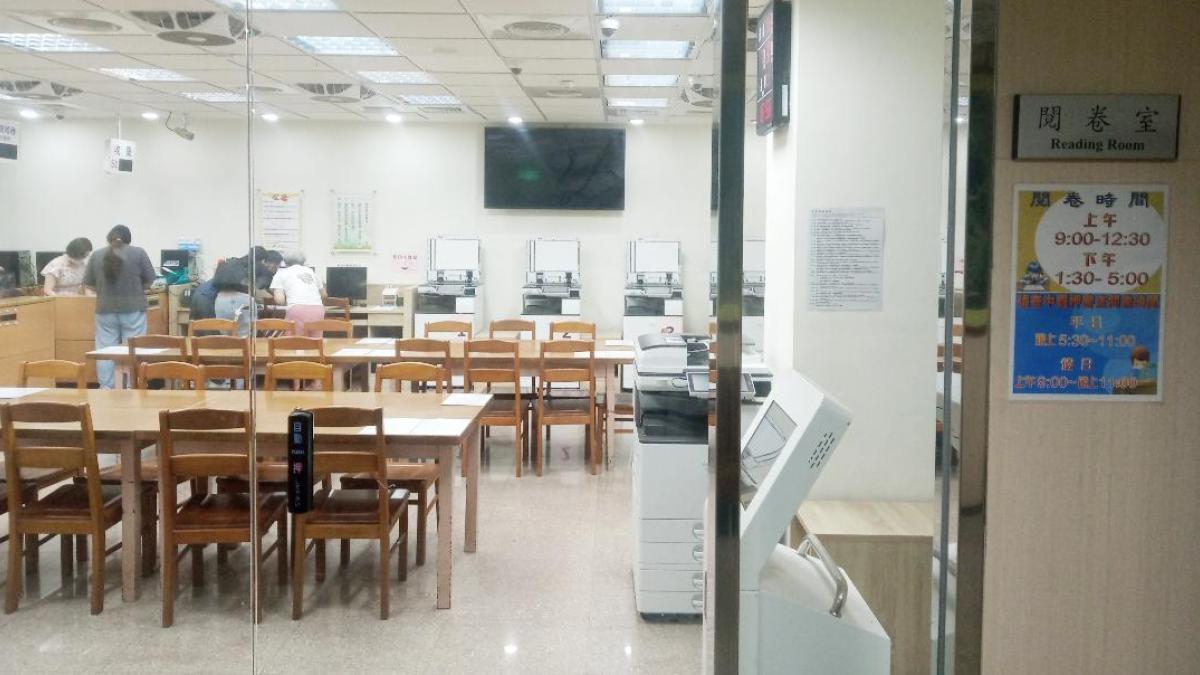
Taipei City Council members Chen Pei-shu and Lin Yen-feng, both from the Democratic Progressive Party, have faced backlash for frequently requesting vast quantities of municipal documents. Chen, in response, has accused the city government of deliberately omitting key pages from the documents provided, suggesting intentional concealment. To resolve this dispute, the author recommends adopting a 'court record access model.' In courts, to promote transparency, both plaintiffs and defendants are allowed to apply to clerks to review case files during proceedings, and may photocopy, photograph, or digitally copy evidence and documents at their own expense—enhancing litigation fairness. Councilors' right to request documents from the city government is based on the Local Government Act, which states, 'Councilors have the right to access relevant official documents and information when performing their duties,' and the Government Information Disclosure Act, which mandates that 'government information should, in principle, be made publicly available.' However, neither law requires the government to provide documents or copies free of charge. Therefore, the Taipei City Government should emulate the court system by establishing a 'Councilor and Public Record Reading Room.' Councilors would first request access to specific case files from officials. Upon supervisor approval, the responsible civil servant would deliver the file to the reading room at an agreed time. Councilors could then carefully review the documents and select only the key sections they need, paying for photocopying, scanning, or photographing them. Since the cost is borne by the requester, there would be no incentive to recklessly request entire batches of documents without filtering—overburdening civil servants and burning out photocopiers—resulting in massive paper waste. Furthermore, because individuals select and copy the documents themselves, the problem of missing pages or intentional concealment would be eliminated. This approach offers a win-win solution. The photo referenced in this article shows the 'Party Record Reading Room' at Taipei District Court, equipped with three computers for copying files to USB drives or CDs, and ten photocopiers for plaintiffs and defendants to self-serve and pay for copying case materials. Another example is the National Central Library, located across from the Chiang Kai-shek Memorial Hall, where visitors must fill out request forms to borrow books, and staff retrieve them from the stacks on the second floor. Inside, dozens of computers and photocopiers allow readers to self-serve and pay for copying content from books. Both examples—the court and the library—adopt a 'pay-per-use' and 'self-service' model for document access. The Taipei City Government can follow suit. By doing so, it can eliminate excessive document requests and wasteful photocopying, sparing trees and paper from unnecessary destruction! *The author is a civil society worker in judicial reform.
FACT BOX
- Source: PR Times
- Category: News