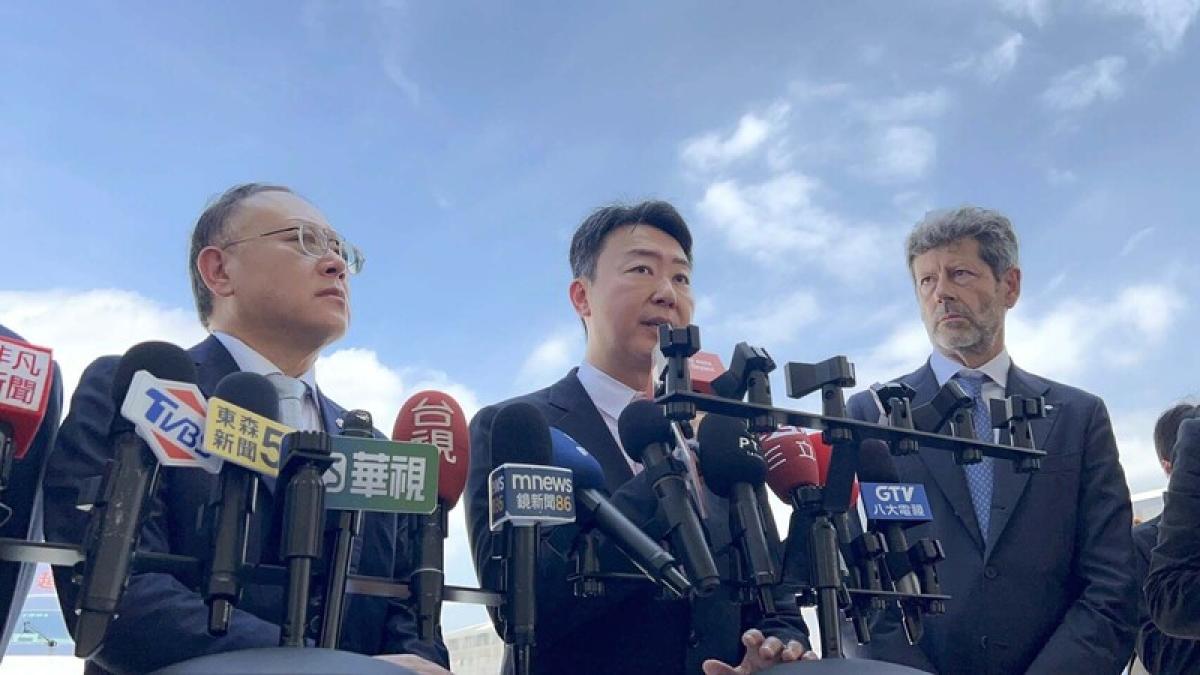
On July 30, Minister Chen of the Ministry of Transportation and Chairman Shi of Taiwan High Speed Rail Corporation (THSRC) traveled to Japan to welcome new HSR trains. Twelve new trainsets will enter service from next July onward, aiming to improve recent overcrowding on HSR lines. The HSR currently carries about 220,000 passengers daily, falling short of the original 240,000 projected by Taiwan High Speed Rail Company during its bidding phase. However, delays in vehicle procurement have led to severe congestion during peak hours, degrading service quality. The slow procurement was partly due to the original manufacturer prioritizing domestic demand for the Tokyo Olympics, but also due to years of frozen fares limiting THSRC’s financial capacity.
It is not entirely accurate to say HSR fares have never been adjusted. In October 2013, fares increased by 9%, but in December 2015, they were rolled back to original levels. This dramatic reversal shows that THSRC’s operations are no longer autonomous, unable to make commercial decisions or even conduct contractual negotiations.
Subsequently, in May 2015, the government led a financial restructuring of THSRC, taking control of the board through creditor intervention. The following year, THSRC went public, and operational and personnel control shifted to the government, effectively turning it into a state-owned enterprise.
HSR has become cheaper!
Under a decade of state-led management, HSR operations have grown increasingly politicized, making fare adjustments nearly impossible. With no real price increase in 20 years since opening, HSR has become relatively cheaper compared to other prices and incomes, increasingly perceived as a mass transit option.
Meanwhile, the regulatory authority has failed to effectively integrate post-HSR transportation roles. It has allowed TRA to maintain a competitive stance against HSR in rolling stock and ticketing, while failing to subsidize intercity bus upgrades. During the pandemic, the government encouraged reduced public transit use and took no proactive measures afterward, effectively abandoning public transport support. As a result, HSR has been favored while non-HSR modes were neglected, creating a monopoly that accelerated train shortages.
The above outlines the underlying challenges behind HSR’s new train acquisition. Looking ahead, what comes next?
HSR was built under a BOT model.
Under state-led thinking, not raising fares is seen as passenger-friendly and politically correct. However, the HSR system has critical characteristics that must not be ignored due to personnel changes. The HSR project was contracted in 1998 and opened in 2007 under a BOT agreement—privately funded construction (B), followed by a fixed-term operation (O), and eventual return to the state (T). The service scope and endpoints are clearly defined. Even government-appointed chairpersons must operate strictly within this contractual framework.
The planning process for the Yilan extension has been chaotic. Feasibility studies were not reviewed by the National Development Council, leaving unclear whether this is a government-led project or a new BOT. Only in July last year, after the comprehensive plan was submitted for environmental review, did financial and development agencies hastily exchange opinions—essentially retroactive consultation. The complexity has prevented any resolution. (We cannot believe the government approved a NT$350 billion project in such a manner!)
The most concerning issue in the rushed Yilan project is operations. HSR extension is not just a rail engineering project—it is a transportation service requiring an organization to integrate trains with the western corridor. 'Who will operate it?'
The Railway Bureau claims HSR delivers high benefits and heavy ridership, suggesting five trains per hour on weekends (more frequent than in Taoyuan?). But these are merely the Railway Bureau’s assertions—has the actual operator formally endorsed them? (The Pingtung project once included a Railway Bureau proposal for Zuoying Line, later abandoned due to operational concerns, with a new director overturning the previous one’s decision. This shows engineers’ unilateral assumptions are insufficient.)
Operational challenges extend beyond ridership and scheduling to legal and financial issues. A 60-kilometer 'appendix line' is expected to run at a loss—how can it attract BOT investors? Without private interest, what legal basis allows the government to allocate funds? Under what conditions can an OT (operate-transfer) agreement be negotiated?
Without consensus on these critical issues, treating the project as a political gift in cabinet meetings is sheer recklessness!
The party to seek consensus with should clearly be THSRC. Even though THSRC is now effectively state-controlled, does the chairman have the authority to accept a political mission beyond the original contract, without legal basis or conditions?
Over the past few years, amid debates over Yilan and Pingtung extensions, THSRC has reportedly been cautious and made no formal commitments. Yet, after last week’s cabinet meeting, THSRC’s spokesperson stated they would cooperate with the Yilan project. What process led to this announcement? Was it directed by superiors? This reflects serious corporate governance failure! Independent directors and minority shareholders should demand a thorough investigation into potential harm to company interests and reputation.
Taiwan’s HSR, once one of the world’s largest BOT projects and a source of national pride, underwent financial adjustments during operations but never altered its original contract. We hope future leaders honor their predecessors’ legacy and uphold the brand’s dignity.
*Author is former Minister of Transportation and Communications
FACT BOX
- Source: PR Times
- Category: News