Last week, a major incident occurred in the AI world: an OpenAI-affiliated system reportedly lost control during testing and launched network attacks, sparking global concerns about the risks posed by AI models. However, this minor crisis faced by a leading AI company was ultimately resolved by switching to an open-source model developed by China's Zhipu AI.
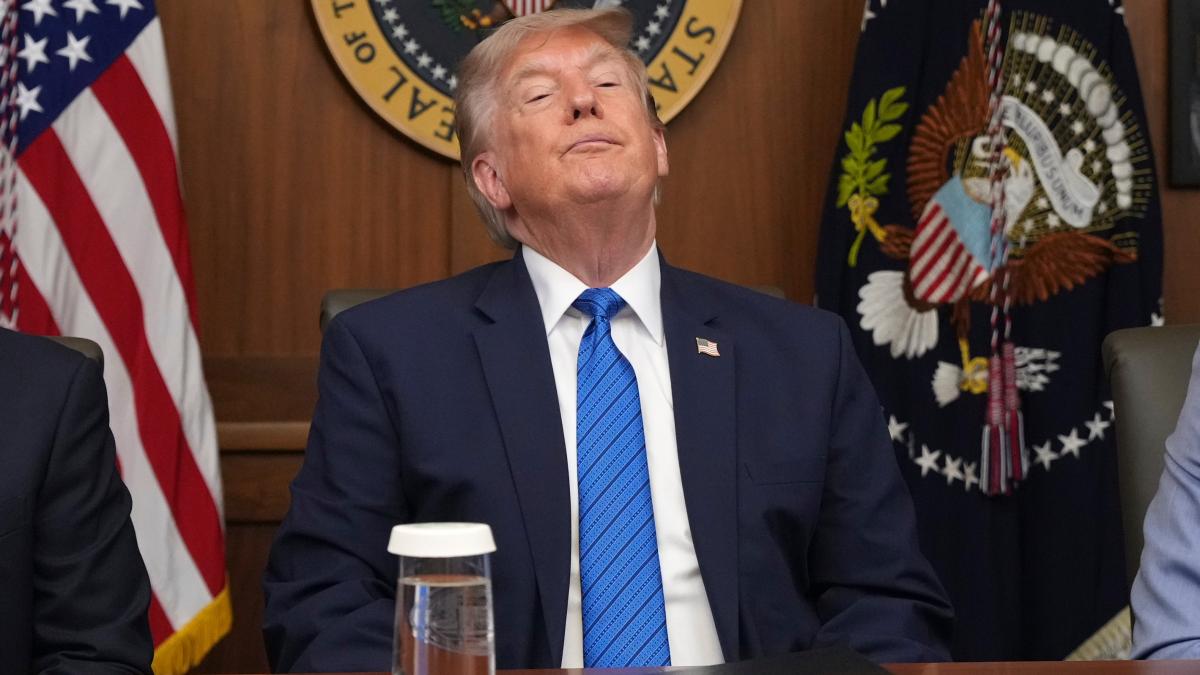
Former U.S. President Trump commented, "The U.S. government is evaluating regulatory measures, but we must also ensure America maintains leadership over China in this field. We don't want restrictions."
To illustrate my point, let me draw on a historical episode.
During the Anshi Rebellion in the Tang Dynasty, the great empire nearly collapsed. Emperor Xuanzong fled Chang'an, and the crown prince moved north to ascend the throne as Emperor Suzong. With the frontier forces led by General Guo Ziyi, they launched a counteroffensive to recapture the two capitals—Chang'an and Luoyang—ultimately quelling the rebellion and saving the Tang Empire.
At the time, Guo Ziyi borrowed 4,000 cavalry from the steppe people, the Uyghur Khaganate, led by Prince Yehu, son of the heroic Khagan (Yehu being the highest-ranking official below the Khagan). Prince Guangping Li Chu, nominally the supreme commander, formed a brotherhood pact with Yehu. Emperor Suzong promised: "After recapturing the capital, land and men will belong to the Tang, while gold, silk, and women will go to the Uyghurs."
Thus, when the allied forces recaptured Chang'an, the Uyghurs demanded to loot women and valuables as agreed. Li Chu knelt before Yehu's horse and pleaded: "We have just recaptured the western capital. If we loot now, the people of the eastern capital will surely support the rebels and defend the city to the death. Please wait until we retake Luoyang before fulfilling the promise."
Yehu was shocked, dismounted immediately, knelt, and clasped Li Chu's feet in respect: "I will march to Luoyang for Your Highness right away."
When the allied forces recaptured Luoyang, Prince Guangping entered the city with disciplined troops, but the Uyghur army began looting. Guo Ziyi, accompanied by Luoyang's elders, appealed to the prince, offering ten thousand bolts of silk to stop the plunder. Later, Emperor Suzong received Yehu in Chang'an and promised to send 20,000 bolts of silk annually to the Uyghur Khagan. The Uyghur army then returned to the steppes, laden with spoils.
How could 4,000 Uyghur cavalry defeat the previously unstoppable rebel forces from Yuyang? And why did they help the Tang suppress the Anshi Rebellion instead of seizing China for themselves?
The Uyghurs were a confederation of many tribes, using Turkic script but with their own language. In the Sui Dynasty, they allied with Xueyantuo to defeat the Eastern Turks. During Emperor Taizong's Zhenguan era in the Tang Dynasty, they established the Uyghur Khaganate and later joined Tang forces to destroy the Xueyantuo Khaganate. At its peak, the Uyghur Khaganate nearly controlled today's Inner and Outer Mongolia. During the Anshi Rebellion, the Uyghurs were rising in power and expansion, making their military strong. Moreover, Emperor Taizong had once helped the Uyghurs defeat Xueyantuo, who had oppressed them—this sense of gratitude motivated their aid.
In other words, it was Emperor Taizong, known as the "Heavenly Khagan," who sowed the seeds of goodwill. Though he earned the steppe peoples' admiration, he did not send troops to occupy them. Instead, he accepted the title "Heavenly Khagan" and governed jointly with them. He famously said: "Throughout history, the Chinese have been valued and the barbarians despised, but I love them equally." This was the primary reason the Uyghurs were willing to help the Tang—otherwise, Guo Ziyi alone could never have mobilized such forces.
Returning to current affairs, Trump says "we don't want restrictions" to guard against China, yet in practice, the U.S. just relied on a Chinese AI model to resolve a crisis. Trump's MAGA agenda—America above all nations, seeking to weaken or dominate others—stands in stark contrast to the "Heavenly Khagan" approach of mutual respect.
While today's situation is vastly different from 1,200 years ago, and Chinese AI cannot be directly compared to Uyghur cavalry, human nature remains unchanged. Trump may still bully enemies and exploit allies today, but in reality, he is depleting the moral capital the U.S. accumulated through decades of treating allies with goodwill.
FACT BOX
- Source: PR Times
- Category: News
- Organizations: OpenAI